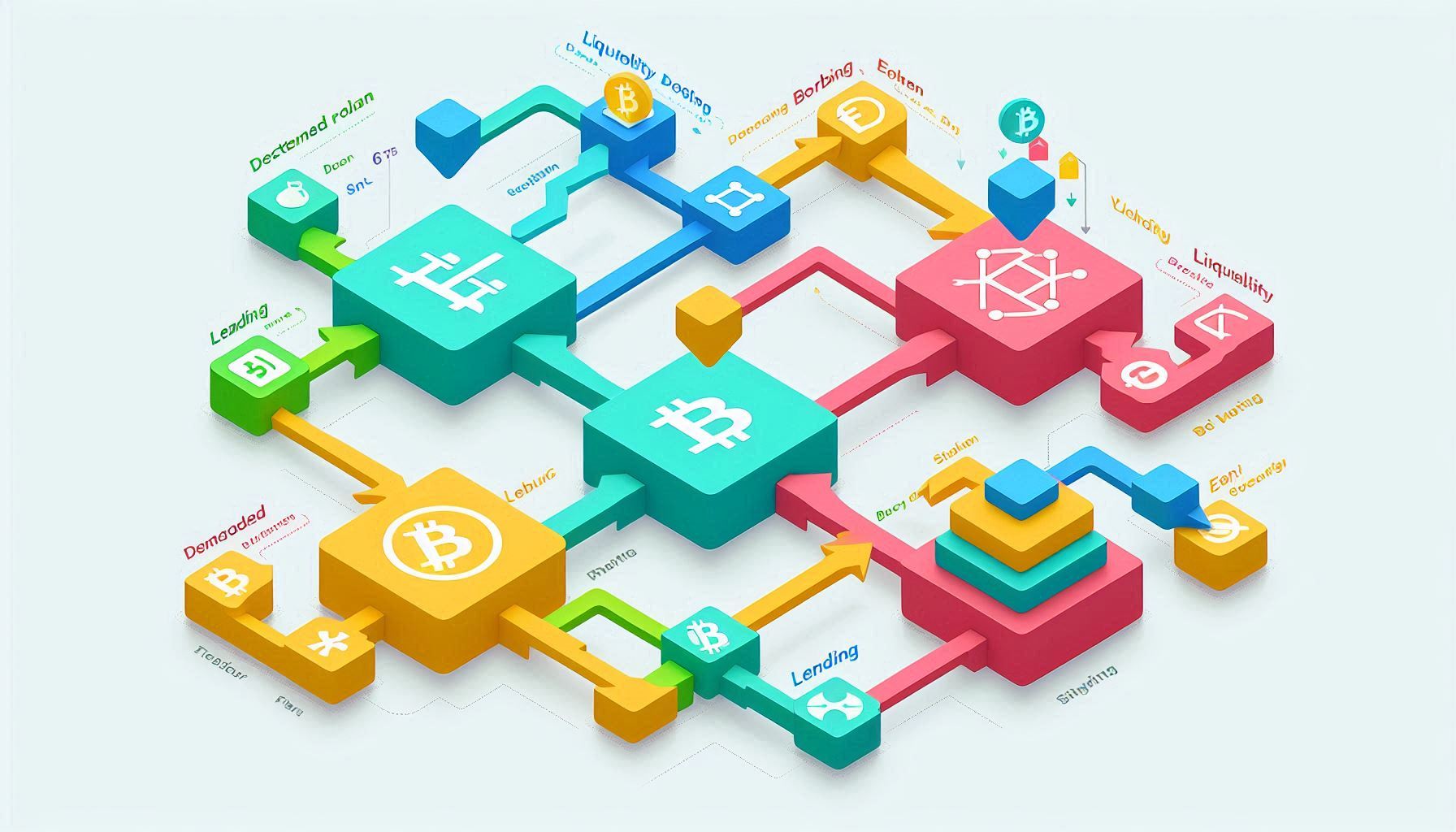
Decentralized Finance, or DeFi, is the financial system that employs blockchain and does not
need intermediate parties like traditional banks and institutions. DeFi platforms rely on smart
contracts on the blockchain, which most of the known ones are Ethereum-based, in order to further extend
several financial services into areas like lending, borrowing, trading, and even collecting interest on
cryptocurrency holdings. However, what DeFi introduces is cutting out the middleman so that financial
systems would be more transparent, accessible, and controlled by users themselves over their assets and
transactions. Innovation in this sense would enable every individual with access to the Internet to
engage in financial activities with effects of increasing financial inclusion and transparency,
meanwhile allowing for greater innovation in the creation of financial products and services.
Decentralized Finance, commonly known as DeFi, refers to a financial
ecosystem built on
blockchain technology that operates without intermediaries like banks or brokers. By utilizing smart
contracts on platforms such as Ethereum, DeFi aims to provide a more accessible, transparent, and
efficient financial system where users can lend, borrow, trade, and invest in cryptocurrencies without
the need for centralized authorities.
Importance of DeFi in the Financial Landscape
DeFi has gained significant traction due to its potential to democratize
finance,
offering services to anyone with an internet connection. It eliminates traditional barriers, such as
high fees and lengthy processing times, enabling users to take control of their financial assets.
Moreover, DeFi fosters innovation through its open-source nature, encouraging the development of new
financial products and services that cater to a global audience. This transformative approach has the
potential to reshape how individuals engage with their finances and invest in the future.
Key Components of Decentralized Finance (DeFi)
1. Smart Contracts
Smart contracts are self-executing contracts with the terms of the
agreement directly
written into code. They enable trustless transactions between parties without the need for
intermediaries. In DeFi, smart contracts automate processes like lending, borrowing, and trading,
ensuring that transactions are executed securely and transparently.
2. Decentralized Exchanges (DEXs)
Decentralized exchanges allow users to trade cryptocurrencies directly with
one another
without relying on a centralized authority. DEXs operate using smart contracts, providing a platform for
users to maintain control of their funds while facilitating trades in a peer-to-peer manner. Examples
include Uniswap, SushiSwap, and PancakeSwap.
3. Liquidity Pools
Liquidity pools are collections of funds locked in a smart contract that
facilitate
trading on decentralized exchanges. Users can contribute to these pools by depositing their
cryptocurrencies, earning rewards in return. This mechanism ensures that there is always liquidity
available for traders and helps maintain the stability of the DEX.
4. Stablecoins
Stablecoins are cryptocurrencies designed to maintain a stable value
relative to a fiat
currency or other assets. They play a crucial role in DeFi by providing a stable medium of exchange and
a safe haven during periods of volatility. Popular stablecoins include Tether (USDT), USD Coin (USDC),
and DAI.
5. Yield Farming and Liquidity Mining
Yield farming involves staking or lending cryptocurrencies in exchange for
interest or
rewards, while liquidity mining specifically refers to providing liquidity to DEXs in return for tokens.
Both practices enable users to earn passive income on their digital assets and are fundamental to the
DeFi ecosystem.
6. Governance Tokens
Governance tokens are digital assets that grant holders the ability to
participate in
the decision-making processes of a DeFi protocol. By holding these tokens, users can vote on proposals,
changes, or upgrades to the platform, making them integral to the decentralized governance model of
DeFi.
Risks and Challenges in Decentralized Finance (DeFi)
1. Smart Contract Vulnerabilities
Smart contracts are susceptible to bugs and vulnerabilities that can be
exploited by malicious actors. If a smart contract is not properly audited or tested, it may result in
financial losses for users. The decentralized nature of DeFi means that there is often no recourse to
recover lost funds.
2. Market Volatility
The cryptocurrency market is notoriously volatile, which can lead to
significant price fluctuations. This volatility can affect the stability of DeFi projects, particularly
those involving collateralized loans or yield farming, where sudden price drops can trigger liquidations
and losses for users.
3. Regulatory Uncertainty
DeFi operates in a largely unregulated environment, which poses risks for
users and developers alike. As governments and regulatory bodies begin to scrutinize the DeFi space,
projects may face compliance challenges that could impact their operations or even lead to shutdowns.
4. Lack of Consumer Protections
Unlike traditional financial systems, DeFi lacks built-in consumer
protections. Users must take full responsibility for their transactions, and if something goes
wrong—such as a failed transaction or a compromised wallet—there is often no recourse for recovery.
5. High Gas Fees
During periods of high network congestion, transaction fees (gas fees) on
platforms like Ethereum can surge dramatically. These high costs can deter users from participating in
DeFi protocols, particularly for smaller transactions, thus limiting accessibility.
6. Dependency on Oracles
Many DeFi applications rely on oracles to obtain off-chain data for pricing
and other functions. If an oracle is compromised or fails to deliver accurate data, it can lead to
incorrect outcomes in DeFi protocols, potentially resulting in significant financial losses for users.