The FBI Still Hasn’t Cracked NYC Mayor Eric Adams’ Phone
Pig butchering, the crypto-based scammer scourge that has pulled in an estimated $75 billion from
victims globally, is spreading beyond its roots in Southeast Asia, with operations proliferating across
the Middle East, Eastern Europe, Latin America, and West Africa. The UK's National Crime Agency
disclosed new details about the identities of the Russian ransomware group known as Evil Corp—as well as
the group's ties to Russian intelligence agencies and even its direct participation in espionage
operations targeting NATO allies. A WIRED investigation revealed how car-mounted automatic license plate
reader cameras are capturing far more than just license plates, including campaign yard signs, bumper
stickers, and other politically sensitive text, all examples of how a system for tracking vehicles
threatens to become a broader surveillance tool. In other news, ICE signed a $2 million contract with
Paragon Solutions, a known vendor of spyware including the hacking tool Graphite. And the Pentagon is
increasingly adopting handheld controllers for weapons systems in an effort provide more intuitive
interfaces to soldiers who have grown up playing Xbox and PlayStation consoles. And there's more. Each
week, we round up the privacy and security news we didn’t cover in depth ourselves. Click the headlines
to read the full stories. And stay safe out there. The FBI Still Hasn’t Cracked the Phone of Indicted
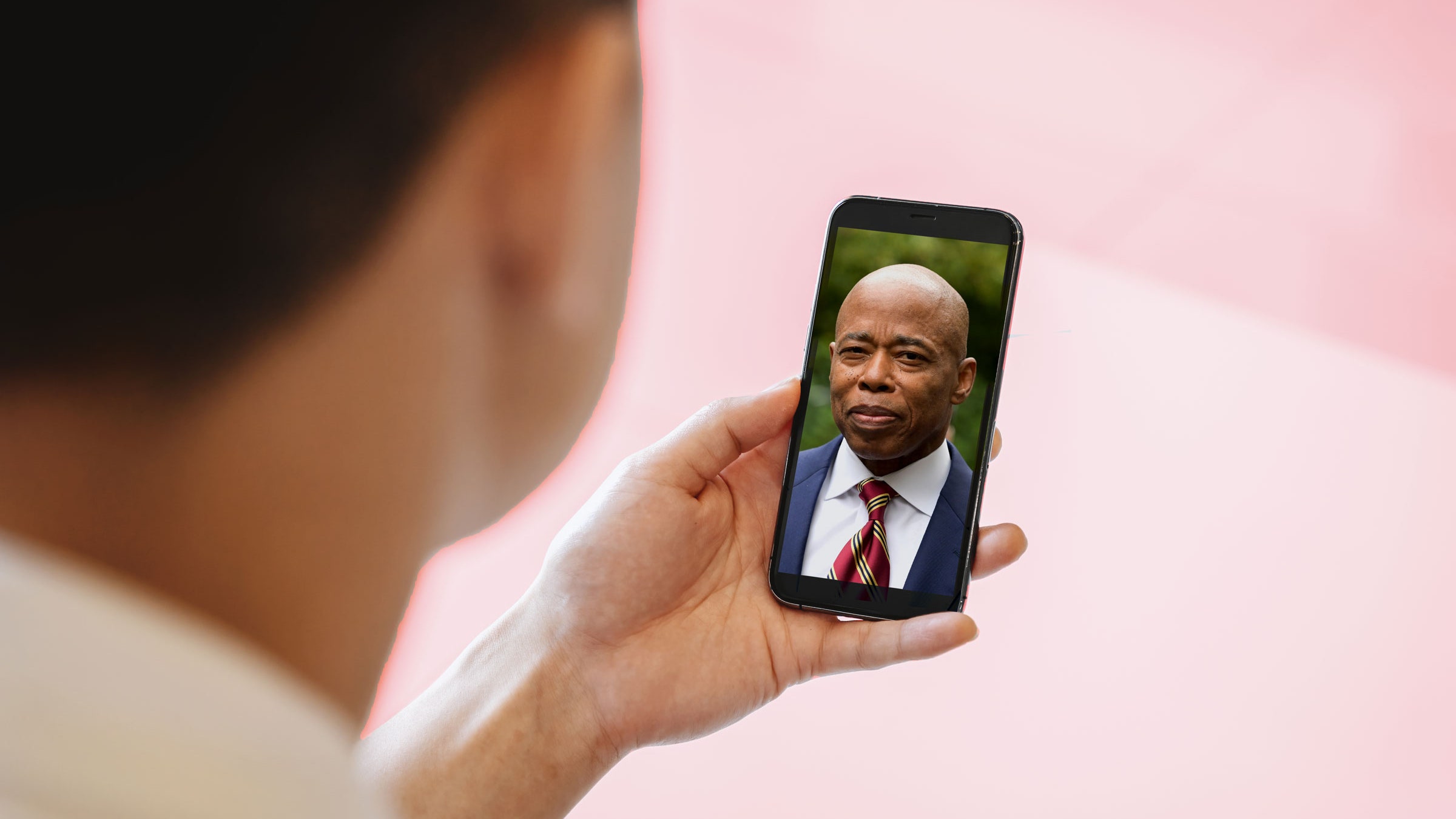
NYC Mayor Eric Adams As the politics of America's biggest city have been turned upside down by the
criminal charges against New York mayor Eric Adams, there's still a “significant wild card” in the
corruption case against him, prosecutors said in court this week: The FBI can't manage to get into his
phone. Prosecutors in the case against Adams, which centers on alleged illegal payments the mayor
received from the Turkish government, revealed that the FBI still hasn't cracked the encryption on
Adams' personal phone, nearly a year after it was seized. That phone is one of three that the bureau has
taken from Adams, but agents seized Adams' personal phone a day later than the other two devices he used
in an official capacity. By that time, Adams had not only changed the passcode on the phone from a four
digit PIN to six digits—a measure he says he took to prevent staffers from intentionally or
unintentionally deleting information from the device. He also claims he immediately “forgot” that code
to unlock it. That very convenient amnesia may leave the FBI and prosecutors in a situation similar to
their investigation into the San Bernardino mass shooting carried out by Syed Rizwan Farook in 2016,
when the US government demanded Apple help unlock the shooter's encrypted iPhone, leading to a
high-profile standoff between the Apple and the FBI. In that case, the cybersecurity firm Azimuth
eventually used a closely guarded—and expensive—hacking technique to unlock the device. In Adams' case,
prosecutors hinted that the FBI may have to resort to similar measures. “Decryption always catches up
with encryption,” a prosecutor in the case, Hagan Scotten, told the judge. Harvard Students Add Face
Recognition to Meta’s Smart Glasses Face recognition is one of only a few technologies that even
Facebook and Google have hesitated to integrate into products like Google Glass and the Ray-Ban Meta
smart glasses—and rightly so, given the privacy implications of a device that would allow anyone to look
at a stranger on the street and immediately determine their phone number and home address. Now, however,
a group of Harvard students has shown how easy it is to bolt that face recognition onto Meta's
augmented-reality eyewear. The project, known as I-XRAY, integrates with the face-recognition service
Pimeyes to let Ray-Ban Meta wearers learn the name of virtually anyone they see and then immediately
scour databases of personal information to determine other info about them, including names of family
members, phone numbers, and home addresses. The students say they're not releasing the code for their
experiment, instead intending it as a demonstration of the privacy-invasive potential of
augmented-reality devices. Point made. Meta Says It Will Train Its AI on Input from Smart Glasses If
that warning about the privacy risks of AR eyewear needed more reinforcement, Meta this week also
conceded to TechCrunch that it will use input from users' smart glasses to train its AI products.
Initially, Meta declined to answer TechCrunch's questions about whether and how it would collect
information from Ray-Ban Meta smart glasses for use as AI training data, in contrast to companies like
OpenAI and Anthropic that explicitly say they don't exploit user inputs to train their AI services. A
couple of days later, however, Meta confirmed to TechCrunch that it does in fact use images or video
collected through its smart glasses to train its AI, but only if the user submits them to Meta's AI
tools. That means anything that a user sees and asks Meta's AI chatbot to comment on or analyze will
become part of Meta's massive AI-training data trove. Microsoft and the DOJ Seize 100+ Domains Used by
Russian Spies If you can't arrest Russian hackers, at least you can nab their web domains. That, at
least, is the approach this week of the US Justice Department, which along with Microsoft and the NGO
Information Sharing and Analysis Center used a lawsuit to take control of more than a hundred web
domains that had been used by Russian hackers working for the Kremlin's intelligence and law enforcement
agency known as the FSB. Those domains had been exploited in phishing campaigns by the Russian hacker
group known as Star Blizzard, which has a history of targeting the typical victims of geopolitical
spying such as journalists, think tanks, and NGOs. The domain seizures seem designed in part to head off
threats of foreign interference in next month's US election. “Rebuilding infrastructure takes time,
absorbs resources, and costs money,” Steven Masada, the assistant general counsel of Microsoft’s Digital
Crimes Unit, said in a statement. “Today’s action impacts [the hackers'] operations at a critical point
in time when foreign interference in US democratic processes is of utmost concern.”