Kremlin Allocates $948 Million to Bolster Crypto-Mobilization Amid Ongoing War in
Ukraine.
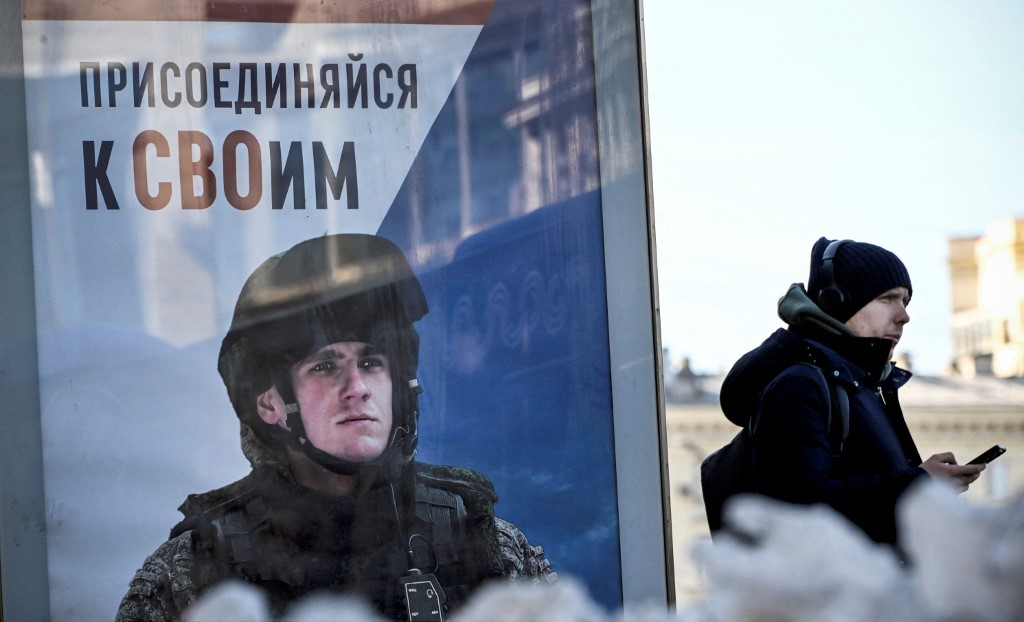
The Russian government plans to allocate 90 billion rubles ($948 million) between 2025 and 2027 for
one-time payments to individuals signing military contracts with the Russian Ministry of Defense,
according to a report by the Institute for the Study of War (ISW).
This substantial financial commitment suggests that the Kremlin intends to continue relying on its
“crypto-mobilization” efforts to meet manpower requirements for the ongoing war in Ukraine.
The so-called crypto-mobilization refers to continuously recruiting smaller reservists, which operates
alongside larger-scale conscription campaigns and other mobilization efforts. Russia has been conducting
various campaigns to attract “volunteers” to sign contracts with its armed forces, offering increasingly
lucrative financial incentives to sustain its war effort.
The Russian federal government currently offers a one-time payment of 400,000 rubles ($4,200) for
signing a military contract, with some regional governments offering payments exceeding one million
rubles.
These financial incentives suggest that the Kremlin is seeking to recruit an estimated 225,000 personnel
through contract service between 2025 and 2027. However, this goal may require even higher payments, as
the rates have steadily increased since 2022.
The Kremlin’s increased financial incentives reflect concerns that current recruitment efforts may not
be sufficient to maintain the required number of new forces to support its military operations in
Ukraine.
Despite these enhanced payments, ISW assesses that there are medium- to long-term limitations on how
many recruits the ongoing crypto-mobilization can generate. Simply increasing financial incentives may
not be enough to address these constraints.
Russian President Vladimir Putin remains committed to crypto-mobilization as a means of avoiding a
widely unpopular full-scale mobilization. However, ISW notes that Putin still has the option of
declaring another partial mobilization, as he did in the fall of 2022, should the situation in Ukraine
deteriorate further.
Putin and the Russian military leadership appear unwilling to reduce the intensity of operations in
Ukraine, viewing the maintenance of the theater-wide initiative as strategically critical. It remains
uncertain how the Kremlin will respond if faced with another significant manpower crisis similar to that
experienced in the latter half of 2022.