HBO doc reveals Bitcoin creator is Peter Todd—that’s wrong but ‘Money Electric’ is
still a good watch
The search for Satoshi has now gone on for more than a decade. It has produced spectacular misfires,
including Newsweek’s infamous 2014 cover story that claimed to find Satoshi hiding in plain sight in Los
Angeles. The discovery was wildly wrong—Newsweek had instead found a confused older man whose last name
happened to be Nakamoto—but the episode would become another piece of Bitcoin lore. It also served as a
textbook example of the perils of confirmation bias.
Now comes Cullen Hoback, whose new documentary Money Electric: The Bitcoin Mystery purports to unmask
Satoshi Nakamoto once and for all. The film debuts at 9pm PT on HBO, the network that in 2021 released
Hoback’s Q: Into the Story, a close-up look at the Q-Anon conspiracy that credibly pointed to the people
who orchestrated it.
Hoback does not lack confidence (the trailer for Money Electric proclaims the “Internet’s greatest
mystery” will be revealed) and, by and large, his documentary is a good one. It avoids the pitfalls of
most other crypto films. Money Electric is not a fan film by groupies looking to promote a token. Nor
does it disparage and ridicule the crypto industry without trying to understand it—a common approach by
would-be sophisticated critics.
Instead, Hoback depicts a group of long-time Bitcoin advocates the way they see themselves: As the
stewards of Satoshi’s gift, which gave the planet a form of money beyond the reach of intrusive,
profligate governments. In this view, the villains are JPMorgan CEO Jamie Dimon—the Bitcoin-hating
banker who is shown at the beginning and end of Money Electric—and Elizabeth Warren, the progressive
senator who allied with Wall Street against crypto.
Meanwhile, the central characters in Money Electric are those tied to Blockstream, a company that
promotes the adoption of Bitcoin by individuals, companies and even countries. At the outset of the
film, we meet Samson Mow, a self-proclaimed Bitcoin ambassador who helps persuade the Prince of Serbia
and the President of El Salvador to embrace the currency.
There is also Adam Back, the founder of Blockstream who is famous for creating Hash Cash, a precursor to
Bitcoin. We also meet figures like Peter Todd, a Back acolyte and core Bitcoin developer, as well as
Roger “Bitcoin Jesus” Ver, another influential early crypto figure who is currently facing charges for
tax evasion. There are also cameos from high profile figures from the business world, including Jack
Dorsey, the Twitter co-founder who renamed his other company from Square to Block as part of his
dedication to crypto.
The documentary’s interviews with this roster of longtime Bitcoiners lends it authority, as does its
succinct handling of major events in crypto’s evolution. Those include the so-called block size wars
over Bitcoin’s architecture, the rise of Ethereum and alt-coins (“shitcoins” to detractors) and the U.S.
government’s recent campaign to hobble the industry.
Satoshi ‘revealed’
Money Electric also stands out from other crypto films because of its hefty production budget—Hoback
shoots scenes in Malta, Canada, El Salvador and numerous other places—and because the director pushes in
all his chips in claiming to identify Satoshi Nakamoto. Unfortunately, his bet is almost certainly
wrong.
Hoback’s quest to identify Satoshi begins in the right direction. He identifies the most prominent
figures in a network of “cypherpunks” who shared a passion for privacy and cryptography, and
corresponded via a now-famous email list of the same name. It was this mailing list as well as an online
forum called BitcoinTalk where, in addition to his famous white paper, Satoshi shared his vision for
Bitcoin.
Early in the documentary, Hoback shows photos of the cypherpunks most closely associated with Bitcoin
and who represent the most likely candidates to be Satoshi. They are Back, the creator of Blockstream
and Hash Cash, as well as other names familiar to longtime Bitcoiners: Hal Finney, Nick Szabo and Wei
Dai.
Hoback makes a brief half-hearted effort to assess if these candidates are Satoshi, and then moves on to
Craig Wright, an Australian charlatan who arrived on the crypto scene in 2016 with falsified evidence to
claim he invented Bitcoin. Mercifully, the film maker is not taken in and moves on to other candidates.
As Money Electric progresses, it zeroes in first on Back as a potential Satoshi and then on Back’s
Blockstream protegé and friend, Peter Todd.
Todd is much younger than the other figures long identified as likely candidates, and would have been 19
or 20 years old at the time Satoshi Nakamoto published the Bitcoin white paper. To make his case that
Todd is Satoshi, Hoback seizes on his 2013 email exchange with an unknown figure named John Dillon about
a technical upgrade to Bitcoin.
The emails were leaked in 2016 and caused a minor uproar in crypto circles as it appeared that Dillon
was a U.S. intelligence agent paying Todd as part of a plot to infiltrate Bitcoin. Hoback, however,
makes a plausible case in the film that Todd and Dillon were one and the same person—and that Todd
orchestrated the whole controversy to push for the upgrade.
Hoback treats this as a Eureka moment and, from this, seizes on a published exchange between Satoshi and
Todd—one where Todd appears to correct the Bitcoin inventor—as proof that the latter must be Satoshi. In
other words, Todd was again using his trick of replying to his own pseudonymous messages. To bolster the
case, Hoback notes that Satoshi’s final communication appeared three days after the exchange, and that
the writings of Todd, a Canadian, have included U.K. style spellings—such as colour and cheque—that are
also found in texts by the Bitcoin inventor.
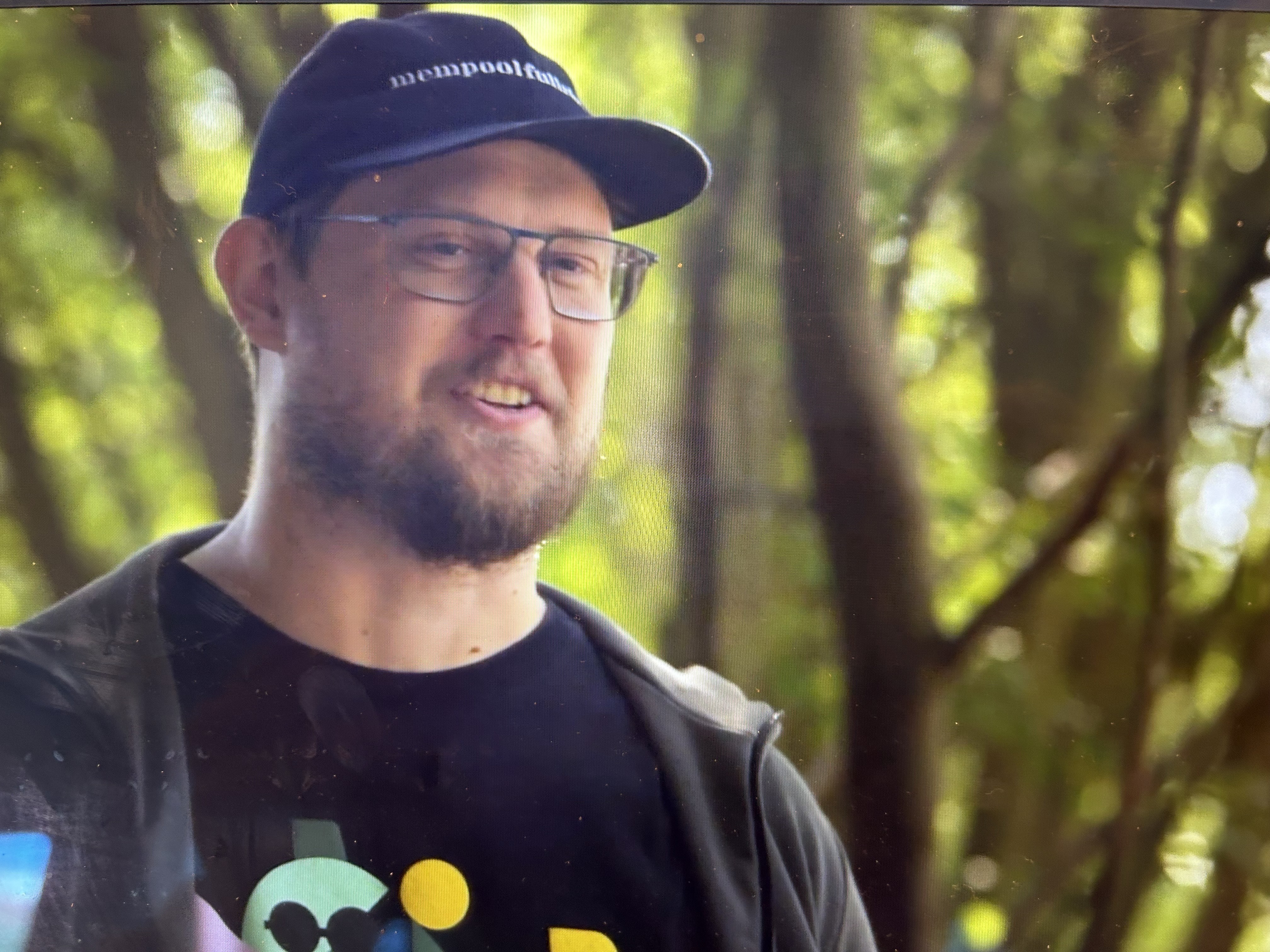
In the film’s climax, Hoback interviews Back and Todd in a broken down castle in the Czech Republic (why
they are there is unclear) and puts his theory to them directly. Todd never cleanly denies he is Satoshi
but instead equivocates and appears to engage in gently trolling the film maker.
Who is Satoshi?
Based on all this, Hoback and HBO have been hyping Money Electric as a blockbuster exposé that, after
all these years, unmasks Satoshi. Oops. They should have instead remembered the lesson of Newsweek and
the perils of confirmation bias—the all-too-common practice of interpreting new information to affirm
existing beliefs, and rejecting that which contradicts them.
There is, for now, no smoking gun that Peter Todd is not Satoshi (though one may emerge soon enough).
But it is notable that Todd’s name has never come up among crypto insiders as a likely candidate and it
is improbable that Hoback, a newcomer to the scene, would stumble on Bitcoin’s inventor so conveniently.
It’s also unlikely that someone barely out of high school who had yet to produce any publications of
note would have both penned a document as complex as the Bitcoin white paper, and possessed the
sophistication to implement what it set out. Finally, it stretches the imagination to think that
Satoshi—who fiercely shunned publicity—would choose to participate in an HBO film exploring who created
Bitcoin. When Todd tells Hoback in the film that “we are all Satoshi,” the film-maker should have simply
recognized this as a familiar refrain from Bitcoin devotees and left it there.
Hoback’s biggest mistake, though, is less his decision to zero in on Todd than to ignore a far more
compelling theory about Satoshi’s identity—one that also aligns with Occam’s Razor, the theorem that the
simplest explanation is typically the correct one.
The film began on the right track by highlighting the original cypherpunks and that’s where the search
for Satoshi should have stayed—and in particular on a man named Nick Szabo, who Hoback introduces as a
potential suspect, but then dismisses without a compelling reason. He ignores not only longtime whispers
within the Bitcoin community, but also a stack of compelling evidence.
This evidence includes the work of Nathaniel Popper, a former New York Times journalist and author of
Digital Gold, a close-up look at the early Bitcoin scene written much closer to the cryptocurrency’s
origin story. Popper’s reporting—including this 2015 article—points clearly in the direction of Szabo,
and is supplemented by an academic study that conducted a regression analysis that compared Satoshi’s
writing and those of potential Bitcoin inventors. The study found an uncanny match between Satoshi and
Szabo, who also uses U.K. spelling. If you favor circumstantial evidence, there’s also the fact that
Nick Szabo’s initials NS are the inverse of SN.
While Hobuck’s big reveal is ultimately a misfire, Money Electric is still very much worth watching. The
filmmaker does an admirable job telling the story of crypto—a phenomenon that exists almost entirely
online—with sophistication and passion, while making clever use of just enough graphics to convey
timelines and technical portions.
For crypto novices, Money Electric offers a compelling story that explains Bitcoin in a fair and
accurate fashion. For longtime crypto devotees, the documentary supplies plenty of familiar faces and a
sympathetic take on their culture—while also serving up yet another piece of lore that will be the
subject of memes for years to come.