Unmasking Bitcoin Creator Satoshi Nakamoto—Again
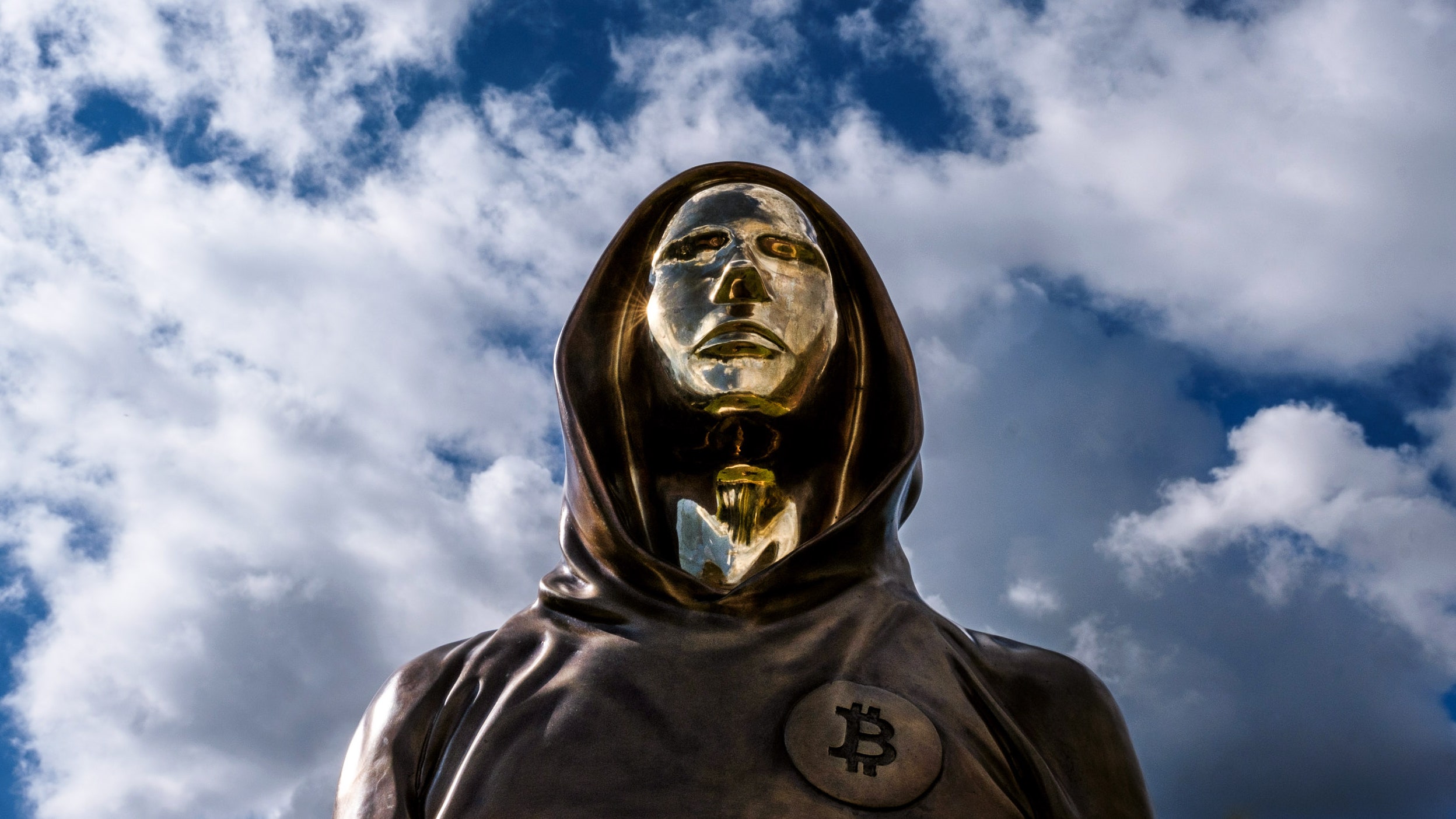
Peter Todd is standing on the upper floor of a dilapidated industrial building somewhere in Czechia,
chuckling under his breath. He has just been accused on camera of being Satoshi Nakamoto, the Bitcoin
creator, whose identity has remained a mystery for 15 years.
In the final scene of a new HBO documentary, Money Electric: The Bitcoin Mystery, documentarian Cullen
Hoback confronts Todd with the theory that he is Satoshi. In a previous work, Hoback unmasked the figure
behind QAnon. Here, he tries to repeat the trick with Bitcoin.
“I will admit, you’re pretty creative—you come up with some crazy theories,” Todd tells Hoback, before
rejecting the idea as “ludicrous.” “I warn you, this is going to be very funny when you put this into
the documentary.”
The film stops short of claiming to have conclusively unmasked the creator of Bitcoin, absent
incontrovertible proof. “For the record, I am not Satoshi,” Todd says in an email. “It is a useless
question, because Satoshi would simply deny it.”
The hunt for Bitcoin’s creator has yielded a broad cast of Satoshis over the years, among them Hal
Finney, recipient of the first ever bitcoin transaction; Adam Back, designer of a precursor technology
cited in the Bitcoin white paper; and cryptographer Nick Szabo, to name just a few. The finger is
pointed at some; others elect themselves. But though Satoshi has had many faces, a consensus has formed
around none of them.
“People have suspected basically everyone of being Satoshi,” Todd points out, early in the documentary.
“The problem with this kind of stuff is that people play all these crazy games.”
WIRED has its own place in the history of the hunt for Satoshi. On the same day in December 2015, WIRED
and Gizmodo separately nominated Australian computer scientist Craig Wright as a potential Satoshi. The
original story, based on a trove of leaked documents, proposed that Wright had “either invented Bitcoin
or is a brilliant hoaxer who very badly wants us to believe he did." A few days later, WIRED published a
second story, pointing to discrepancies in the evidence that supported the latter interpretation.
In March, a judge in the UK High Court ruled categorically that Wright is not Satoshi, closing a case
brought by a group of crypto firms to prevent the Australian from bringing nuisance legal claims.
During the two months I spent covering the Wright trial, multiple Satoshis appeared in my inbox, too.
“The world is not ready to learn about Satoshi Nakamoto, and they never will unless certain conditions
are met,” wrote one of them, in a garbled message.
Hell, I even met a would-be Satoshi in-person, in the waiting area outside the courtroom. The man, who
had introduced himself as Satoshi, sat down in the public gallery to hear closing arguments. Before
long, he nodded off, chin slumped against chest. One of the other onlookers anointed him “Sleeptoshi.”
Plenty of bitcoiners welcome this strange, crypto version of “I Am Spartacus,” preferring that the
identity of Bitcoin’s creator forever remain a mystery. Free from the overbearing influence of a
founder, Bitcoin has evolved under a system of unspoiled anarchy, they say, in which nobody’s opinion is
worth more than any other. Everyone is Satoshi, and nobody is Satoshi.
“Satoshi’s greatest gift to the world was Bitcoin,” Jameson Lopp, an early bitcoiner and founder of
crypto custody business Casa, told me earlier in the year. “His second greatest gift was to disappear.”
The main evidence supplied in the documentary to back up the theory that Todd created Bitcoin is a forum
thread from December 2010 in which Todd appears to be “finishing Satoshi’s sentences,” as Hoback puts
it. The topic of that thread—a way to prioritize transactions based on the fee paid—is something Todd
would later go on to build into Bitcoin as a contributing developer.
As corroborating evidence, Hoback points to similarities in the grammar and syntax used by Todd and
Satoshi, as well as the timing of Satoshi’s communications, many of which were composed during the
summer, when Todd would not have had college classes to attend. (Todd disputes the characterization of
his availability during the relevant summers.)
Todd is well known in crypto circles for his contributions to the Bitcoin codebase and vocal advocacy
for the technology as an alternative to cash—a supposedly surveillance-resistant tool for the digital
world. At a conference in 2023, I watched as Todd, participating in a panel, said “fuck you” to the
audience unless they exercised their right to make cash purchases that cannot be monitored by government
or bank. Todd has conceded to having previously tried to develop a technology similar to Bitcoin, before
Satoshi beat him to it.
In their 2008 white paper, released in the shadow of a global financial meltdown, Satoshi sketched a
vision for a new electronic cash and peer-to-peer payment system that would cut out money-grubbing
financial intermediaries. In January 2009, they sent the first bitcoin transaction. A little more than
two years later, they vanished from public view, leaving behind a pot of bitcoin—now worth billions—that
has been undisturbed ever since.
Those inclined to continue the hunt, like Hoback, point to the immense influence Satoshi would have
should they ever return, such is the size of their dormant bitcoin stash. This is an asset that now
forms part of 401ks, after all. The most hardcore believers even think it will displace the US dollar as
the predominant global currency.
For all the urgency and seriousness with which he now refutes the claim, Todd himself plays Satoshi
doublespeak, telling the camera with a straight face that he is Satoshi, then lapsing into a wry grin.
“By the way, everyone is Satoshi,” says Todd, in one instance. Another bitcoiner in the film describes
Todd as “the contrarian of contrarians.”
But whether or not he is the real Satoshi, Todd shares the view that some secrets are better kept and
some questions better unasked. To expose Satoshi, he says, would be to open them up to personal safety
risks. Imagine the attention Satoshi might receive from violent extortionists, with his
multibillion-dollar trove of bitcoin.
“Satoshi obviously didn't want to be found, for good reasons. No one should help people trying to find
Satoshi,” wrote Todd, in his email to the press. “Making fun of the question itself is just good
manners.”