A crypto king is now the prime minister of a tiny country
In both politics and crypto, one rule stands: Expect the unexpected. So what do you get when they join
forces? A chaotic cocktail where votes and virtual coins fly faster than you can say “blockchain
government.”
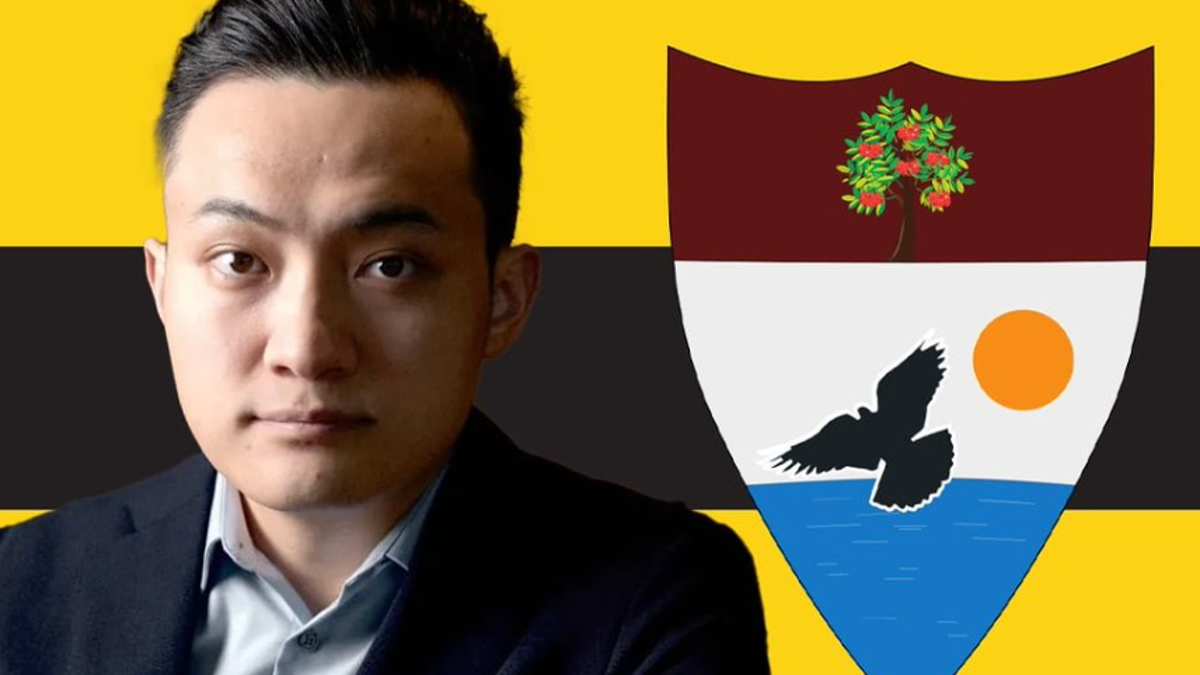
In a recent blockchain-based election, the micronation of Liberland in Eastern Europe has chosen crypto
entrepreneur Justin Sun as the Speaker of its Congress. Following this, Liberland’s President Vít
Jedlička nominated Sun to serve as acting Prime Minister. Sun, a well-known figure in the cryptocurrency
world and founder of the Tron blockchain network, now holds two key positions in this self-proclaimed
libertarian state.
Under the leadership of Liberland President Vít Jedlička, several prominent figures have been elected to
the Liberland Congress. Among them are Indian tech entrepreneur Evan Luthra, journalist Jillian Godsil,
Dorian Jakov Stern Vukotic (the first to enter Liberland in 2023 and tech lead of the Liberland
blockchain team), Bitcoin advocate Navid Saberin, and law graduate Michal Ptáčník.
Justin Sun is a controversial figure
The Chinese entrepreneur has gained notoriety for his outspoken nature and involvement in various
controversies. The U.S. Securities and Exchange Commission (SEC) filed a lawsuit against Sun and his
companies for alleged securities fraud, claiming they manipulated the price of Tron’s tokens and
conspired to distribute billions of crypto assets while artificially inflating trade volumes to attract
investors.
However, Liberland President Vít Jedlička maintains that Sun’s blockchain expertise aligns with the
nation’s mission to harness decentralized technology.
What is the history of Liberland?
Liberland is a self-proclaimed libertarian micronation founded in 2015 by former Czech politician Vít
Jedlička, who serves as its President. Situated on the western bank of the Danube River between Croatia
and Serbia, Liberland covers just 7 square kilometers (2.7 square miles)—a mere speck compared to New
York City, which is 112 times larger.
This territory emerged as a disputed area after the breakup of Yugoslavia and is not claimed by either
Croatia or Serbia. Organized around libertarian principles, Liberland boasts no mandatory military
service and no taxes. However, the country remains unrecognized by the United Nations, raising questions
about its legitimacy.