Crypto Banks Under Fire? Regulatory Crackdowns And Opportunities
Share to Facebook
Share to Twitter
Share to Linkedin
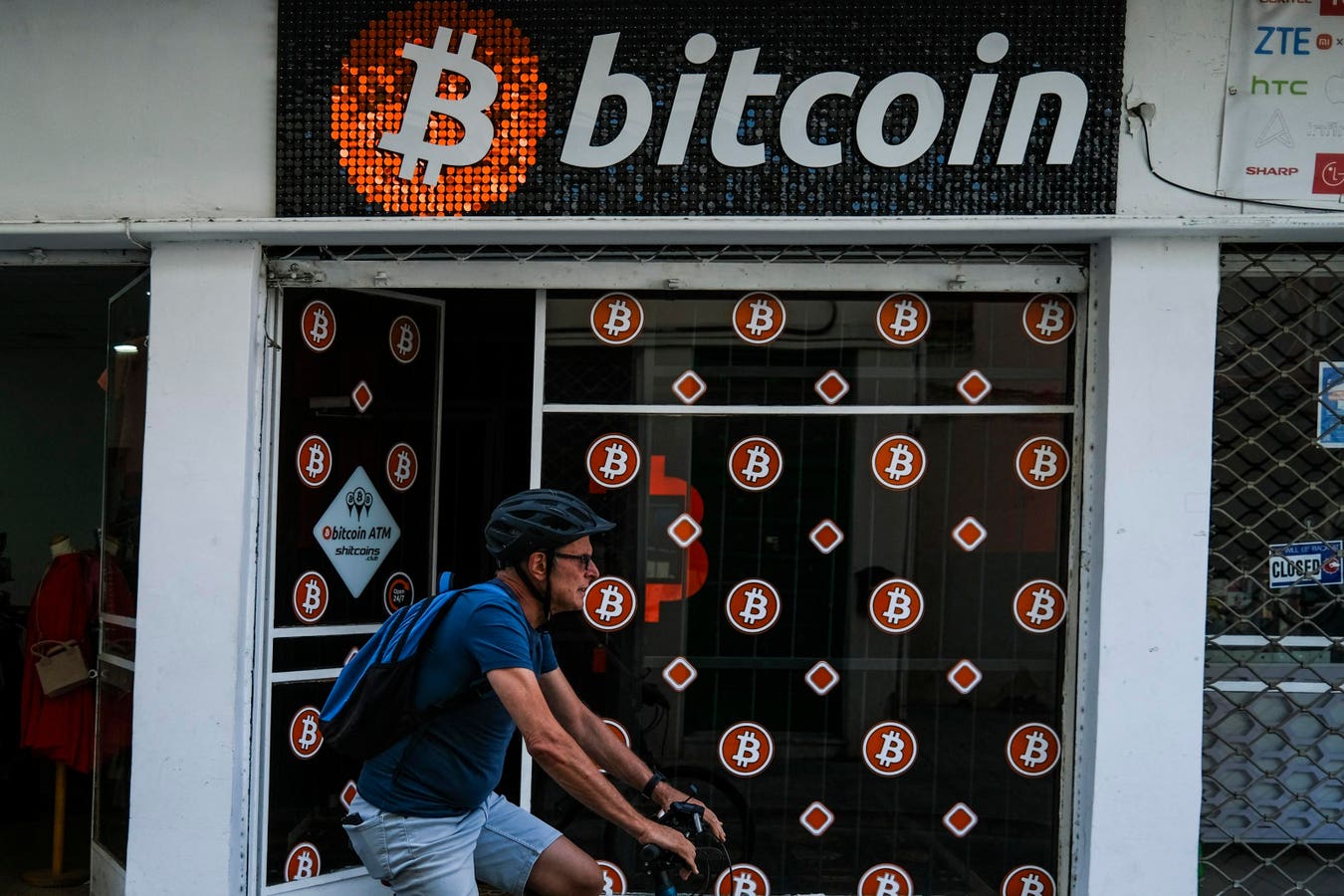
A man rides a bicycle past a store advertising Bitcoin ATMs in Nicosia on September 25, 2024. (Photo ...
[+] by Jewel SAMAD / AFP) (Photo by JEWEL SAMAD/AFP via Getty Images)
AFP via Getty Images
Two years after FTX's implosion, financial regulators are still closely scrutinizing the cryptocurrency
industry. In the United States, several targeted enforcement actions have been levied against crypto
banks and companies, signaling an increased focus on compliance and risk management in the sector.
Following the collapse of Signature Bank and Silvergate, Pennsylvania-based Customers Bank has emerged
as a key player in the crypto banking space, onboarding clients like Kraken and absorbing approximately
$2 billion in deposits from crypto clients. A major draw for Customers Bank was its real-time payments
system licensed from TassatPay, the same technology that had powered Signature Bank’s Signet. However,
Customers Bank found itself under federal scrutiny, receiving an enforcement action from the Federal
Reserve on August 5, 2024. The action cited “significant deficiencies” in the bank’s risk management
practices and its compliance with anti-money laundering (AML) regulations, particularly in relation to
its digital asset services.
Similarly, Dallas-based United Texas Bank faced regulatory action for its crypto-related activities. On
August 28, 2024, the bank was cited for “deficiencies” in its AML compliance and risk management
practices, particularly related to virtual currency customers and foreign correspondent banking. United
Texas Bank, which services a number of crypto clients, is also a correspondent bank for Bank Frick, a
Liechtenstein-based institution specializing in cryptocurrency services. These enforcement actions
reflect the growing concerns regulators have about crypto banks' ability to manage the unique AML risks
posed by digital assets.
At the same time, a multi-billion-dollar fine was issued to TD Bank for failing to meet AML standards.
TD Bank did not automatically monitor a substantial portion of its transactions, leaving 92% of its
total transaction volume unchecked between January 1, 2018, and April 12, 2024. This failure allowed
“trillions of dollars in transactions annually to go unmonitored for potentially suspicious activity.”
While TD Bank’s deficiencies were not exclusively tied to crypto transactions, the enforcement action
did mention a “Customer Group C,” which reportedly laundered funds from a UK-based cryptocurrency
exchange to a Colombian financial entity.
Across the Atlantic, regulatory scrutiny of the crypto sector is intensifying as well. In the UK, crypto
payments firm BCB was subject to an S166 investigation this year by the Financial Conduct Authority
(FCA), an indication that regulators are paying closer attention to how crypto firms manage risk. BCB is
known to provide banking services to some of the largest institutions in the digital asset sector,
including Bitstamp, Crypto.com, Gemini, and Kraken. In the EU, there are growing concerns over the
compliance of stablecoins, with reports suggesting that Coinbase may soon delist USDT
, the third-largest cryptocurrency, due to non-compliance with the EU's Markets in Crypto Assets (MiCA)
regulation.
MORE FOR YOU
‘This Needs To Stop’—Tesla Billionaire Elon Musk Issues ‘Staggering’ Fed ‘Bankruptcy’ Warning After
Sparking Bitcoin Price Panic
Microsoft Windows Deadline—10 Days To Update Or Stop Using Your PC
What To Know About Liam Payne’s Death: Zayn Malik Postpones Shows, Cowell And Cole React
Critics of these enforcement actions argue that regulators are applying a double standard when it comes
to crypto companies. Nic Carter, a well-known voice in the cryptocurrency space, has been particularly
vocal about what he calls "Operation Chokepoint 2.0," claiming that crypto companies in the US are being
unfairly targeted by politically motivated regulatory measures. Others have pointed to the disparity in
the treatment of Binance and TD Bank. While Binance’s CEO, Changpeng Zhao (CZ), remains in prison amid
allegations of AML failures, none of TD Bank’s top executives have faced similar consequences, despite
the bank's significant failings in monitoring its transaction volumes.
However, it’s not all doom and gloom for crypto firms. In Europe, there are signs of regulatory clarity
and progress for companies that are adapting to the changing landscape. Switzerland-based Sygnum Bank, a
digital assets specialist, recently registered with Liechtenstein’s regulators as it prepares for an
expansion into the EU. Likewise, Portugal’s Bison Bank has launched Bison Digital, a subsidiary designed
to offer regulated services to the growing digital assets industry in Europe. These developments signal
that the regulators are not unanimous in their crackdown on the industry.
The past two years have seen a sharp increase in regulatory oversight of the cryptocurrency industry,
with a particular focus on banks and institutions that service digital assets. Enforcement actions
against banks like Customers Bank and United Texas Bank in the U.S. reveal how seriously regulators are
taking the crypto sector. Meanwhile, the scrutiny of firms like BCB in the UK and the potential
delisting of USDT in the EU further underline the global nature of this regulatory shift.
Despite the heightened scrutiny, the outlook for crypto banking is not entirely bleak. While companies
in the US are facing enforcement actions, those that embrace compliance abroad are finding opportunities
to expand. As banks like Sygnum and Bison Digital demonstrate, there is still room for growth in this
rapidly evolving industry. The road ahead will undoubtedly be challenging for crypto banks, but the
potential for innovation and expansion remains strong for those able to adapt to the new regulatory
reality.
Follow me on Twitter or LinkedIn. Check out my website.
Boaz Sobrado
Editorial Standards
Forbes Accolades