Ant CEO Eric Jing touts tokenisation benefits for cross-border transactions at
FinTech Week
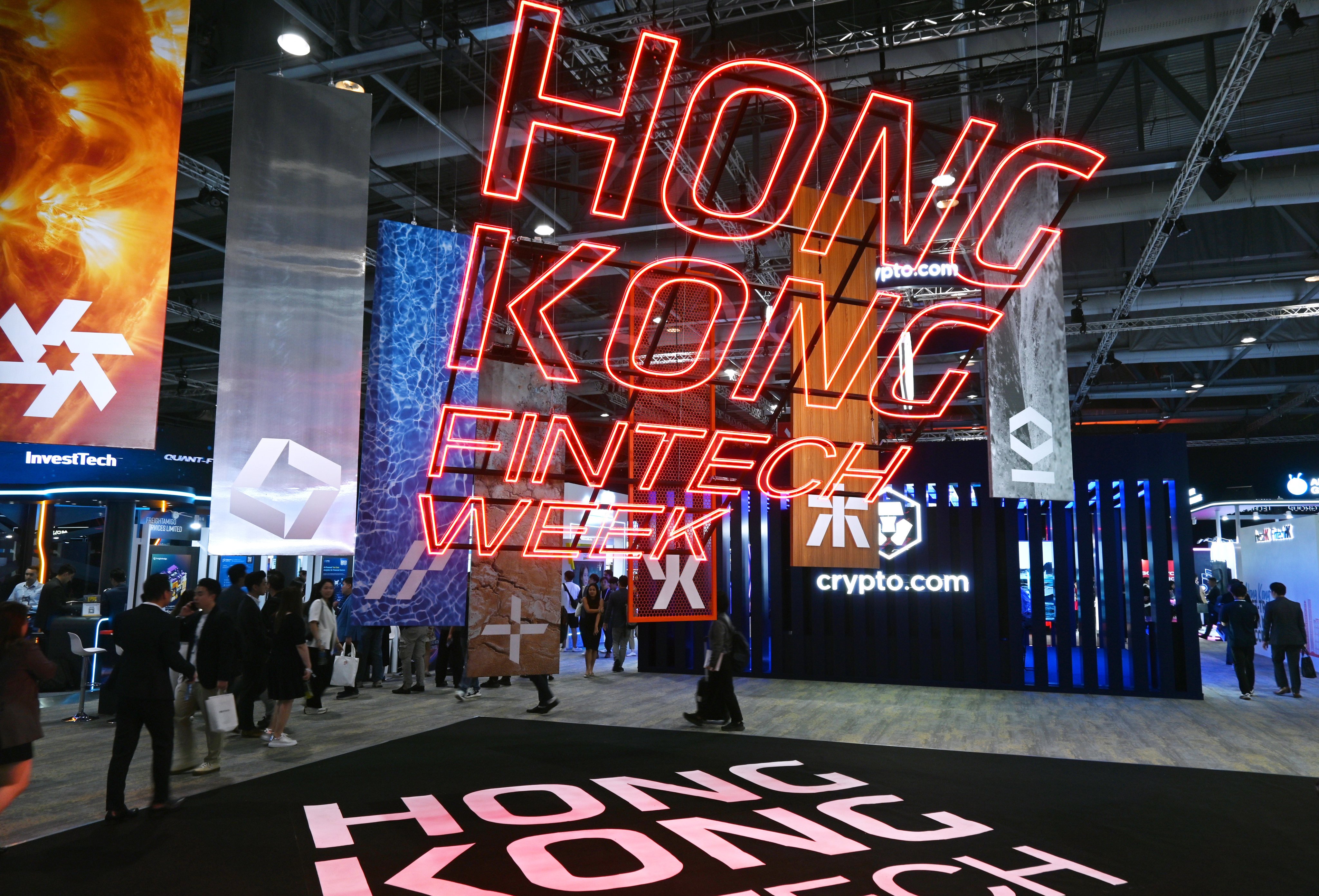
Tokenisation could drive real-time cross-border payments, Ant Group CEO Eric Jing Xiandong told an
audience at Hong Kong FinTech Week on Monday, a topic he elaborated on while extolling the progress that
Alipay has made in the city.
“With tokenised deposits, that’s a really, really, really huge value for cross-border payments,” Jing
said in a panel discussion with Howard Lee, deputy chief executive of the Hong Kong Monetary Authority.
“If we can really solve … cross-bank, cross-currency [issues], then we are really moving to real-time
settlement on a global scale.”
Tokenisation was one of two major themes at FinTech Week, along with artificial intelligence (AI), which
Jing noted would also be transformative in the financial sector in the form of greater personalisation.
Tokenised deposits improve efficiency by eliminating middlemen, operating 24/7, and being programmable
for automated execution when conditions are met, according to Jing.
Thematically, the focus on tokenisation builds on a shift in focus for FinTech Week that started last
year, as momentum in the cryptocurrency space slowed. Hong Kong Monetary Authority Chief Executive Eddie
Yue Wai-man noted the difference between tokenisation and cryptoassets in his opening remarks, calling
the latter “more speculative” and in need of “guardrails to protect investors”. Tokenisation records the
value of other assets on a programmable ledger, he explained.
“Tokenisation has the potential to create hyperconnectivity between users, data and services that are
essential to driving economic progress,” Yue said.
For Jing, tokenisation could be another critical component of cross-border transactions, something that
has become increasingly important for Ant Group, the operator of Alipay, one of China’s top two mobile
payment apps. Ant is the fintech affiliate of Alibaba Group Holding, owner of the South China Morning
Post.
Alipay has been making inroads in Hong Kong through a concerted effort to make mobile payments through
the mainland service more common. AlipayHK now covers 90 per cent of merchants and has 4.2 million
users, Jing said, covering more than half of Hong Kong’s population and up by nearly 1 million users
from two years ago. He also noted Alipay’s integration with 14 other mobile wallet platforms from nine
countries.
“We’re always thinking [about] what we can do [to] work with other partners, making sure other
cross-border travellers’ lives can be much easier, making their cross-border experience a local one,”
Jing said.
Alipay’s main rival, Tencent Holdings’ WeChat Pay, has also seen a rapid increase in cross-border
payments. Forest Lin, head of Tencent Financial Technology, said during a separate panel that WeChat Pay
has seen a fourfold increase in inbound payments over the past year as China receives more visitors
after the pandemic.
Making mobile payments easier for foreign visitors has become a priority for the Chinese government as
it seeks to spur more tourism.
While much of the tech industry’s attention has shifted to AI in the two years since Hong Kong announced
a policy shift meant to promote the growth of the crypto industry, the government has continued to
promote Web3 in other areas. Tokenisation is central to that focus, along with stablecoins, or
cryptocurrencies pegged to a fiat currency, for which a new regulation from the HKMA is due out this
year.
OSL executive director Gary Tiu said he sees the shifting Web3 landscape in Hong Kong as a result of
maturation.
“We narrowed the gap between Web3 and [traditional finance] by a huge margin,” he told the Post on the
sidelines of the event. “We want to use that infrastructure … to bring more diversity to our products
and services.”
OSL announced two new tokenised funds during FinTech Week – one in collaboration with ChinaAMC, its
first tokenised fund, and another with Franklin Templeton, which has offered a similar product in the
US. It is part of the HKMA’s Project Ensemble, which is trialling use cases for tokenisation and a
central bank digital currency.
Tiu said the tokenised funds were indicative of innovations in the space that could have a
transformative effect on the finance industry, drawing a contrast with earlier tokenisation efforts.
“Real estate by its very nature is highly illiquid. Putting it onto a blockchain isn’t going to make it
more liquid,” he said. “But money market funds actually are highly liquid. So by putting something which
is already highly liquid into an environment where you can optimise around the operational cycle, then
there might be some benefits.”