Ubisoft Finally Launches Its NFT Game, Hoping to Capitalize on the Crypto Grift
Ubisoft hasn’t yet left its hopes for the inevitable NFT comeback at the door like many other major
publishers have these last few years. The publisher’s long-awaited figurine battler Champions Tactics
Grimoria Chronicles went live last week, and already the game is asking those with deep pockets to drop
hundreds or even thousands on digital figurines to battle with players online. The NFTs you can buy with
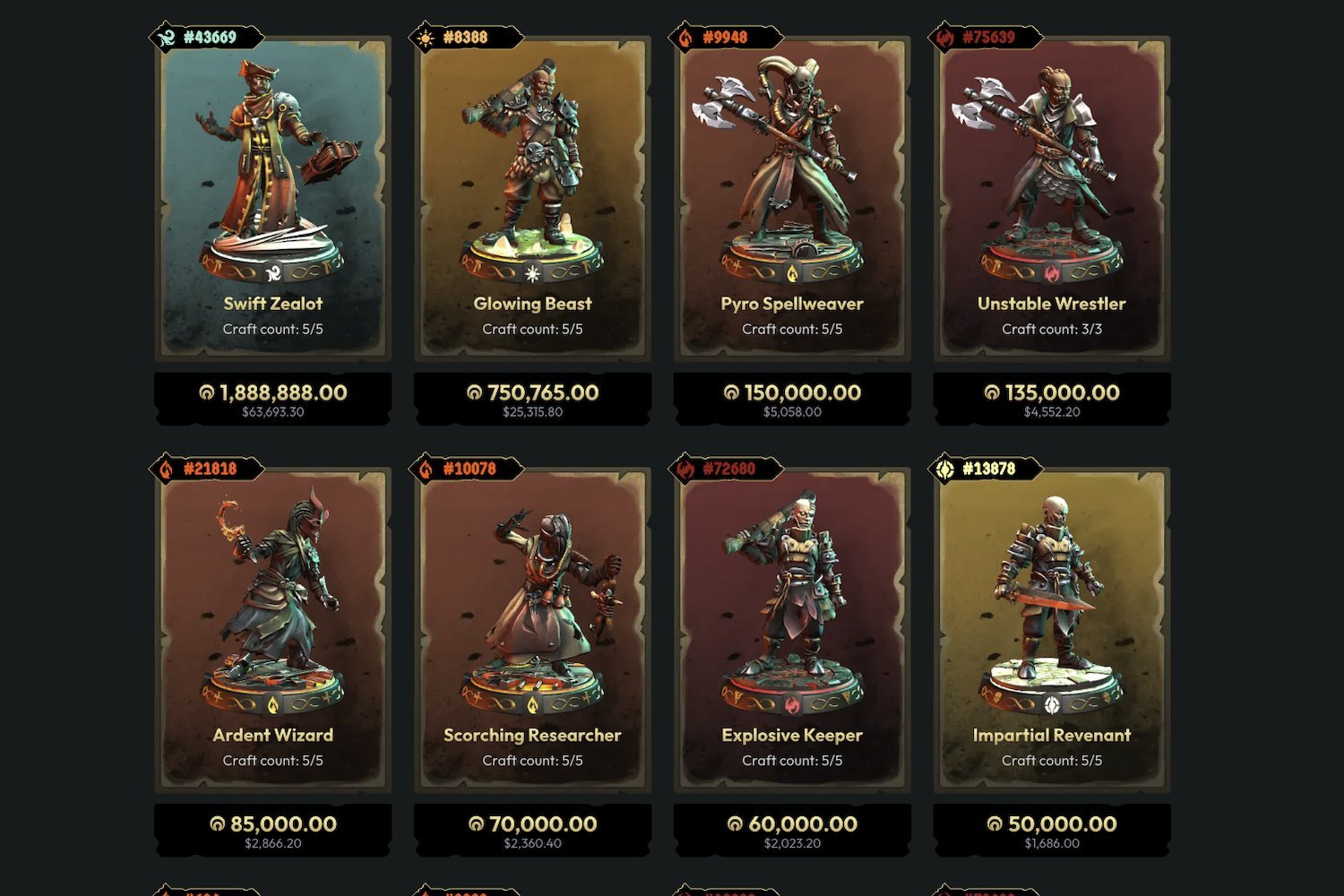
in-game currency or crypto are selling for between $55 and an incredible $63,863.
Ubisoft first announced Grimoria Chronicles last year, and the game went through a closed beta over the
summer of 2024. Though the game technically launched on Oct. 23, Ubisoft made no peep about the game on
any of its main social media accounts (although the developer has been promoting it on its own Twitter),
and you won’t find it featured on its website alongside major releases like Star Wars: Outlaws and
Assassins Creed Shadows.
The game is a turn-based battler where players have the chance to mint NFTs of figurines, all with a
standard slate of stats and classic roles like “Tank” or “Damage.” You set up to three figures against
an opponent’s slate. Then, each of you performs the classic dance of kicking each other’s shins until
one of you falls down. Your figures gain experience and loot for every battle, and then you rinse and
repeat. It’s like a rudimentary, PVP version of Darkest Dungeon, but with more nickel and diming.
Users are granted a few starter figures, but the game incentivizes you to buy, buy, buy. Want new
figures? You’ll need to buy them off other players or “Forge” them, which also costs crypto. In every
way, this is yet another web3 game in the vein of the now-maligned “play to earn” game Axie Infinity.
It’s running on the Oasys blockchain. Worse still, you need to sign into a Ubisoft account to access the
game at all.
As evidenced by live gameplay, there are critical hits and other RNGs for damage. Still, Ubisoft claims
on its webpage the game isn’t based on luck but skill. You need to “pick the best champions to counter
your opponent’s lineup” and “master the ever-changing meta.” However, the game’s NFT marketplace is
absolutely subsumed with cheap figures with low stats and few abilities. The difference between a $7 and
a $150 champion can be between a few points in stats like “Vitality” or a higher initiative. By that
token, the fabled $64,000 “Swift Zealot” figure doesn’t seem anywhere near worth the money, even if all
you cared about in this world was winning more matches in the game’s dull-looking, back-and-forth
battles.
In a statement, Ubisoft Paris studio director Francois Bodson told IGN that it worked with Ubisoft’s
Strategic Innovation lab to ensure the blockchain “was done in service of delivering new and innovative
gaming experiences for our players.” He related his game to a “physical trading card game” and said the
team plans to keep up work on the title after launch.
Each figure is procedurally generated from a host of pre-made assets, which guarantees none are truly
that unique or have any real personality. It feels like a cash grab meant to incentivize players to
grind long hours in anonymity or buy in for hundreds or thousands of dollars in the vain hope of cashing
out later. It’s a sick, twisted vision of gaming that players have long since rejected.
Ubisoft is the only studio that hasn’t got the memo on that front. Last year, Sega’s co-COO Shuji Utsumi
said the company was no longer totally sold on the whole NFT thing. Meanwhile, Mojang and Valve have
summarily rejected crypto. The few remaining crypto games that are still in development include Ready
Player One’s author Ernest Cline and his “metaverse” title, which is based on his geek-culture obsessed
universe.
Ubisoft has been on the NFT train for the past three years, but it hasn’t met with much success on that
front. The publisher was widely condemned for attempting to shove NFTs into Ghost Recon: Breakpoint in
2021. Ubisoft’s plan to sell numbered helmets, pants, and guns reportedly netted the company just a few
hundred dollars through its Quartz platform. Ubisoft halted its plans for more Quartz items in Wildlands
and Ghost Recon: Breakpoint in 2022.
Ubisoft is trying to have its cake and eat it, too. It hopes nobody notices the new crypto game, knowing
how the gaming community has largely rejected digital currency. It’s hoping that crypto might make a
comeback or that enough people will buy-in on the backend. Crypto in gaming is nothing more than a more
effective monetization scheme than microtransactions. Ubisoft’s head of subscriptions, Philippe
Tremblay, said earlier this year players would eventually get “comfortable” not owning their games. If
anything is clear, buying a “one of a kind” digital figurine doesn’t supply you with any more ownership
than before.