How To Mine Dogecoin
Share to Facebook
Share to Twitter
Share to Linkedin
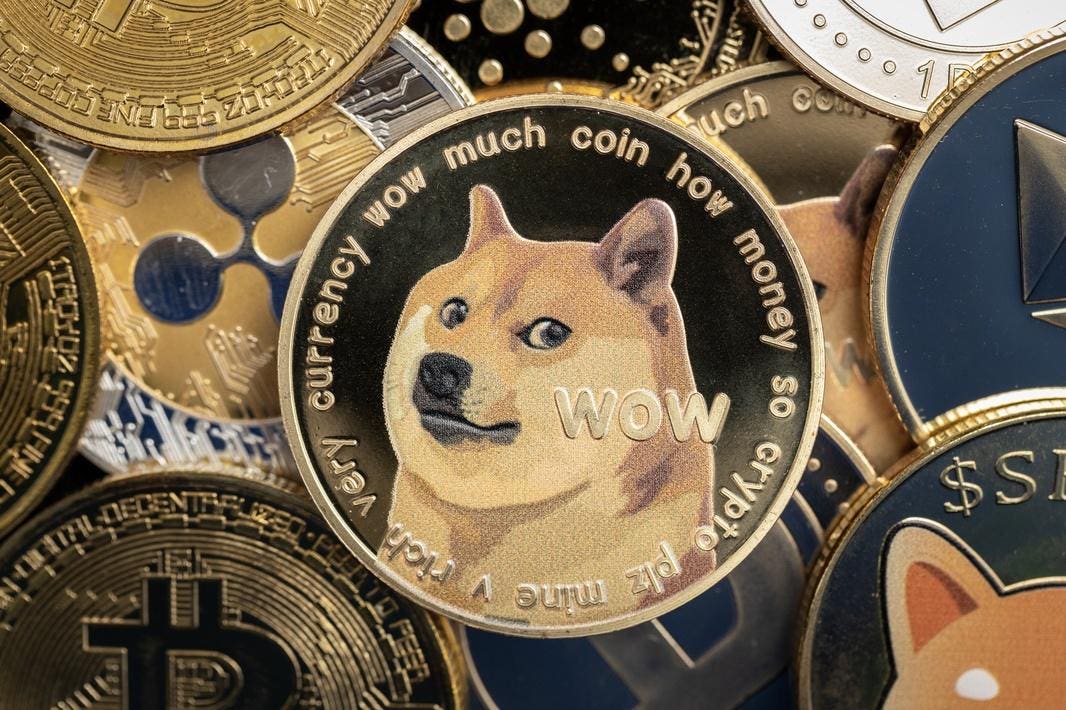
Dogecoin cryptocurrency coin close-up, on top of other cryptocurrency coins
TABLE OF CONTENTS
What Is Dogecoin Mining
How Does Dogecoin Mining Work?
Dogecoin Mining Vs. Bitcoin Mining
How To Mine Dogecoin
Dogecoin Mining Pools Explained
Calculating Dogecoin Mining Profitability
Risks And Challenges Of Dogecoin Mining
Bottom Line
Frequently Asked Questions (FAQs)
Mining dogecoin turns computer power into DOGE rewards through blockchain transaction processing.
Specialized hardware solves complex equations to validate network operations, with miners receiving
10,000 DOGE per solved block. A profitable mining operation combines the right hardware, proper setup
and smart strategy selection. This article details mining requirements, pool mechanics, equipment
specifications and market factors affecting daily mining revenue.
What Is Dogecoin Mining
Dogecoin mining is a process where computers solve complex mathematical problems to verify and add new
transactions to the Dogecoin blockchain. When miners successfully solve these puzzles, they receive
newly created DOGE tokens as rewards. This system, known as Proof of Work, maintains the network's
security and processes transactions without intermediaries like banks.
Miners essentially act as auditors and transaction processors for the Dogecoin network. They bundle
pending transactions into blocks, verify their authenticity and compete to find a specific number
(nonce) that will make the block valid. The first miner to find this solution broadcasts the block to
the network, adds it to the blockchain and collects the block reward plus transaction fees. Currently,
miners receive 10,000 DOGE per block, with new blocks generated approximately every minute.
The mining process requires specialized computer hardware called Application-Specific Integrated
Circuits or Graphics Processing Units, along with mining software and a stable internet connection.
While dogecoin originally allowed CPU mining on regular computers, the network's growing difficulty now
makes dedicated mining equipment necessary for profitable operations.
How Does Dogecoin Mining Work?
Dogecoin mining uses the Scrypt algorithm, which differs from Bitcoin's SHA-256. The process starts when
a miner's computer receives pending transactions from the network and combines them into a block. The
miner's hardware then repeatedly attempts different nonce values, aiming to create a block hash that
meets the network's current difficulty target.
MORE FOR YOU
FBI Warns Gmail, Outlook, AOL, Yahoo Users—Hackers Gain Access To Accounts
Samsung’s Update Decision—Bad News For Millions Of Galaxy S24 And S23 Owners
Trump Vs. Harris 2024 Polls: Harris Leads In 2 Surveys, Tie In 1 Other—As Race Tightens
The Scrypt algorithm makes intensive use of computer memory, which affects hardware choices and energy
consumption. When a miner finds a valid solution, they broadcast the new block to other network
participants for verification. If the block passes validation, it joins the blockchain, and the miner
receives 10,000 DOGE plus transaction fees. The network automatically adjusts mining difficulty every
240 blocks to maintain a consistent one-minute block time.
Miners can work solo or join mining pools to share resources and rewards. In pools, participants combine
their computing power to find blocks faster, splitting rewards based on their contributed hashpower. The
pool operator manages work distribution and reward payments, taking a small fee for these services. This
cooperative approach provides more steady income compared to solo mining's all-or-nothing results.
Dogecoin Mining Vs. Bitcoin Mining
The main difference between dogecoin and bitcoin mining lies in their algorithms. Dogecoin uses Scrypt,
which needs more memory but less processing power than Bitcoin's SHA-256. This algorithmic difference
means Bitcoin ASICs can't mine dogecoin, creating separate hardware markets and mining communities.
Scrypt's memory requirements also make dogecoin mining more accessible to GPU miners.
Block times and rewards separate these cryptocurrencies further. Dogecoin creates new blocks every
minute with a fixed reward of 10,000 DOGE, while Bitcoin produces blocks every 10 minutes with rewards
that halve every four years. Bitcoin's limited supply of 21 million coins contrasts with dogecoin's
unlimited supply. These economics affect long-term mining profitability and network security dynamics.
Mining difficulty adjustments follow different patterns too. Dogecoin recalculates difficulty every 240
blocks (about 4 hours) to maintain consistent block times. Bitcoin adjusts every 2,016 blocks (roughly
two weeks). The shorter adjustment period helps Dogecoin respond faster to hashrate changes, but can
also lead to more volatile mining profitability.
How To Mine Dogecoin
The process involves five key steps: setting up a wallet, selecting hardware, choosing a mining
strategy, installing software and collecting rewards. Each step needs careful consideration to build an
efficient and profitable mining operation.
1. Set Up A Crypto Wallet
Before mining, you need a secure wallet to store your dogecoin rewards. Hot wallets like Trust Wallet or
the official Dogecoin Core wallet connect to the internet for easy access and quick transactions. They
work well for active trading but face online security risks.
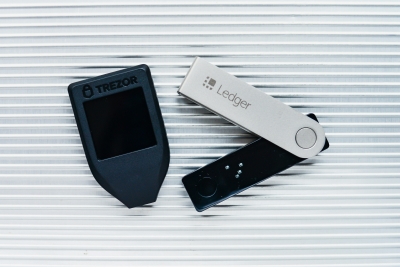
Cold wallets like Ledger or Trezor store your private keys offline, offering maximum security for
long-term holdings. These hardware devices protect your DOGE from online threats but make frequent
transactions less convenient.
2. Choose Your Mining Hardware
Modern dogecoin mining demands powerful ASIC miners or GPU setups. Top ASIC options include the Bitmain
Antminer L7 (9.16 Gh/s) and Goldshell Mini DOGE (185 Mh/s). For GPU mining, cards like the NVIDIA RTX
3080 or AMD RX 6800 XT deliver strong performance. Your setup needs proper cooling (fans, air
conditioning), stable internet and reliable power supply with surge protection.
3. Choose Your Mining Strategy
Your mining strategy affects profitability, risk and technical requirements. Each approach offers
distinct advantages based on your goals and resources.
Cloud Mining: Rent mining power requires minimal technical knowledge but includes hosting fees and trust
in third-party operators
Pool Mining: Join groups to combine resources and share rewards. Offers steady income and lower hardware
requirements but includes pool fees
Solo Mining: Run independent operations for full block rewards. Needs substantial computing power and
technical expertise but eliminates pool fees
4. Set Up Your Mining Software
Popular mining software options include CGMiner, EasyMiner and MultiMiner. These programs connect your
hardware to the Dogecoin network and mining pools. CGMiner leads in flexibility and features while
EasyMiner offers a simpler interface for beginners. The software needs proper configuration of pool
settings, worker details and optimization parameters for maximum efficiency.
5. Collect Your Rewards
Mining rewards arrive differently based on your strategy. Pool mining pays small, regular amounts to
your wallet address as you contribute work. Most pools offer automatic payments when you reach minimum
thresholds, typically 50-100 DOGE. Solo miners receive full block rewards (10,000 DOGE) but less
frequently. Monitor your earnings through pool dashboards or blockchain explorers to track performance.
Dogecoin Mining Pools Explained
Mining pools unite individual miners who share their computing power to find blocks faster. When any
pool member discovers a valid block, the 10,000 DOGE reward splits among participants based on their
contributed hashrate.
Joining a pool starts with creating an account on the pool's website and setting up worker credentials.
These credentials go into your mining software configuration to link your hardware with the pool. Most
pools use either Pay-Per-Share or Pay-Per-Last-N-Shares payment systems. PPS offers fixed payments for
each valid share submitted, while PPLNS rewards miners based on their recent contribution history.
Pools charge fees between 1% and 3% of earnings for their services. They provide real-time monitoring
dashboards, detailed statistics and automatic payments. Look for pools with servers close to your
location to minimize network latency and rejected shares.
Calculating Dogecoin Mining Profitability
Mining profitability depends on five main factors: hardware costs, electricity rates, mining difficulty,
DOGE price and pool fees. Current ASIC miners like the Antminer L7 cost $10,000-20,000 but deliver
higher hashrates than GPU setups. Electricity costs vary by location, ranging from $0.04 to $0.20 per
kilowatt-hour, which significantly impacts operational expenses.
Online mining calculators help estimate potential returns based on these variables. Input your
hardware's hashrate, power consumption and local electricity cost to estimate daily profits. Remember to
factor in hardware depreciation, cooling costs and maintenance expenses. Most calculators update
automatically with current network difficulty and market prices.
Mining becomes profitable when revenue exceeds total costs. At $0.10/kWh electricity cost, an Antminer
L7 mining dogecoin and litecoin through merged mining might generate $20-30 daily profit at current
prices. However, profitability fluctuates with market conditions and network difficulty changes.
Risks And Challenges Of Dogecoin Mining
Mining dogecoin comes with several technical and financial risks. Hardware failures can occur from
continuous operation, especially in high-temperature environments. Equipment repairs and replacements
create unexpected costs and downtime. Market volatility affects mining profits directly - sudden price
drops can turn profitable operations into money-losing ventures. Network difficulty adjustments every
240 blocks mean your mining rewards can decrease as more miners join the network.
Operational challenges include managing electricity costs, maintaining stable internet connectivity and
keeping up with software updates. Mining equipment generates significant heat and noise, requiring
proper ventilation and soundproofing. The rapid pace of hardware development can make equipment obsolete
within 1-2 years, forcing miners to upgrade to stay competitive.
Bottom Line
Dogecoin mining offers a way to earn DOGE through computing power and electricity investment. Success
requires careful hardware selection, strategic choices about mining pools versus solo operations and
constant attention to operational costs. The process needs technical knowledge, proper equipment
maintenance and awareness of market conditions.
Mining profitability changes with DOGE price fluctuations, electricity costs and network difficulty.
Before starting, calculate your potential returns using current market data and prepare for ongoing
adjustments to your mining strategy. Consider joining a mining pool for steady returns, especially when
beginning your mining journey.
Frequently Asked Questions (FAQs)
Can I Mine Dogecoin On My Laptop?
Mining dogecoin on a laptop isn’t practical or profitable. Modern laptops lack the computing power to
compete with specialized mining hardware, and continuous mining operations could damage your system from
overheating.
How Much Can I Earn From Dogecoin Mining?
Mining earnings vary based on your hardware's hashrate, electricity costs and market conditions. A
modern ASIC miner can earn $20-30 daily at current prices and difficulty levels, but profits change with
market fluctuations and network competition.
Is Dogecoin Mining Legal?
Dogecoin mining is legal in most countries, including the United States, Canada and most European
nations. However, some countries like China and Algeria have banned cryptocurrency mining, so check your
local regulations.
What’s The Best Hardware For Mining Dogecoin?
ASIC miners designed for Scrypt algorithm provide the best mining performance and efficiency. GPU mining
remains possible but delivers lower returns compared to ASICs due to hashrate and power consumption
differences.
Do I Need A Special Wallet To Store Mined Dogecoin?
Any dogecoin-compatible wallet works for storing mined coins. You can choose between software wallets
for active trading or hardware wallets for enhanced security of larger holdings.
Follow me on Twitter or LinkedIn. Check out my website.
Andrey Sergeenkov
Editorial Standards
Forbes Accolades