US election: Where do presidential candidates Trump and Harris stand on crypto?
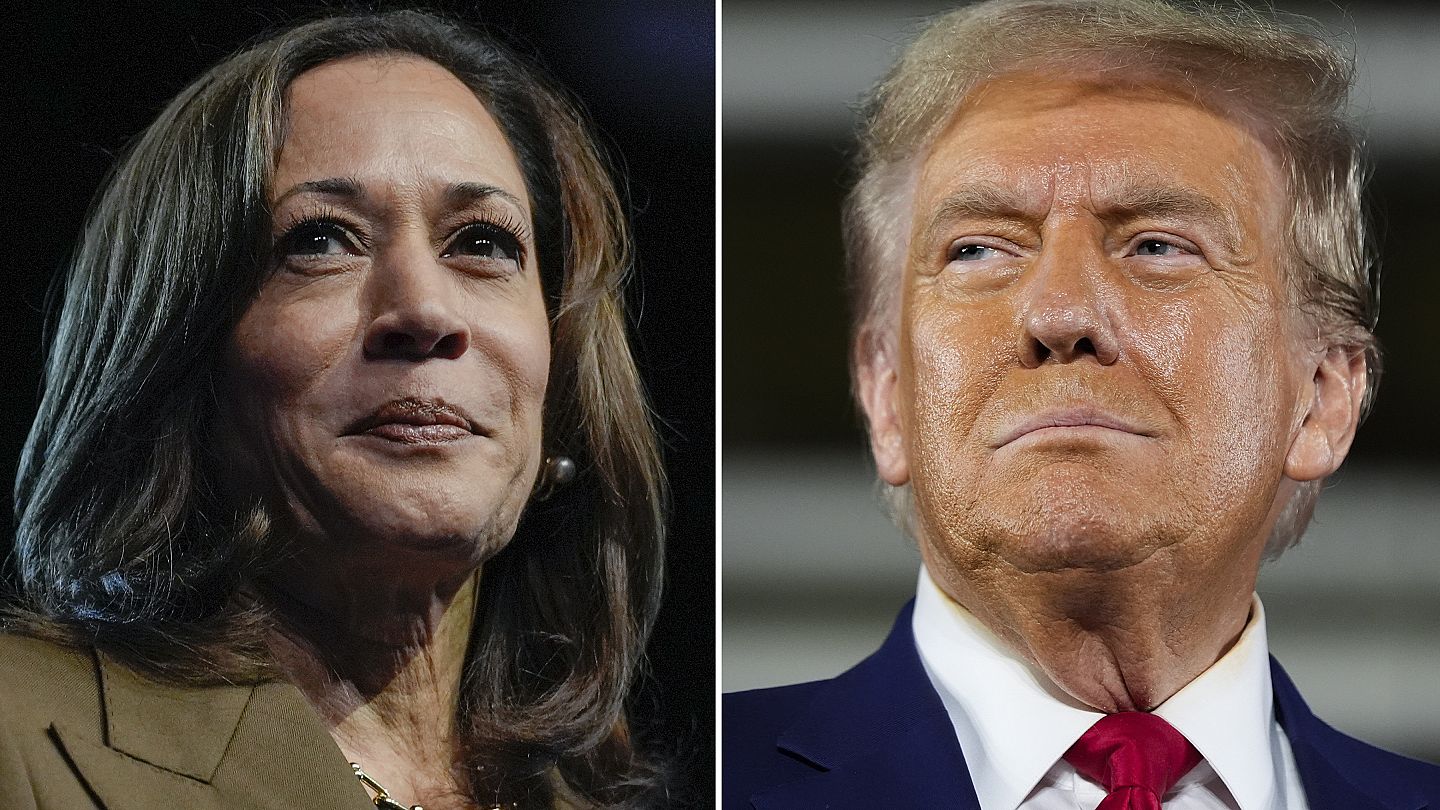
From Donald Trump’s promises of a national Bitcoin stockpile to Kamala Harris’ support of a regulatory
framework for digital assets, the two US presidential hopefuls have different stances on the future of
crypto. Crypto corporations have put $119 million (€110 million) into the election so far, according to
an August analysis of federal election data from US non-profit Public Citizen. Most of that money has
gone to Fairshake, a super political action committee (PAC) and its affiliates on both sides of the
political spectrum. They’ve received nearly $114 million (€105.4 million) directly, with multi-million
dollar donations from crypto giants Coinbase and Ripple. These companies are the biggest corporate
donors to this election cycle, with 44 per cent of all corporate money coming from crypto bankers, the
report said. We take a look at where both candidates stand on crypto. Trump’s vision of the US as the
‘crypto capital of the world’ Trump, the Republican candidate, has come out with a long list of promises
that he will make to the crypto industry. At a 2024 Bitcoin conference in July, Trump pledged to end the
Democrat’s “anti-crypto crusade,” by making America “the crypto capital of the world”. He also announced
his acceptance of Bitcoin campaign donations and claimed he was one of the first to do so. “If crypto is
going to define the future, I want it to be made and mined in the US,” Trump said at the conference. On
one of his first days in office, Trump said he would fire the head of the US Securities and Exchange
Commission (SEC), who enforces laws against market manipulation and put a Bitcoin and crypto
presidential advisory council in its place. Erwin Voloder, head of policy with the European Blockchain
Association (EBA), said Trump’s sudden course correction on crypto could mean companies considering a
move to Europe for friendlier regulations could stay home instead. Trump has also alluded to creating a
strategic Bitcoin stockpile, that would likely come from the holdings of criminals when they are
arrested. Voloder considers this move to be “extremely bold” because if Trump wins the election, the US
could be the first jurisdiction that has crypto as a reserve asset. “If the US decides that it wants a
strategic reserve of [Bitcoin], that’s a credible signal to probably a lot of other jurisdictions that,
hey look, there may be something here,” Voloder continued. In September, Trump launched his own crypto
trading platform called World Liberty Financial. The project, run by him and his sons, is a
decentralised finance (DeFi) platform where people can borrow, lend and invest in crypto.The platform
lets users buy WLFI tokens but only sold 532 million of the 20 billion it made available for public
sale, according to a recent report in The Verge.While not directly crypto, the Republican Party’s 2024
GOP platform says they also oppose the creation of a Central Bank Digital Currency (CBDC), a virtual
version of the country’s dollar. Kamala’s ‘Crypto4Harris’Harris, the Democratic candidate, has been
quieter about her stance on crypto than her Republican rival. In August, some Democratic lawmakers
attended a virtual town hall with cryptocurrency advocates who call themselves “Crypto4Harris”.“We
launched Crypto4Harris to show [Kamala Harris] that, despite the loudest voices and where the money
flows, there is a proud, determined coalition standing for unity and representation on the Democratic
ticket,” the group said in a recent X post. In her recently announced platform on economic opportunities
for Black men, Harris said she would support “a regulatory framework for cryptocurrency and other
digital assets” so people could invest and own these assets, according to the website. She also promised
donors to her campaign in a Manhattan event in September that she would grow investments in artificial
intelligence (AI) and crypto if she’s elected, according to Bloomberg. Voloder said it’s hard to know
whether Harris will be a good vote for the crypto industry because her camp’s been less specific than
Trump's. “If you’re an incoming Harris administration … there’s a lot of money going into crypto from US
companies, so clearly people care about this as a policy issue. You have an incentive to do something
about that,” Voloder said. The current Democratic president Joe Biden has called for protecting
consumers and setting guardrails on digital assets.In 2021, Biden nominated Gary Gensler as chair of the
SEC. Gensler told CNBC in September that he believes the crypto market needs oversight to “build trust”
and protect investors. A 2022 Biden executive order on digital assets then focused on encouraging what
it called “responsible financial innovation” and “safe and affordable financial services,” and called to
reduce the “risks” that digital assets bring with them to several areas, such as financial stability,
cybercrime, and human rights. In May, Biden vetoed a Republican-led bill in Congress that he believed
would “inappropriately constrain the SEC’s ability to set forth appropriate guardrails and address
future issues,” related to digital assets, the White House said. “Appropriate guardrails that protect
consumers and investors are necessary to harness the potential benefits and opportunities of
crypto-asset innovation,” the president said.