The Outlook For Crypto Under Trump And A Republican Congress
Share to Facebook
Share to Twitter
Share to Linkedin
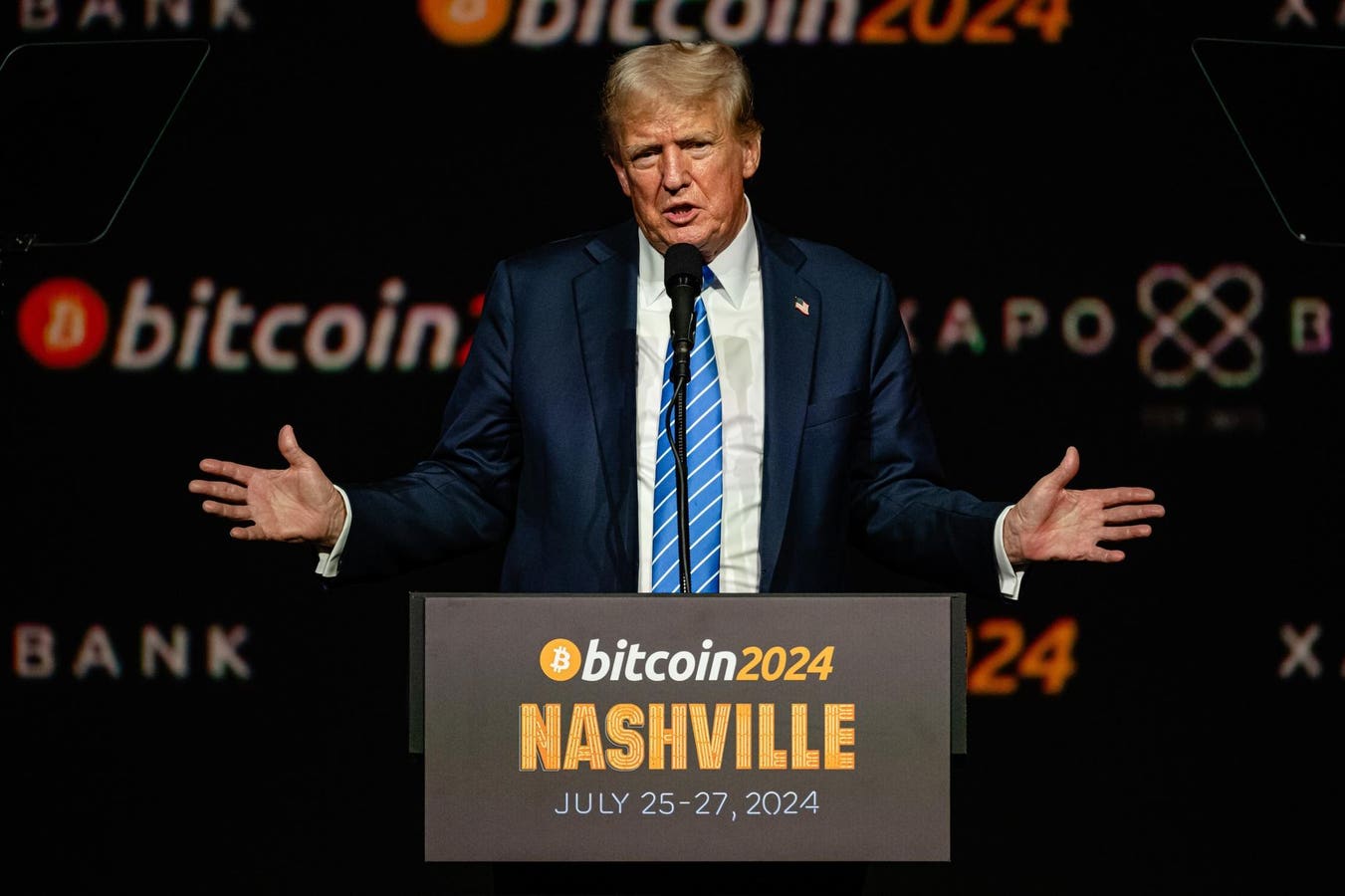
NASHVILLE, TENNESSEE - JULY 27: Former President and 2024 Republican presidential candidate Donald ...
[+] Trump gestures while giving a keynote speech on the third day of the Bitcoin 2024 conference at
Music City Center July 27, 2024 in Nashville, Tennessee. The conference, which is aimed at bitcoin
enthusiasts, features multiple vendor and entertainment spaces and seminars by celebrities and
politicians. (Photo by Jon Cherry/Getty Images)
Getty Images
As it became clear on Election Night that President-elect Donald Trump was set to return to the White
House, crypto markets, unsurprisingly, began to rise, reflecting optimism about the relief a Trump
administration will likely bring to the industry. There is no denying that Trump will be a more
pro-crypto president than President Joe Biden has been. However, there are uncertainties over how much
he will be involved with advancing the industry and how likely a law can be passed in Congress amid a
crowded legislative agenda.
Trump’s position in the White House will mean a refreshed perception of the crypto industry at the top
of the executive branch. Still, his choices of regulatory nominees will be critical to shaping his
administration's policies toward the sector. Key positions to watch include who Trump nominates to lead
the Securities and Exchange Commission, the Commodity Futures Trading Commission, and the Treasury
Department.
All candidates for these positions will likely share Trump’s favorable view of the industry, but it is
unknown how high of a priority it may be. The Trump administration is likely to prioritize deregulation
across most sectors. However, crypto is the one area that could go against that trend, with industry
members eager for regulatory clarity. How high of a priority crypto is for these regulators will
determine how long that process takes, but winding down some of the SEC’s current lawsuits could be
faster. Still, more likely than not, there will at least be some form of favorable regulatory guidance,
if not a rule, from these agencies.
The most important guidance that could be given is a joint document from the SEC and CFTC on how the two
agencies will determine whether a token is a security or a commodity. If pursued under the Trump
administration, this guidance would likely lean toward the industry-preferred perspective, and most
tokens would be commodities rather than securities. However, this issue of classifying tokens is also
among the likely areas that Congress would address with legislation, such as a bill similar to the
Financial Innovation and Technology for the 21st Century Act if a crypto-related bill is going to pass.
The advantage of making this change through legislation is that it would be harder for a future
crypto-skeptical industry to walk back than an interpretative rule or agency regulation.
A Republican trifecta, which looks relatively likely at this point, is the best election outcome the
crypto industry could have hoped for at the federal level, especially for trying to get legislation
through Congress. The most critical win for the sector was Senator-elect Bernie Moreno’s (R-Ohio)
victory over Senator Sherrod Brown (D-Ohio), as it removed a powerful industry opponent and was vital in
ensuring a Republican-controlled Senate. The House has yet to be officially determined as races remain
uncalled, but Republicans are in a favorable position to defend their majority, according to The Cook
Political Report.
MORE FOR YOU
Today’s NYT Mini Crossword Answers For Friday, November 8
Federal Judge Strikes Down Biden Program Offering Legal Status To Undocumented Spouses Of U.S. Citizens
Can Trump Fire Jerome Powell? Fed Chairman Says He Won’t Resign If Trump Asks
Still, passing a bill like FIT21 or other crypto-related legislation in the next Congress is not
guaranteed. These measures will likely require the support of some Democrats in the Senate, and there is
uncertainty over how high of a priority the bills may be amid a crowded legislative agenda.
Additionally, who will succeed House Financial Services Committee Chair Patrick McHenry (R-N.C.) remains
undecided, and the victor will significantly impact the chances and timing of getting any of these bills
done. In the Senate, Senator Tim Scott (R-S.C.) is in line to become chair of the Senate Banking,
Housing, and Urban Affairs Committee. While a crypto supporter, Scott has yet to indicate that it is a
top priority.
The outlook for crypto under Trump and a unified Republican government has undoubtedly improved from its
position under the Biden administration. However, this change will likely take some time to manifest
itself as new agency heads need to be confirmed by the Senate, and passing laws through Congress is a
notoriously slow and difficult process, even when one party controls the White House and both chambers
of Congress.
Follow me on Twitter or LinkedIn.
Owen Tedford
Editorial Standards
Forbes Accolades