Wall Street Looks Forward To Less Regulation And Higher Profits
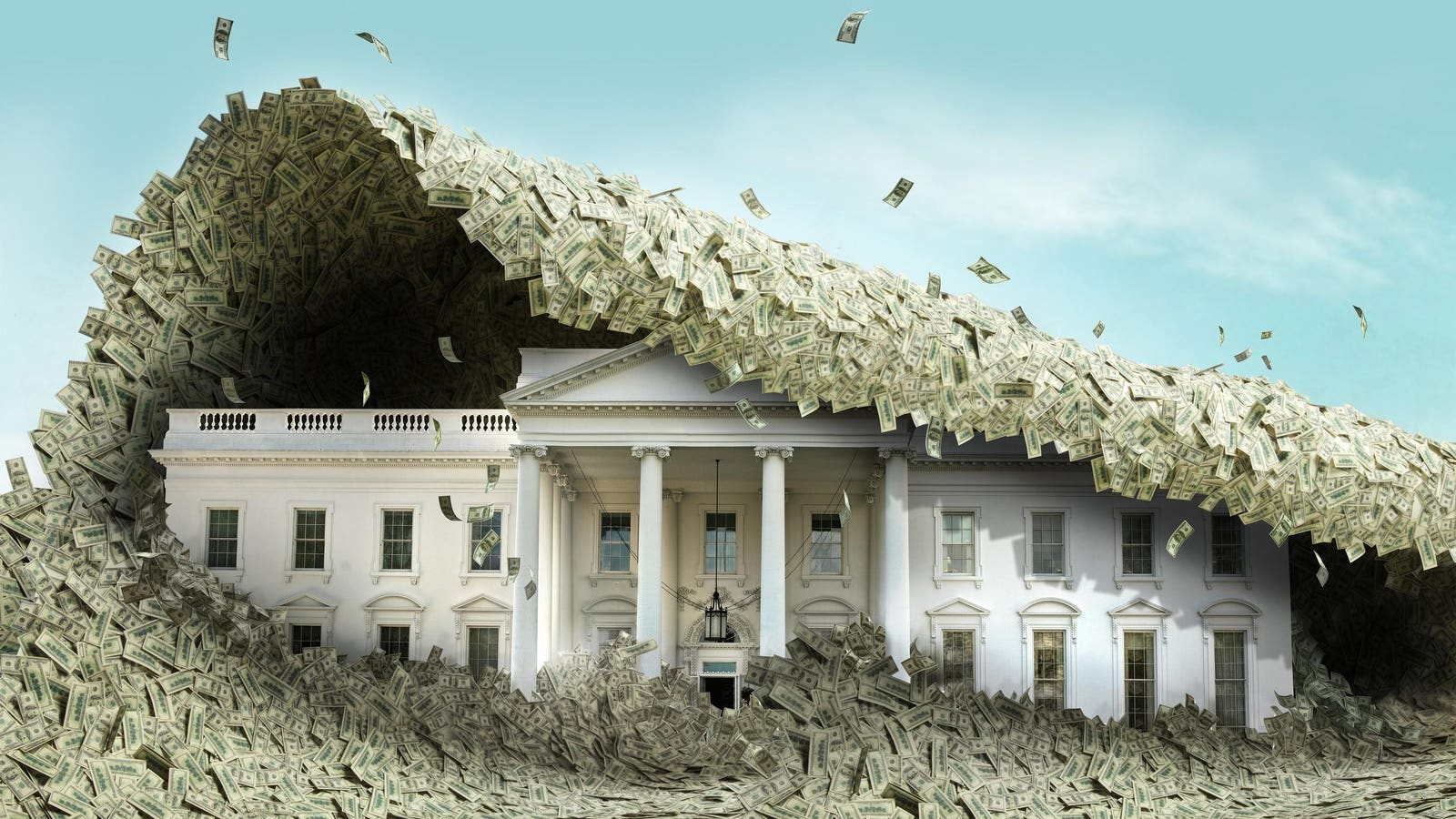
President-elect Trump will likely put business-friendly leaders in charge of key government agencies and
ease regulatory burdens. Great news for banks and dealmakers
By Hank Tucker, Forbes Staff
Investors celebrated Donald Trump’s decisive victory in last week’s presidential election, with banks
and alternative investing firms among the biggest winners in anticipation of more lenient regulations.
Goldman Sachs soared 12% in the last three days of the week, and peers like JPMorgan, Citigroup, Morgan
Stanley and Bank of America as well as private equity giants KKR and Apollo all gained at least 7%. The
rally extended to smaller banks, with the KBW Regional Banking Index up 10% in that span, as financials
helped propel the S&P 500 Index’s 3.7% gain in the final three days of the week to a new record high.
The reaction was a show of exultation and hopefulness that Trump will fill out his cabinet with a
Treasury Secretary sympathetic to Wall Street and replace stricter regulators at agencies like the
Securities and Exchange Commission and the Federal Trade Commission. Trump’s win along with a probable
Republican Congress once all the votes are counted in close House races also makes it more likely that
the generous corporate tax cuts he enacted during his first term will be extended when they expire at
the end of next year.
“It’s a fairly heavily regulated industry, and to the extent you get the government off your back a
little bit, it’s going to be positive,” says Stephen Biggar, director of financial institutions research
at Argus.
Bank regulations have been tightened significantly around the world since the Global FInancial Crisis,
part of a framework put in place by the Basel Committee on Banking Supervision, in an effort to reduce
the risk of insolvency and bank failures. The so-called Basel III Endgame rules scheduled to take effect
next summer initially hiked major banks’ capital requirements by 19%, though after fierce resistance
from industry leaders—JPMorgan CEO Jamie Dimon called many of the rules “flawed and poorly
calibrated”—the Federal Reserve scaled that hike back to 9% in September. Now, Citigroup CEO Jane Fraser
said Friday in a CNBC interview that she expects requirements to be eased further.
“I consider this a watershed moment in turning the page for bank regulation. The post-Global Financial
Crisis period is now over,” says Mike Mayo, a longtime banking analyst at Wells Fargo. “The pendulum had
already started to swing back, but now it’s likely to swing back even more.”
Lighter capital requirements will help banks make more loans and earn more interest, and an expected
increase in M&A activity would also bolster capital markets profits for Wall Street’s largest investment
banks. Total M&A activity dropped 17% in 2023 to around $3 trillion in deal volume, and although it has
slightly rebounded this year, it’s still far from the peak that investment banking divisions enjoyed in
2021.
Private equity firms and acquisition-hungry businesses were already gearing up for a big 2025 with
interest rates expected to come down. PE firms worldwide have $2.6 trillion in dry powder ready to be
put to use, according to S&P Global, though another Trump administration does carry some risk. Bond
yields have already gone up since the election as investors expect deficits to remain persistently high
if tax cuts are extended, and Trump’s threat of tariffs may cause prices to rise again and bring back
inflation and higher rates.
“If there are unusually large tariffs, tax reductions, deficits or other moves that push interest rates
up too high, then that could derail the rally in a hurry,” says Mayo. “If they place populism over
economics, the markets are likely to react very quickly to that.”
High interest rates have been a primary culprit for the dealmaking slump in the last two years, but
bankers and politicians have also pointed the finger at Federal Trade Commission chair Lina Khan.
Celebrated by progressives like Bernie Sanders and Alexandria Ocasio-Cortez for challenging corporate
monopolies, Khan has been vilified by conservatives for scuttling deals and overseeing lengthy reviews.
SEC chair Gary Gensler, nominated by Joe Biden in 2021, is another target of Trump’s ire. The SEC has
adopted dozens of new rules under Gensler’s leadership on topics like ESG reporting requirements and
stricter SPAC disclosures for sponsor compensation and conflicts of interest. Trump’s vow to fire him
was also applauded by crypto evangelists, as Gensler has taken a hard line on digital assets, including
lawsuits against exchanges Coinbase and Kraken.
“We may see a stricter adherence to the generally recognized timelines for SEC registration statement
review, which had for many years generally been up to 28 days for a first filing review and two weeks or
less for subsequent filings,” says Christian Nagler, capital markets partner at Kirkland & Ellis. “Over
the last few years those time periods at times have become longer.”
As for the IPO market, which has also slowed since 2021, Nagler notes that the number of IPOs has
increased in the last four years immediately following a presidential election year regardless of who
wins, and the market appears to expect more of the same next year. The SPAC market has already started
to rebound this year, with 46 IPOs so far in 2024 compared with 31 in all of 2023, according to SPAC
Insider data—still a long way from the 613 offerings in 2021 at the height of the SPAC bubble, when many
performed poorly. Some of those floundering SPACs are still among the 95 blank-check companies currently
searching for acquisition targets.
“Those were 500-year flood numbers, and nobody wants to go back there… anywhere between 80 and 120 [per
year] is probably a healthy SPAC market,” says Kristi Marvin, founder and editor of SPAC Insider. “A lot
of sponsor teams want to IPO now in anticipation of a better deal-making environment in 2025.”
MORE FROM FORBES
ForbesHandicapping Trump’s Brain Trust: The New TrumpiverseBy John HyattForbesSilicon Valley Defense
Tech Can’t Wait For Trump To Get StartedBy David JeansForbesFBI Investigating Possible China Hack Of
Presidential Campaign Officials’ iPhonesBy Thomas BrewsterForbesHere’s What Billionaires Are Saying
Online In Response To Trump’s VictoryBy Kyle Khan-MullinsForbesElon Musk’s Risky Gamble On Trump Pays
OffBy Alan Ohnsman
Follow me on Twitter or LinkedIn. Send me a secure tip.
Hank Tucker
Editorial Standards
Forbes Accolades