Why This Crypto Casino Wants to Steal Your Best Memes
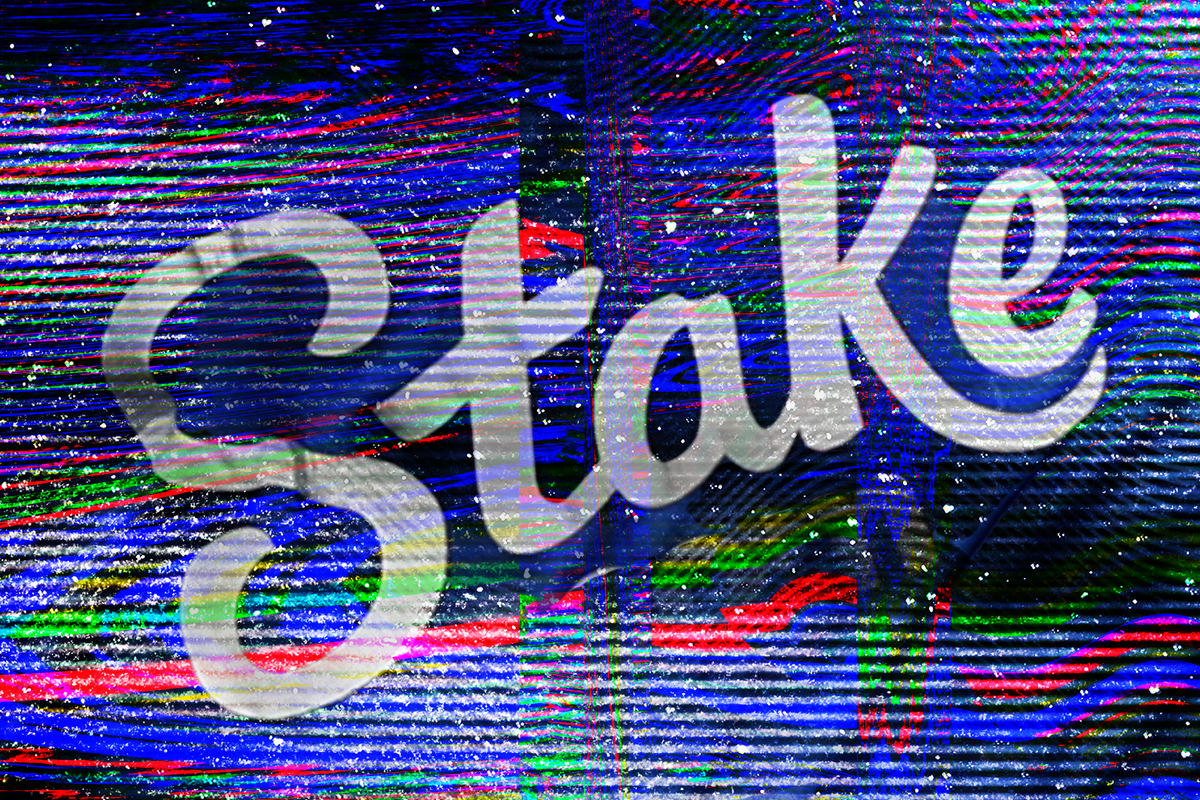
If you’ve been on X lately, you’ve probably seen this but not even realized it: a clean-looking logo for
an online crypto casino called Stake pasted onto a poorly cropped and low-res meme or a video.
Founded in 2017 by Australian entrepreneurs Ed Craven and Bijan Tehrani (but ostensibly operated out of
the small Caribbean nation of Curaçao), Stake is a crypto gambling site worth more than $2.6 billion
today. The company’s most recent blog post claims that over 1.2 billion bets were placed in September
alone, and the Financial Times reported in 2023 that the company had roughly 600,000 regular users with
6 million registered accounts. Despite this, public perception of the site seems overwhelmingly
negative—and much of its bad reputation comes from the viral marketing ploys the company uses to reel in
new users.
Its new watermarking scheme on X is an amorphous advertising campaign that ignores international borders
and the gambling laws that exist within them. While it’s legally sketchy, it’s also morally dubious.
Kids who just want to look at memes have become the targets of a casino’s ruse.
The company has a history of strange marketing gimmicks. In 2022, many Twitch streamers like Canadian
star xQc were offered what seemed like an infinite money glitch to gamble freely on Stake as long as
they streamed their slot binges, blackjack games, and mini-games such as Plinko while live; xQc
reportedly bet an estimated $685 million on the site with the company’s help. This added to Twitch’s
eventual decision to ban Stake (among other gambling sites) from its platform soon after, citing the
effects on its highly impressionable audience of Gen Z and Gen Alpha.
In response, Craven and Tehrani created Kick, a competitor streaming site, and tempted Twitch streamers
with massive contracts to hop platforms and gamble freely. Now, more than a year later, xQc has
reportedly bet more than $2.9 billion on Stake while livestreaming on Kick. (He’s openly admitted to
having a gambling addiction in the past.) Stake may be shameless about using its Kick stars to promote
gambling, but its marketing strategies are not isolated to their Twitch knockoff.
Stake and Kick thus work in tandem, generating a slew of free marketing that spreads well outside their
sites’ limits. But Stake’s latest tactic involves paying X accounts to watermark its logo on any and all
posts they make.
Let’s say you make a meme, and you post it on your Instagram. It gets screenshotted and reposted by
casual meme spreaders. Eventually, there’s a chance it winds up in the photo gallery of a Stake
employee, where your content becomes an ad for the company. Nothing is removed. Only a logo is added.
It’s then posted by an X account which has Stake tagged in its bio. It goes viral, giving the company
tons of eyeballs on their logo. Rinse and repeat.
Patient zero for this ad experiment appears to be X user @FearedBuck, who started as a Milwaukee Bucks
fan account but later pivoted to posting Kick clips full time. In August, Stake logos began showing up
on the account’s videos. The page has since amassed more than 645,000 followers—up from 64,000 last
December.
Viewers, seemingly tired of the account’s engagement-baiting antics and appalled by the obvious money
grab, Community Noted all of @FearedBuck’s Stake-sponsored posts, explaining that the user was violating
X’s guidelines on undisclosed promotions as well as violating the Federal Trade Commission’s guidelines
on gambling advertisements.
As quickly as it started, @FearedBuck went full-stop on the Stake logos. But other accounts have since
stepped in, all of which mostly post Kick clips. The only thing that’s changed is that the Stake
watermarks now have clarifying text, often reading “Gamble Responsibly” or “This Is An #Ad,” in
addition.
The additional declaration may swerve X’s guidelines but it doesn’t bypass the U.K.’s Advertising
Standards Authority, which has reportedly begun monitoring Stake’s X campaign. The ASA has already taken
action against Sky Bet (a similar gambling site) from when ex-footballer Gary Neville watermarked the
Sky Bet logo in a video.
Stake has landed in hot water for its advertising before. Back in August, the Dutch Gaming Authority
ordered the removal of Stake logos from its sponsored Formula 1 cars, again citing influence on minors.
Stake is not legal in the Netherlands and the ads (on a car, being televised) could not simply be
geoblocked based on a user’s IP address.
Now they’ve made the jump to sponsoring meme pages, believing they can take the same tack: plaster your
company logo on everything—like a player’s jersey or a stadium wall—and let the constant exposure become
brand awareness. But memes and internet chatter are inherently organic and communal, which makes it much
more egregious when they try this approach.
Take this one between two X accounts, @PercThaGoat and @KillaMinga, that both have Stake tagged in their
bios. The latter shared a video of artwork with a Stake watermark. The subsequent quote tweet attested,
“Average coworker phone wallpaper,” receiving over 28,000 likes.
The only problem: This is an elaborate two-part copycat that blatantly plagiarized the exact contents of
earlier X posts that happened months before. The copycat post banks on the proven virality of its parts
and the fact that many users haven’t seen the original posts yet.
Ever since Elon Musk instated Twitter Blue, money grabs from blue-check accounts have become
commonplace. A “rent due” tweet has become an axiom explaining the constant lewd shock-and-outrage bait
that floods most of the timeline. To combat the onslaught, the site’s Community Notes feature acts as
the law—but it’s an illusion of control. Individuals like @FearedBuck may have stopped posting Stake
ads, but their original promotional posts were never removed from the site entirely.
It’s well-known that Musk is struggling with advertisers, and although he’s promised to remove the bots,
he’s seemingly too addicted to the site’s engagement numbers to fully delete anything that’s going viral
(unless it challenges his right-wing dogma). While we can’t say that Stake is paying off Twitter, it’s
obvious that Twitter’s turning a blind eye.
Another more drastic solution would be for the government to step in and do something about it. Stake is
illegal in America. To work around this, Stake created Stake.us, which operates as a sweepstakes casino,
meaning there’s no real money being bet. It’s all pretend money (tokens), and when an American opens the
Stake homepage, it urges them to redirect to its legal stateside alternative where no real money can be
wagered.
Because of this redirection, Stake has managed to abide by the FTC’s guidelines. However, if one views
memes as a piece of media with disproportionately high influence on young minds, then the legality of
Stake’s watermark campaign is much more murky.
This all depends on the viewpoint of FTC Chair Lina Khan, who is reportedly more anti-business than many
Democratic Party donors are comfortable with. However, in an upcoming Trump presidency, the new FTC
elect will likely be from the same talent pool as an axe-throwing Fox News host or even Elon Musk
himself. With a Stake logo on many of his website’s viral posts, maybe the Phantom of Mar-a-Lago and his
host will never appoint someone anti-business enough to throw the hammer down soon.
Meanwhile, the conveyor belt of repackaging viral internet media and moments to advertise for a crypto
casino keeps rolling. The watermarked Stake meme gets screenshotted and passed on, where it spreads
through successive channels—like when publications that need to embed Twitter videos become complicit in
Stake’s amorphous campaign.
Meme creators who have taken notice of the Stake watermarks have begun parodying the campaign by adding
excessive amounts of Stake logos to their own memes or pretending they’re instead sponsored by Dave &
Buster’s. The collective shaming has built a grassroots rebellion but—like Community Notes—it doesn’t
seem to be producing real-world effects.
Hope is not lost, though. While marketing gambling to minors across international borders might be an
actual crime, it’s well understood what the real crime is in the eyes of an irony-poisoned,
meme-consuming council: being cringe. As long as this public perception remains and compounds with
Stake’s already shady reputation, then the brainwashing might fall flat.