Crypto News on 22 Oct, 2024

     Catch up on all the key developments in the cryptocurrency world from October 2, 2024. On this day, the crypto market saw significant movements, regulatory updates, and breakthrough announcements from leading blockchain projects. Explore in-depth analyses, price fluctuations, and expert commentary on trending coins and tokens. Whether you're tracking Bitcoin's latest performance or the rise of altcoins, our detailed coverage ensures you're always informed about the latest in crypto.

Written by Vivek

Admin

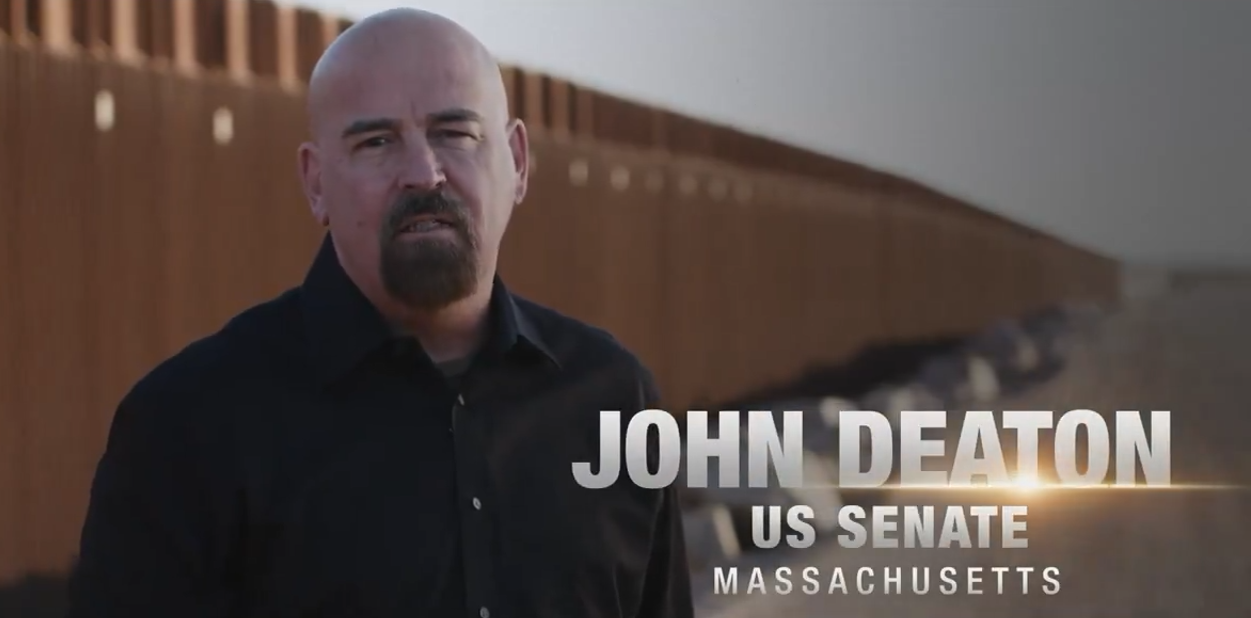
Warren Has To Go: Elon Musk Agrees With Coinbase CEO's Endorsement Of Pro-$XRP Deaton

Tech mogul Elon Musk agreed with the statements made by Coinbase CEO Brian Armstrong regarding the senatorial race for Massachusetts, wherein the chief executive of one of the world's largest cryptocurrency exchanges endorsed pro-crypto lawyer John Deaton over Sen. Elizabeth Warren.Musk, who campaigned for Republican presidential candidate Donald Trump in Pennsylvania, re-shared Armstrong's post about Warren being "anti-freedom," and captioned the post with a "Yes."Armstrong Endorses Deaton, Musk OKs MoveThe crypto executive said Monday that "crypto holders in MA should realize Warren is the one who got Gary Gensler his job and encouraged him to (unlawfully) try and kill the crypto industry in America."Armstrong went on to note how it was a lucky instance that the Democratic senator and Gensler, Chair of the U.S. Securities and Exchange Commission (SEC), didn't succeed, especially since Coinbase and other crypto firms "fought back."He said residents of Massachusetts should vote for Deaton, a prominent pro-crypto lawyer who is known in the crypto community for his pro bono work for holders of the XRP token in a lawsuit filed by the SEC against Ripple, the largest holder of XRP.Armstrong's comments were in response to crypto lawyer James Murphy's post wherein he said "Deaton has done more for crypto freedom than all other candidates combined.""She is anti-freedom, thinks the government should run all financial services (similar to China), and has done enormous harm to this country," Armstrong concluded.Crypto Community Champions DeatonMany crypto users took to the comments to hail the work Deaton has done for the community and the industry as a whole."You could have pointed out that John Deaton actively protected the crypto industry as well. It's not just that Warren is atrocious, Deaton is a knight in shining armor defending crypto," one XRP user said.One Solana (SOL) user said Deaton comes in with a "fresh perspective" that could benefit not just everyday citizens but also the crypto sector.Another called Deaton a "strong advocate for crypto holders" and called on the community to push back against government and regulatory "overreach."Musk's Crypto StanceWhile Musk is known as a fan of the world's top memecoin, Dogecoin (DOGE), he hasn't been very vocal about other cryptocurrencies. On the other hand, he said Sunday that he thinks crypto can be a "bulwark" against centralized control. He was asked whether he thinks the XRP Ledger will be integrated into traditional financial institutions in the future. He dodged the question and said his statements shouldn't be taken as an endorsement or a lack of endorsement for XRP token.It is unclear if Musk will help fund Deaton's campaign, with two weeks left before the elections, but his "yes" and reposting of Armstrong's endorsement statement has been taken by the crypto community as his indirect endorsement of the former U.S. Marine, who fared comparatively well against Warren during a crypto clash on their debate last week.

 2024-10-22 11:01:01

read more

Your VPN May Not Be Private. This Blockchain Startup Nym Has A Fix

Nym CEO Harry Halpin hopes his ultra-private VPN will be his killer app. . Harry Halpin Virtual Private Networks are marketed as a cloaking device to trick internet users into thinking they are anonymous online. However, it's an open secret that VPNs sell user data for money. By Steven Ehrlich, Forbes Staff There’s an old saying among marketers, “If you are not paying for the product, then you are the product.” Over the past two decades, “free” internet services like Google and Facebook have built giant innovative businesses by essentially selling their customer data to advertisers. Virtual private networks (VPNs) are far more insidious. These products are marketed as a simple way to browse the internet privately, free from governments and companies’ prying eyes. They are widely used by corporations to protect proprietary information. The market for VPNs surpasses $50 billion with more than a billion people worldwide are using these cloaking applications. However, talk to industry leaders like Roger Dingledine, founder of the Tor Project, whose website promises “You have the right to browse without being watched,” and you will soon find out that most VPNs are private-in-name-only. “It all comes down to privacy by promise,” says Dingledine, “There is no way for you to know if we're screwing you.” Key privacy threats, according to Dingledine, include a company keeping a log of user activities, even if it promises not to, and the ability of VPN operators to monitor traffic flows to deduce when a user visits a website. Nick Percoco, Chief Security Officer at crypto exchange Kraken, began working with VPNs over 20 years ago. At the time, they were primarily a business-to-business product, used by organizations requiring increased security in online communications, such as banks. Percoco points out that VPN issuers started to monetize ‘privacy’ by marketing their products to consumers. “People started to equate having a VPN on my phone or my computer as super secure and ultra-private,” says Percoco.”You're just teleporting yourself to some arbitrary point on the internet. We know that over the years, many VPN companies record what their clients are doing and sell that data to people.” One such provider called “Hide My Ass” requires users to take extra steps to stop the sale of their data. Not exactly privacy by default. Since many people don’t value privacy enough to pay for it, VPNs sell customer data to fund operations, in addition to offering subscription plans. The latest entry into the virtual private network market is a Swiss-based blockchain startup called Nym Technologies. Its founder Harry Halpin says his new NymVPN doesn’t need to sell customer data because blockchain technology will be used to create “self-sustaining economics.” NymVPN falls under the crypto category known as DePIN, for decentralized physical infrastructure because it relies on a blockchain to coordinate the operation of its network. In fact a key differentiator for NYM is that its blockchain, and the tradeable tokens it produces, are used as the payment rail for the VPN, which should fund the entire operation. "We have a technology that nobody else does, we add noise to your data to scramble surveillance tools using artificial intelligence," insists Halpin. "Its now or never for this kind of tech." Originally from South Carolina, Halpin did not set out to be a privacy crusader. That changed when he studied for a PhD in Informatics at the University of Edinburgh in Scotland, focusing on artificial intelligence and large language models that became precursors for companies like OpenAI. At the time, he was primarily interested in climate activism. His focus changed in 2009, when he was arrested by Danish authorities when he was in Copenhagen to protest a lack of government action on climate change as a delegate to the United Nations Climate Change Conference. “At that time, I became interested in privacy, anonymity, and security. Then, in 2011, as I was finishing my PhD, I did some early work on VPNs, primarily because I had friends in North Africa.” says Halpin. “I found the Tunisian revolution against Ben Ali very inspiring. As someone who was targeted by undercover police, I was in a dark place, and it inspired me to see the courage of all these young people in Tunisia, Egypt, and elsewhere [rise against authoritarian regimes].” After supporting protesters by helping them get set up with various VPNs during the Arab Spring, Halpin went to work for Sir Tim Berners-Lee, inventor of the World Wide Web, to help make web browsers like Google Chrome more secure. His next epiphany came following the Edward Snowden revelations in 2013. “I realized that the problem of mass surveillance is much worse than I thought because Snowden revealed that you now have a global passive adversary that can watch every [data] packet with a god’s eye view of the internet,” says Halpin referring the Snowden’s revelations about the U.S. government’s surveillance from his days as an NSA analyst. It turns out that the European Union agreed. So in 2015, it put out a $4.5 million grant proposal described by Halpin as designed to “Build NSA-proof anti-surveillance software ,because they didn't want [former German Chancellor Angela] Merkel's phone to be spied on.” Halpin won the grant and started Nym. The grant funded Halpin’s research into a concept known as mix-networks or “mix-nets”, which offer the ability not only to conceal a user’s online activity but their identity as well. These differ from simple VPNs because they use a network of relays to shuffle messages and break linkages between senders and receivers. The catch is that mix-nets use a lot of computational power, so they are slow. “They couldn't scale to general purpose VPN style traffic,” says Halpin. Halpin’s Nym, which has about 50 employees, including convicted Wikileaks spy Chelsea Manning who serves as a Security Consultant for the startup, recently launched its new VPN, NymVPN in beta. It is still a work in progress. For Halpin and his team to succeed they must solve two complex problems simultaneously. First, they need to create a mix-net that performs at usable speeds. When Forbes used NymVPN during a video chat, the screen kept freezing and pages took more than 30 seconds to load. The company has already had to compromise to some degree, offering a faster “two-hop” VPN, which utilizes a pair of relays to complement its more secure, but slower “five-hop” alternative. Manning says of the comparison, “You are trading anonymity for speed.” However, the two-hop method is recommended for video calls or sending large files. Halpin and Manning aim to find a way to more efficiently organize data packets and leverage hardware to reduce this sluggishness, especially when setting up the initial set of nodes. “The closer we can get the packet exchange down to bare metal, the more secure it is, the faster it is,” says Manning, referring to the efficiency that comes with hard-coding programs directly onto silicon chips as opposed to running software programs to accomplish tasks atop generic hardware. The company’s next challenge comes from crypto markets. Currently Nym’s token is languishing, down 92% since it launched in April 2022, and there is scant activity on the blockchain. Hardly any applications are running on Nym right now despite a $300 million innovation fund set up by venture capitalists on behalf of Nym in October 2023. “We thought people would be very excited about mix-nets, but we received very few proposals,” says Halpin. “There were maybe 30 proposals, of which only one got venture capital funding.” Halpin’s team at Nym decided to build its new VPN, which he hopes will be the killer-app for his privacy focused blockchain. Tor’s Dingledine warns that Nym’s reliance on demand for its blockchain and higher prices for its token, as its VPN’s funding mechanism is risky. “There are some downsides to the capitalist-based approach,” says Dingledore. “One of the big ones is, why people participate in the first place. Is the primary goal user safety or profit? If it's profit, you will put your relay in the cheapest possible place.” DePIN, as a sector within crypto, has attracted more than $16.8 billion in 1,746 deals since 2020 according to Pitchbook, but it is still largely unproven. The only project held up as a success right now is Helium, a blockchain-based wireless hotspot service that promised to create what it is being touted as “the people’s network.” However, in its short history, it has already had to switch from operating its blockchain to moving on top of $72 billion (market cap) Solana, and it has faced accusations of insider enrichment. Its token, HNT, is down 88% from its all-time high of $54.88 in 2021, and the network only generates about five thousand dollars a day in fees. Undeterred, Halpin and team endeavor to continue to build a better mousetrap. “One of the biggest problems I see in [VPN] technology right now is a lack of vision, where people keep building the same thing,” says Manning. “The most fun part about this project is that the mix-net is something new.” MORE FROM FORBES Follow me on Twitter or LinkedIn. Check out my website. Send me a secure tip. Steven Ehrlich Editorial Standards Forbes Accolades

 2024-10-22 10:30:00

read more

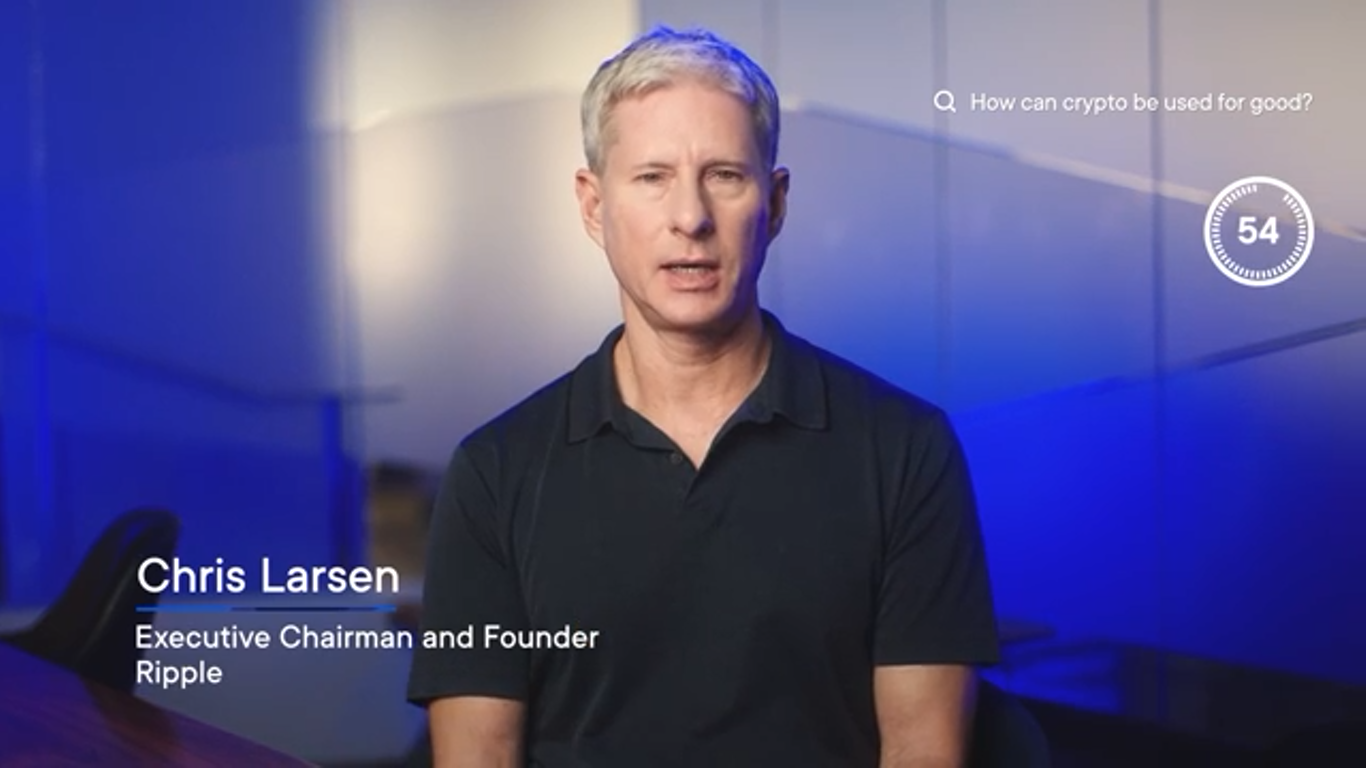
'Complete Disregard' For $XRP Holders: Outrage After Ripple's Larsen Donates $10M To Harris Campaign

The cryptocurrency community is on fire after Ripple co-founder Chris Larsen revealed Monday that he has donated another $10 million XRP tokens to support the campaign of Vice President Kamala Harris.Larsen's latest move came about a week after Federal Election Commission (FEC) filings showed that the crypto executive donated $1 million in XRP tokens to the Future Forward super PAC, which backs the Democratic presidential nominee.Larsen Makes His Views ClearThe executive chairman of Ripple, which is currently grappling with the U.S. Securities and Exchange Commission (SEC) in a lawsuit initiated by the financial regulator four years ago, said he believes Harris "will ensure that American technology dominates the world.""It's time for the Democrats to have a new approach to tech innovation, including crypto," Larsen said, seemingly referring to earlier statements made by pro-crypto candidates from the Democratic Party regarding Kamala's supposed desire for a "reset" with the industry that's been hounded by the SEC under Chair Gary Gensler.Ripple CEO Comes to Colleague's DefenseShortly after Larsen revealed his huge donation to the Harris campaign, Ripple CEO Brad Garlinghouse took to the comments, saying he respects Larsen and everyone else's right to support "whomever they think is best to lead the U.S."He went on to note that there is an urgent need to "change course" from the current administration's "misguided war on crypto." He promised that Ripple, the largest holder of the XRP token, will engage with both political parties to push for pro-crypto policies."It's not about party lines; it's about championing policies that drive blockchain and crypto innovation," he pointed out.Crypto Community Blasts Larsen's 'Careless' MoveSeveral key figures in the crypto community raised concerns about Larsen's latest donation, and many crypto users, especially those who use the XRP token, criticized his presidential choice.Trader Amonyx accused Larsen of "carelessly spending money without considering XRP investors and supporters." He wondered whether Larsen was "comfortable inside" with the choice he made. One user agreed, saying the crypto executive had "complete disregard for $XRP holders."On the Chain podcast founder Chip said Harris could have easily called for Gensler to step down since she is currently in power, but she has chosen not to.Venture capitalist and Bitcoiner Nic Carter called the donation "completely baffling," while crypto influencer Amelie said she hopes "there is a hidden twist in that action."Crypto YouTuber Corey Costa said he feels bad for XRP investors, while crypto investor CryptoTank said Larsen's decision to go public about his support for Harris will be "a bad look" in the eyes of XRP holders who, mostly, have expressed frustration over Kamala's silence despite the SEC's crusade against XRP and the broader crypto industry.Crypto lawyer James Murphy, popularly known in the community as MetaLawMan, raised an issue regarding how the Harris campaign will work around the donation. He pointed out that the campaign will presumably sell the donated XRP to convert the tokens into fiat."Will Harris clear that transaction with @GaryGensler? Will this trade impact the SEC's appeal in the @Ripple case?" he asked. The SEC filed an appeal in an attempt to overturn some provisions of a 2023 ruling in its lawsuit against Ripple.What's Between the Lines?While most crypto and XRP users are fuming over Larsen's announcement, others are theorizing about why the crypto magnate had to make the move.One user suggested that Larsen may have picked the blue side "in lieu of a larger, corporate fine." In August, the SEC vs. Ripple lawsuit could have ended with a $125 million fine. However, the Wall Street regulator's recent appeal filing revives the case, and for some, Larsen's donation may be linked to the four-year-long legal scuffle.For one user, Larsen made a "smart" move, choosing the businessman's way with a focus on "influence" over other matters.$XRP Plummets Amid the NewsNews of the outrage on X over Larsen's donation seems to have affected XRP prices. The token plunged by 4% in the last 24 hours, as per data from CoinGecko. It is down by over 2% in the past week.Just around three weeks, the token's prices were faring much better, propelled by Bitwise's filing for a spot XRP exchange-traded fund (ETF) and excitement around the news.

 2024-10-22 10:25:39

read more

I lost £5,716 in crypto scam via a 'trusted' friend online - here's the red flags I should have spotted

I lost £5,716 in crypto scam via a 'trusted' friend online - here's the red flags I should have spotted The mental impact of being scammed hit hard for victim Carly Rowena By Sam Barker Updated: 10:39 BST, 22 October 2024 A woman who lost almost £6,000 to a sophisticated cryptocurrency scam is speaking out to help defeat stigma around being a victim of fraud. Carly Rowena, 37, an author and entrepreneur, was targeted by fraudsters in March 2023. Rowena said: 'I'd like to think I'm not someone that would fall for scams. but this one was very clever, and I think the more people talk about this the more it helps.' The scam began when Rowena saw a friend of hers post an Instagram story that she had paid someone to manage her bitcoin, and had seen a large return. Con artist: Carly Rowena was lured in by a scammer that was posing as her friend Intrigued, Rowena messaged her friend, who passed on the details of her contact at an investment firm. Little did she know, but Rowena was actually speaking to a fraudster. Her usual guard was down, as the investor seemed to come highly recommended by a trusted friend. 'I don't think of scams when I'm viewing my friends' content,' Rowena said. 'I messaged her and asked if it was legit. She said yes, this woman is incredible. It overcame the trust factor as this person seemed to know my friend.' RELATED ARTICLES One in five people have fallen victim to a finance scam in... Britons lost £572m to fraud in first half of 2024 - but... Share this article HOW THIS IS MONEY CAN HELP Fraud complaints about Revolut rise 146% in just two years The scammer sent Rowena details of an investing website, as well as a contract to sign, and promised her portfolio could increase in value by 50 per cent in just 24 hours. Everything seemed to be legitimate, so Rowena accepted, and transferred £1,304.49 in ethereum and £4,412.11 to the fraudster in instalments, and was able to track the performance of her 'investments' through a special online dashboard. Then the next day fraudster got in contact with some good news - Rowena's cryptocurrency holdings had increased to £75,000. But the delighted Rowena was then told that she would need to pay a fee of $7,500 in bitcoin in order to get her money. Speaking out: Rowena says she felt shame after she realised she had been defrauded It was at this point that Rowena was suspicious. Why was she being asked to pay a fee, rather than it being taken out of the profits she had apparently made? She then messaged her friend, the one that had apparently recommended the investor in the first place, and was told something chilling. Rowena's friend's phone had been hacked, and all of her social media accounts taken over as part of an elaborate ploy to lure others into paying the fraudster some money. Rowena confronted the fraudster, and said she was not going to pay the additional fee. Immediately the tone of the conversation changed, and the scammer said she could not get any of her money back without paying the charge. After reporting the matter to Action Fraud and Instagram, Rowena resigned herself to the knowledge that her £5,716.60 was gone for good. Rowena said: 'I feel shame, I feel guilty, I feel stupid for a lot of things. It was too good to be true, but there were so many elements, and I had a recommendation through a friend.' The stigma of fraud Many scam victims report feeling shame, anxiety and trauma, according to research from cloud computing firm Akamai. Victims also feel there is a stigma attached to having been defrauded. This helps perpetuate fraud, as victims feel shamed into silence and many do not report the crime or even tell anyone. A survey of 1,002 Britons who have been a victim of cybercrime in the past year, commissioned by Akamai, reveals most are ashamed of their experience, feel they've done something wrong, and believe there's an unfair stigma placed on them. On average, cybercrime costs the victims surveyed £808. As a result, one in five struggled to pay their bills or had to cut back spending on essentials like food in the wake of these financial losses. However, the damage cybercrime causes to mental health is less widely understood. Nearly two-thirds of Britons said they felt traumatised by what happened to them and the majority also admitted to feelings of shame and embarrassment. Meanwhile, 55 per cent said they continued to experience anxiety after the cybercrime, especially while using online services, and nearly one in three had trouble sleeping. Natalie Billingham, of Akamai, said: 'Cybercrime is not just a technological issue; it's a human one. 'Cybercriminals prey on a victim's vulnerability as there's still a perception that if you're a victim of cybercrime, you've done something wrong. 'They rely on their victims not talking about their attack. We need to stop this 'cyberstigma' because if we're more understanding about cybercrime, and talk about it more, we'll stand a better chance of fighting back against cybercriminals.' SAVE MONEY, MAKE MONEY 3.75% AER Var. 3.75% AER Var. Chase current account required* 5.05% one-year fix 5.05% one-year fix Prosper boost on Al Rayan Free share offer Free share offer No account fee and free share dealing 4.84% cash Isa 4.84% cash Isa Flexible Isa that now accepts transfers Dealing fee refund Dealing fee refund Get £200 back in trading fees Affiliate links: If you take out a product This is Money may earn a commission. These deals are chosen by our editorial team, as we think they are worth highlighting. This does not affect our editorial independence. *Chase: 3.69% gross. Ts and Cs apply. 18+, UK residents Share or comment on this article: I lost £5,716 in crypto scam via a 'trusted' friend online - here's the red flags I should have spotted Add comment Some links in this article may be affiliate links. If you click on them we may earn a small commission. That helps us fund This Is Money, and keep it free to use. We do not write articles to promote products. We do not allow any commercial relationship to affect our editorial independence.

 2024-10-22 09:39:42

read more

Crypto On-Ramp Firm Transak Confirms Data Breach: Details

This year has seen a surge in crypto-related scams and hacks, with the latest being a data breach on the crypto on-ramp platform Transak. In an official statement on October 21, Transak confirmed that the personal information of 92,554 users was compromised in the attack. The platform, which facilitates the conversion of fiat currencies to cryptocurrency, operates in over 162 countries, according to its website. In a blog post, Transak revealed that the breach exposed users' names, birth dates, identification documents, and selfies—information collected as part of the platform's Know Your Customer (KYC) process. Upon internal probe, Transak discovered that one of its employee's laptops was violated by an unauthorised actor to facilitate this phishing attack. “Using the compromised credentials, the attacker was able to log in to the system of a third-party KYC vendor that we use for document scanning and verification services. As a result, the attacker gained access to specific user information stored within the vendor's dashboard,” the published blog post explained.Fintech Firm Stripe Has Reportedly Acquired Stablecoin Platform Bridge Transak assured users that no financial information was stolen or exposed in the incident. As a non-custodial platform, it allows users to maintain full control over their fiat and crypto assets at all times, ensuring that funds remain secure from potential cybercriminal threats. To mitigate the risks from the breach, Transak has partnered with cybersecurity firms and forensic experts to conduct a thorough investigation. So far, the platform has not disclosed any information regarding the identity of the attackers. “Their expertise has allowed us to quickly assess the situation, identify the breach points, and immediately halt any further unauthorised access,” the blog noted.US SEC Approves Options Listing for Spot Bitcoin ETFs to NYSE Transak is currently reaching out to affected users and has implemented advanced software systems to detect potential breaches at early stages. It remains unclear whether the breach at Transak has impacted Visa-linked users, and Visa has not yet commented on the situation. .embed-container { position: relative; padding-bottom: 56.25%; height: 0; overflow: hidden; max-width: 100%; } .embed-container iframe, .embed-container object, .embed-container embed { position: absolute; top: 0; left: 0; width: 100%; height: 100%; }

 2024-10-22 09:38:28

read more

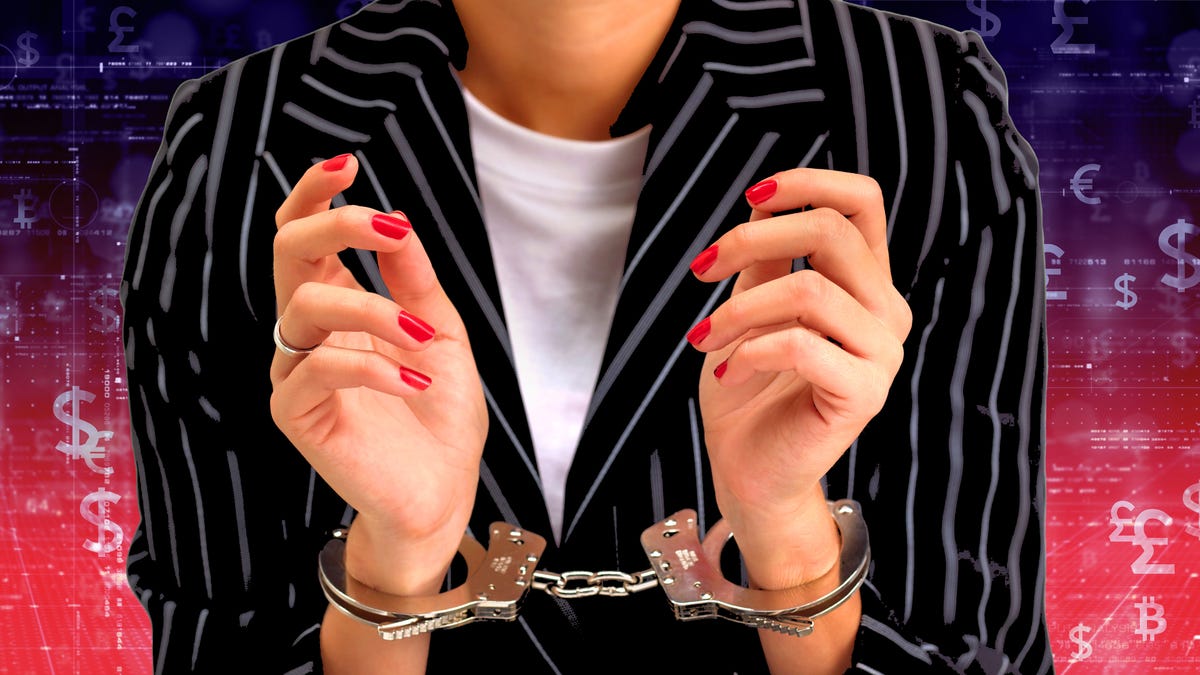
4 women who became infamous crypto fraudsters

Financial frauds related to cryptocurrency are all too common, with high-profile figures like Sam Bankman-Fried and Do Kwon making headlines for their illicit activities. These crypto criminals have not only defrauded countless individuals but have also tarnished the reputation of the cryptocurrency industry as a whole. While much attention is often focused on male perpetrators, several women have also played significant roles in financial fraud involving cryptocurrencies. Let’s take a closer look at them: Ruja Ignatova Ruja Ignatova, a self-titled “CryptoQueen,” co-founded OneCoin with Karl Sebastian Greenwood in 2014 in Sofia, Bulgaria, creating one of the largest Ponzi schemes in cryptocurrency history. While Greenwood is facing a 20-year jail sentence, she is currently on the FBI’s Ten Most Wanted Fugitives list, with the U.S. government offering a $5 million bounty for information leading to her arrest or conviction. A German citizen born in Bulgaria and educated at Oxford, Ignatova defrauded investors of an astounding $4.5 billion through her fraudulent cryptocurrency, OneCoin. The BBC produced a documentary about her, which revealed that she fled Sofia airport in 2017, allegedly bound for an event in Lisbon. Instead, she boarded a flight to Athens and was never seen again. Since her disappearance, numerous theories about her fate have emerged, with suspicions that a drug trafficker may have murdered her. Caroline Ellison Caroline Ellison, the former CEO of Alameda Research and ex-girlfriend of disgraced FTX founder Sam Bankman-Fried (also known as SBF), is convicted of committing financial fraud. Last month, the court sentenced her to 24 months years in prison. Ellison, 29, pleaded guilty to seven counts, including conspiracy to commit wire fraud, commodities fraud, securities fraud, and money laundering. A Stanford University graduate and the daughter of MIT professors, she served as the prosecution’s star witness against Sam Bankman-Fried, the disgraced cryptocurrency executive. SBF was convicted of fraud and theft of about $8 billion in customer funds in the spectacular collapse of the crypto exchange FTX. He was sentenced to 25 years in prison in March. Heather Morgan Heather Morgan was arrested alongside her husband, Ilya Lichtenstein, in New York City in February 2022 on charges of money laundering related to the 2016 hack and theft of approximately 120,000 Bitcoin from the cryptocurrency exchange Bitfinex. The U.S. authorities seized around 95,000 of the stolen Bitcoin from cryptocurrency wallets, valued at approximately $3.6 billion at the time. Since their arrests, the government has also confiscated an additional $475 million linked to the hack. While Lichtenstein is currently under house arrest, Morgan remains free on bail and reportedly attended the Bitcoin Conference 2024 in Nashville, raising questions among attendees. She pleaded guilty last year, and may face up to five years in prison and a $250,000 fine. She has since been awaiting sentencing, scheduled for November 8, 2024. Jian Wen, 42, was found guilty of laundering Bitcoin in connection with a $6 billion fraud scheme in China and was sentenced to six years and eight months in prison earlier this year. In a significant 2018 operation, police in the U.K. seized over £1.7 billion (approximately $2.2 billion) worth of Bitcoin linked to the alleged fraud. She was accused of laundering the proceeds from this fraud by converting the Bitcoin into cash and using the funds to purchase properties, jewelry, and other luxury items. Despite her involvement, the former takeaway worker claimed that she only managed a Bitcoin wallet on behalf of her boss and asserted that she was unaware of the illicit origins of the funds, insisting she was acting solely for her son’s well-being.

 2024-10-22 09:00:00

read more

Candidates Ignoring Crypto Risk Losing A Growing, Informed Voter Base: Ripple CEO

With only two weeks left before the U.S. elections, Ripple CEO Brad Garlinghouse believes that some candidates are missing out on a growing voter base that may turn out to be a key demographic in the November elections.Garlinghouse took to X Monday to share a clip from X owner Elon Musk's town hall in Pittsburgh Sunday wherein the tech billionaire was asked by an audience member if he thinks the XRP Ledger, a public blockchain, will be integrated into financial institutions in the future.Musk dodged the question, but clarified that his comments shouldn't be taken as an endorsement or a lack of endorsement for XRP, the native cryptocurrency of the XRP Ledger.The Tesla CEO then talked about crypto in general, saying it can be a valuable defense against the control that the centralized financial system has established over the years.Do Voters Actually Care about Crypto?Garlinghouse shared a clip on the question and answer between Musk and the apparent crypto user who attended the town hall and shared his thoughts on the matter."Voters care about crypto – they care about XRP – it's not a niche issue. They want real policies that drive innovation and create jobs," Garlinghouse said.The crypto executive's words are backed by data. CoinGecko shows that as of early Tuesday, the crypto market has reached a total market cap of over $2.4 trillion. XRP, the seventh-largest digital token on the top ranks by market value, accounts for $30 billion of the industry's total value.Bitcoin, the world's first and largest crypto asset by market cap, still makes up for the biggest chunk, commanding a market value of over $1.3 trillion as of early Tuesday. Still, XRP isn't very, very far behind and in recent weeks, its popularity has only skyrocketed amid the U.S. Securities and Exchange Commission's (SEC) hounding.Connecting the said figures to the state of crypto in the United States, it can be safe to say that the country is a key adopter of cryptocurrencies and blockchain technology.The latest data shows that nearly 50 million American adults own crypto (around 14% of the country's total population). Furthermore, Triple-A research shows that the U.S. is the second-largest country in terms of crypto adoption.Over 55% of U.S. crypto users are planning to increase their digital asset holdings, considering how 81% of American adults in the country have already heard about crypto.There's also Polymarket, a decentralized market prediction platform that allows users to buy and sell crypto to bet on future events. As of early Tuesday, over $2 billion has been poured into Polymarket's event contract predicting the outcome of the 2024 U.S. presidential election. Donald Trump is leading Kamala Harris by double digits.There are many other event contracts on the platform that have grown to become hundred-million-dollar bets in the lead-up to Nov. 5, further cementing the association of crypto and the elections.Ripple CEO Issues Warning on Missing OutAside from pointing out that voters in the country care about crypto and XRP, Garlinghouse also issued a dire warning for some candidates who may be missing out on the crypto voter base."Candidates that ignore crypto and blockchain risk a serious loss in support from a growing, informed voter base," he said.It appears an increasing number of politicians now understand what Garlinghouse is saying, and many of them are from the Republican Party, at least based on their public promises to the crypto community.For instance, crypto advocacy nonprofit Stand With Crypto revealed that in top races such as the Senate, a disproportionately huge number of GOP candidates have an A (strongly supportive) rating, compared to many Democrats who either have an F (strongly against), a D (somewhat against), or a B (somewhat supportive) rating.Stand With Crypto provides information on 2024 candidates, gathered from their work around bills supporting crypto and their public statements made so far about the industry.Many crypto users on X have also been talking about the elections in recent months, suggesting that crypto voters may be watching whether candidates will lean toward the industry or maintain a hostile approach toward the burgeoning sector.

 2024-10-22 07:14:40

read more

Bitcoin approaches a three-month high ahead of US election

Bitcoin surged by 9% over the past week and 31% since its September low, as markets bet on a potential Trump victory in the US election on 5 November. The world’s largest digital token topped $69,000 before retreating to around $67,000 on Monday, its highest level since 31 July. In euro terms, Bitcoin rose above €64,000 briefly on Monday before retreating to just over €62,300 at 5:20 am CET on Tuesday. Bitcoin’s price is now only 8% below its all-time high of $73,000 (€64,700) set in March, when optimism surrounding the approval of a spot Bitcoin ETF and anticipation of a major Bitcoin halving event in April fuelled a rally. The upcoming US election and central banks’ easing monetary policies have sustained this upward momentum since September. The Trump Trade The recent surge in Bitcoin has been largely attributed to the so-called “Trump trade”, a financial market trend reflecting the scenario in which Republican candidate Donald Trump wins the US Presidential election on 5 November. The former US President has been notably pro-cryptocurrency, pledging at the Bitcoin 2024 conference to make the United States “the crypto capital of the planet” and position Bitcoin as a global superpower. Trump also vowed to dismiss Securities and Exchange Commission (SEC) Chair Gary Gensler, promising to “appoint an SEC chair who will build the future, not block the future” if re-elected. According to Bloomberg data, US spot Bitcoin ETFs saw a net inflow of nearly $2.4bn (€59bn) in the six days up to 18 October. Bitcoin investors have been accumulating Bitcoin-related assets, speculating that US cryptocurrency regulations will be more favourable under a Trump administration than they are under Kamala Harris. Recent polls indicate that the race between the two candidates is extremely close, but betting markets have shifted in favour of a Trump victory, influencing financial market trends toward assets that may benefit from his proposed policy changes. While some analysts predict that Bitcoin could hit $100,000 (€92,000), others caution that Trump’s tariff policies could reignite inflationary pressures, potentially weighing on cryptocurrency markets. Trump recently stated: “The most beautiful word in the dictionary is tariff”, during an event at the Economic Club of Chicago. A Bitcoin-friendly macroeconomic environment The year 2024 has seen a resurgence of enthusiasm for cryptocurrencies, with Bitcoin up 59% year to date. The global macroeconomic backdrop has also played a key role in driving up crypto markets, particularly Bitcoin prices. Cryptocurrencies, known for their high-risk profile, have experienced a substantial rally amid central banks’ easing cycles, particularly following the Federal Reserve’s policy shift. Bitcoin has historically trended upwards during periods of monetary easing by the Fed. During the 2020 pandemic, Bitcoin’s price skyrocketed by 1,600%, climbing to more than $64,000 in April 2021 from the previous year. Recent sweeping stimulus measures implemented by China, along with signs of accelerating rate cuts by other major central banks, may have further contributed to Bitcoin’s rally. Simply put, loose liquidity has been a major driver behind the rise in cryptocurrency markets.

 2024-10-22 06:59:04

read more

Crypto tapping, a poverty barometer for the Nigerian government

A few months ago, not quite long. I happened to be under the weather, so I decided to visit a trusted pharmacy in my area. After the back-and-forth procedure of describing my health issues, across the counter, the pharmacist attending to me was arranging my supposed medication. I tried to ask her a couple of questions just for me to notice how out of reach her ears were to me, so I tiptoed to steal a glance at whatever she was doing. Lo and behold, she was tapping. Yes, she was tapping virtual coins on the infamous Hamster Kombat platform. Just the other day, I was in a five-star hotel in the Eastern Heartland of the country, and what I saw might sound funny. The general manager of the hotel was busy tapping away on Tapswap. Inflation is eating up people’s salaries. It’s already been reported that Nigeria’s inflation hit a 32.70 percent rise in the month of September 2024, according to the Guardian Newspaper, a record rise I must chip in. Most Nigerians have steadily been gazing helplessly at how inflation is consistently eroding the purchasing power of their salaries. An average Nigerian earns thirty thousand Thousand Naira per month, and when you check or divide this by the days of the month, what you would get is a pitiful one thousand naira per day income. Meaning that a huge percentage of Nigerians live below the one-dollar mark since a dollar gives one thousand six hundred naira only. The cost of fuel and diesel isn’t taking a rest while, on its way up, federal universities in the country are hiking up their tuition and miscellaneous fees, such that federal universities, which were once considered the poor man’s school of choice, are drifting away from the grasp of the poor masses. The fees of these federal universities are now almost at par with those of state and privately funded universities across the nation. People have lost hope in the government. I was interacting with a group of crypto enthusiasts the other day, and one said, “I do the tapping because no one is coming to save me, not even the government.” “It takes only my data to tap,” another reiterated. Do you expect me to cast my lot with a government that responds to humanitarian and financial disasters with a bag of rice? Yes, I know that crypto mining is outlawed in the country, but the country leaders do not give a hoot about the country’s people. Another one doubled down. For a government that capitalises on the economic woes of its people during election time, how then do you expect them to care about the poor masses when it’s not yet election time? Their assumed leader asked me. Read also: Cryptocurrency: Role in redefining privacy & freedom A lot of fellow country people want to go to Japa. It actually seemed to me as if I was the only Nigerian who wasn’t tapping. One of the janitors in a hotel confided in me how he keeps on tapping in order to raise funds to travel overseas for good. As if his statements were not enough, he chipped in, “When I Japa una no fit, see me again for this country,” and I could tell he wasn’t bluffing, for I could see and feel the determination in his eyes and voice. What this means is that with the current Japa trend, financial constraints have been the main reason holding a lot of Nigerians back. Had the Tapswap tapping been a major financial success for its participants, Nigeria would have had to battle with a huge demographic decline in the coming months, not just losses of skilled manpower. Potential cybercrimes and malware: To the layman tapper, all you have to do is just keep on tapping your phone screen to accumulate coins. Cryptocurrency is such a decentralised currency and platform that no one knows who is who or who controls what. After tapping, you get your coins turned into cryptocurrency, and to do this, you have to submit your crypto wallet. Remember that your crypto wallet itself houses critical and sensitive information about you. This in turn can serve as a gateway for scammers, bots, and malware to steal sensitive and private details. One of the commonalities in this crypto tapping is that to engage or tap, you must have a Telegram account. Even Pavel Durov, the telegram founder, has stated countless times that his social media platform is an all-for-all, where you are free to sleep like a bat if you wish to. Meaning that scammers and scams are just a pace away. In the first few months of its breakthrough into the Nigerian population, Tapswap (one of the main tapping cryptocurrency platforms) gained 50 million users since it launched in February 2024. What does this mean? It means that if there’s a privacy breach or malware, the data of 50 million Nigerians will be at risk, and subsequently the country’s data too. Some of these apps periodically require the tappers to share posts and data from their platforms with the users’ social media accounts; these posts could be illegal, against the laws of the country of residence of the user. The post itself could be to spread misinformation since we do not even know who generates these posts and what they aim to achieve by having them shared. Honestly, the country’s elites and governing council need to read, keep records, and also act on these barometers of high poverty levels in the country because it poses more than enough risks to the nation at large, not just to the tappers. Let the leaders of the country show know-how on ameliorating the financial disasters plaguing the masses and not just respond with a bag of rice and microphone diplomacy.

 2024-10-22 05:00:21

read more

Understanding Nigeria’s cryptocurrency regulatory framework

By Tochukwu Onyiuke (SAN) and Oge Anene In recent years, cryptocurrency has transformed from a niche digital asset into a significant component of the global financial system. As its use expands, countries like Nigeria have recognised the need for clear regulations to manage risks, protect investors, and foster innovation. However, Nigeria’s journey towards establishing a robust regulatory framework for cryptocurrencies has been challenging. The current regulatory landscape remains fragmented, with overlapping roles between regulatory bodies creating confusion. This article provides an overview of Nigeria’s cryptocurrency regulatory framework, tracing its evolution, examining its strengths and weaknesses, comparing it with global practices, and proposing improvements for a more coherent and effective system, particularly in the area of dispute resolution. Key regulatory milestones Nigeria’s approach to regulating cryptocurrencies began on January 12, 2017, when the Central Bank of Nigeria (CBN) issued its first official caution. The CBN sent a circular to banks and financial institutions warning them about the risks associated with cryptocurrencies, including concerns about market volatility and potential use in money laundering and fraud. Although this circular did not impose a formal ban on cryptocurrency transactions, it urged financial institutions to exercise caution when dealing with digital assets. Less than a month later, on February 6, 2017, the CBN took a stronger stance by prohibiting financial institutions from facilitating cryptocurrency transactions. This directive explicitly banned banks from converting cryptocurrencies into naira or facilitating crypto transactions, effectively pushing cryptocurrency activity into informal sectors, particularly peer-to-peer (P2P) platforms, which have since become dominant in Nigeria. In 2018, the Nigerian Securities and Exchange Commission (SEC) recognised digital assets and initial coin offerings (ICOs) as securities if used for investment purposes. However, the lack of detailed guidelines led to uncertainty about how digital assets should be treated. On February 5, 2021, the CBN reiterated its ban on cryptocurrency dealings by financial institutions. This directive resulted in the closure of many crypto-related bank accounts and pushed more transactions onto P2P platforms. Later that year, in October 2021, the SEC released a position paper aimed at providing clearer guidelines for regulating ICOs and digital assets, but the regulatory framework remained fragmented due to the overlapping responsibilities between the CBN and SEC. Read Also; Local government administrators Recent developments In 2023, the National Information Technology Development Agency (NITDA) launched the National Blockchain Adoption Strategy to promote blockchain technology across various sectors, including finance and healthcare. Although the focus is on blockchain innovation, this strategy indirectly supports the cryptocurrency ecosystem by encouraging the use of blockchain infrastructure. As part of this strategy, NITDA introduced a regulatory sandbox, allowing startups to test blockchain applications in a controlled environment. This initiative fosters innovation while ensuring regulatory oversight, providing a safe space for blockchain experimentation. Although specific regulations for cryptocurrency exchanges and wallet providers have not yet been implemented, ongoing discussions suggest that future rules will focus on consumer protection, market integrity, and preventing illicit activities. Stricter Know Your Customer (KYC) and Anti-Money Laundering (AML) requirements are expected to be introduced, creating a more secure environment for Nigeria’s cryptocurrency market. Analysis of current regulations Nigeria’s current regulatory framework for cryptocurrency has notable strengths but also significant gaps. One of its key strengths is the recognition by both the CBN and SEC of the need to manage risks such as fraud, money laundering, and financial instability. The CBN’s prohibition on banks directly engaging with cryptocurrency transactions was intended to protect the naira and safeguard the financial system from potential risks posed by volatile digital assets. However, the major weakness in the framework is its fragmentation. The CBN restricts financial institutions, while the SEC regulates ICOs and other digital assets, leading to confusion among businesses and investors about which regulatory body holds ultimate authority in certain areas. Another gap is the limited scope of regulation. While the CBN focuses on banks, no comprehensive rules govern cryptocurrency exchanges, wallet providers, or P2P platforms, which dominate the Nigerian market. This lack of oversight increases the risks of fraud, security breaches, and consumer harm. Furthermore, the absence of formal regulations discourages foreign investment and limits the potential growth of Nigeria’s cryptocurrency ecosystem. Dispute resolution in cross-border cryptocurrency transactions As cryptocurrency transactions increasingly involve cross-border interactions, effective dispute resolution mechanisms are essential for ensuring investor confidence and legal recourse. Nigeria currently lacks a well-defined framework for resolving disputes, especially those involving cross-border transactions, leaving participants vulnerable in case of conflicts. European Union (EU) approach The EU’s Markets in Crypto-Assets (MiCA) regulation, includes provisions for Alternative Dispute Resolution (ADR), which enables disputes to be resolved outside of courts through mediation or arbitration. The EU also offers an Online Dispute Resolution (ODR) platform, providing a user-friendly digital platform for resolving disputes across borders. United States approach In the United States, the Securities and Exchange Commission (SEC) and the Commodity Futures Trading Commission (CFTC) regulate different aspects of cryptocurrency markets, and many cryptocurrency-related disputes are resolved through mandatory arbitration. Arbitration is commonly included in the terms of service for many cryptocurrency exchanges, ensuring that disputes are settled quickly and outside of court. Additionally, regulatory bodies like the SEC play a role in overseeing enforcement actions when necessary. Lessons for Nigeria Nigeria could benefit from adopting similar ADR and ODR mechanisms, ensuring quicker and fairer dispute resolution, especially for cross-border transactions. Setting up a local ADR platform for cryptocurrency-related disputes and ensuring mandatory participation from businesses would help improve trust in the market. Nigeria could also implement arbitration clauses in service agreements for cryptocurrency platforms, ensuring disputes are resolved efficiently. Comparison with global practices To improve its cryptocurrency regulations, Nigeria can learn from global best practices: • United States: The U.S. employs a dual regulatory approach, with the Securities and Exchange Commission (SEC)regulating digital assets classified as securities and the Commodity Futures Trading Commission (CFTC) overseeing cryptocurrency derivatives. Nigeria could adopt a similar model where different types of digital assets are regulated based on their specific characteristics. • European Union: The EU’s MiCA regulation creates a unified framework for regulating digital assets, ensuring transparency and consistency across member states. Nigeria could adopt a similar approach to eliminate confusion and create a cohesive regulatory environment for its cryptocurrency market. • United Arab Emirates (UAE): The UAE’s Virtual Assets Regulatory Authority (VARA) offers a centralized regulatory framework for virtual assets, streamlining oversight and promoting innovation. Nigeria could reduce the overlap between the CBN and SEC by creating a unified regulatory body to oversee all digital assets and activities. Recommendations for improving the regulatory framework • Establish a Unified Regulatory Body: Nigeria could streamline its cryptocurrency regulation by creating a dedicated regulatory body, similar to the UAE’s VARA, to oversee all digital asset activities and reduce confusion caused by overlapping responsibilities between the CBN and SEC. • Develop a Comprehensive Regulatory Framework: A unified framework covering exchanges, wallet providers, ICOs, and P2P platforms is essential to ensure that all participants in the ecosystem are regulated appropriately. • Strengthen KYC and AML Measures: Enforcing stricter KYC and AML requirements across all cryptocurrency platforms would reduce the risks of fraud and money laundering while enhancing market security. • Support Innovation with Regulatory Sandboxes: Introducing regulatory sandboxes would encourage innovation in the cryptocurrency and blockchain sectors while maintaining oversight from regulators. • Enhance Public Awareness and Financial Literacy: Increasing public awareness about cryptocurrency risks and improving financial literacy would empower consumers to make informed decisions and avoid scams. • Implement ADR and ODR Mechanisms: Nigeria should establish internal and cross-border dispute resolution mechanisms similar to the EU’s ADR and ODR systems, providing accessible and efficient avenues for resolving cryptocurrency-related disputes. Nigeria’s cryptocurrency regulatory framework has evolved significantly since 2017, but there are still significant gaps that need to be addressed. The fragmentation between the CBN and SEC creates confusion, while the lack of a clear dispute resolution process hinders cross-border transactions. By adopting a unified regulatory framework, strengthening KYC and AML measures, supporting innovation, and introducing effective dispute-resolution mechanisms, Nigeria can create a more cohesive and effective regulatory environment. These reforms will not only protect investors but also foster the growth of the digital asset sector, positioning Nigeria as a leader in Africa’s cryptocurrency market. • Onyiuke is a Senior Advocate of Nigeria (SAN) and heads the dispute resolution team of Accendolaw LP, a commercial law firm in Lagos. Anene, a blockchain expert, is a Supervisory Associate Counsel in the firm.

 2024-10-22 04:48:00

read more

Money Talks: What is Crypto Really Good For?

Five years ago, tech investor Ben Horowitz of Andreessen Horowitz bet our own Felix Salmon that 10% of Americans would be using Bitcoin to pay for something by now. The bet involved a 100-year-old bottle of wine. Ben lost, of course, but he’s ready to double down with a new digital wager! He and partner Chris Dixon discuss the past and present of crypto, blockchain, and AI. If you enjoy this show, please consider signing up for Slate Plus. Slate Plus members get an ad-free experience across the network and an additional segment of our regular show every week. You’ll also be supporting the work we do here on Slate Money. Sign up now at slate.com/moneyplus to help support our work. Podcast production by Jared Downing and Cheyna Roth.

 2024-10-22 01:55:56

read more

Nomura-backed crypto custodian Komainu makes first acquisition

Komainu, the cryptocurrency custodian backed by Nomura Holdings, is buying Singaporean rival Propine Holdings in its first acquisition.The takeover of Propine, which is pending approval from Monetary Authority of Singapore, is likely the first of several acquisitions, Komainu co-CEO Paul Frost-Smith said in an interview. He declined to say how much Komainu is paying for Propine.Buying Propine will yield Komainu a Capital Market Services license in Singapore, Frost-Smith said, adding that it’s 'an absolutely key factor in building' the business. Komainu is stepping up an expansion in Asia, where economies from Singapore to Hong Kong and Japan have established regulatory regimes for digital assets in the past few years.

 2024-10-22 01:38:00

read more

Nomura-Backed Crypto Custodian Komainu Makes First Acquisition - Bloomberg

Why did this happen? Please make sure your browser supports JavaScript and cookies and that you are not blocking them from loading. For more information you can review our Terms of Service and Cookie Policy.

 2024-10-22 00:00:00

read more

African Potential: The Intersection Of AI, Crypto, And Digital Inclusion

Share to Facebook Share to Twitter Share to Linkedin Kenya medical training college students, use their mobile phones to take pictures of doctors ... [+] chanting as they make their way to the health ministry headquarters protesting with placards to demand better pay and working conditions in the capital, Nairobi on April 16, 2024. Hundreds of hospital doctors joined a demonstration in the streets of the Kenyan capital as a nationwide strike by medics neared its fourth week. (Photo by SIMON MAINA / AFP) (Photo by SIMON MAINA/AFP via Getty Images) AFP via Getty Images It’s everything that’s currently wrong with artificial intelligence in a single tweet. Elizabeth Laraki posted on X/Twitter about a bad experience she had with AI. Elizabeth Laraki is due to speak at an (unnamed) UX/AI conference later this year, and came across an ad for the event featuring the photo she’d supplied. Except it wasn’t: the image used in the tweet was subtly different. Whereas her original photo showed an appropriately-dressed businesswoman, the doctored image showed her shirt unbuttoned to reveal a suggestive peak of her bra. Who was this rogue air brusher? Women working in the tech industry won’t be surprised to learn that the villain, ironically, is artificial intelligence itself. It turns out the organizers had used an AI tool when cropping and sizing the image, and it had automatically decided to make Elizabeth look far racier than she’d ever have wanted. What caused the AI to act in such an inappropriate and sexist manner? Simple: because so much female imagery online is sexualized, AI is trained to think this is how women should look. AI Airbrushing Makes Changes X (Twitter) Of all the ethical and practical challenges we face in an AI-powered future, this might seem like a fairly peripheral thing to worry about (although I can assure you, inherent anti-female bias is of absolutely central importance to every woman). It highlights, however, an issue that affects pretty much everyone who isn’t a white man from the Global North: inherent biases that ultimately stem from AI’s representation problem. The good news is that things are changing fast. Women are increasingly represented at every level of AI and web3, including as founders and CEOs. So let’s go in search of the next generation of female tech talent – and what better place to start than in Africa? Inspirational Women This week I announced the winners of "Most Inspirational Women in Web3 and AI" at Singularity South Africa. The 135 winners comprise women who are playing a central role in shaping the future we will all soon inhabit. What’s especially encouraging is how many of these inspirational women are occupying the highest positions, as either CEOs or founders. This indicates that our young industry is making significant strides towards fair and equal representation – although there’s clearly a long way still to go before we even approach parity with men. Since we did the announcement of the the most inspirational list at Singularity South Africa in Johannesburg, I want to talk about our choice of venue, because that tells another critical story about the future of representation in AI. It is summed up here at a high level. "Hosting events that celebrate inspirational women in AI and Web3 in the world but specifically Africa is crucial for fostering innovation and economic growth on the continent. By promoting diversity in these cutting-edge fields, we can tap into a wider pool of talent and perspectives, leading to more inclusive and effective technological solutions. Such initiatives not only inspire the next generation of African tech leaders but also help bridge the gender gap in the industry, ultimately contributing to Africa's digital transformation and economic development," commented Mic Mann, Co-CEO of Singularity South Africa. Africa Rising Our decision to unveil this year’s Inspirational Women at Singularity South Africa was a no-brainer. It is one of the most prestigious tech events in a continent that’s on the cusp of becoming a global powerhouse of innovation. With over 60% of Africa's population under the age of 25, the continent is poised to become a major source of tech talent in the coming years. The World Economic Forum predicts that by 2035 there will be more young Africans entering the workforce each year than in the rest of the world combined. Africa, particularly Sub-Saharan Africa, is emerging as a global leader in cryptocurrency adoption and innovation. The region ranks high on the Global Adoption Index, with Nigeria maintaining its position as the second-largest crypto market worldwide. Cryptocurrencies, especially stablecoins, are being widely used for practical purposes such as business payments, hedging against inflation, and facilitating cross-border transactions. Digital generated image of hand with dark skin tone going through portal and touching robotic hand. ... [+] Metaverse and Web3.0 concept. XYO, a decentralized physical infrastructure network (DePIN), is making significant impacts across the continent by enabling smartphone users to earn cryptocurrency through data collection. This technology has led to life-changing earnings for many participants, from paying off mortgages to starting businesses, with potential to transform entire communities by connecting them to the global data economy. XYO's efforts are also addressing data bias by incorporating more African data into global datasets, contributing to a more comprehensive and human-centric understanding of the world. As Markus Levin, Co-Founder of XYO, states: "To date there have been 434,998 XYO data nodes all across Africa and together they earned millions in XYO. I am excited to hear all their individual stories. Africa is at the heart of XYO's expansion strategy and we see huge potential for the entire DePIN ecosystem." Markus Levin, Co-Founder of XYO Sub-Saharan Africa leads the world in DeFi adoption, driven by the need for accessible financial services in a region where traditional banking is limited. Stablecoins have become crucial in countries facing foreign exchange crises and currency volatility, accounting for about 43% of the region's total transaction volume. Africa's real-world crypto use cases offer valuable lessons for the global market, positioning the continent as a potential future leader in crypto innovation and financial inclusion. Africa’s tech sector is often written off or, worse, ignored. That’s a massive, myopic mistake. Sure, the continent faces several significant challenges, not least with its relatively underdeveloped digital infrastructure. Yet, what it might lack in connectivity, it more than makes up for in talent and ingenuity (a fact reflected in the number of African winners and nominees in this year’s Inspirational Women). Africa has a thriving AI industry, with developers applying the technology in incredibly creative, groundbreaking ways to solve specific local challenges – with healthcare a particular focus. I can’t do much more than scratch the surface of Africa’s burgeoning AI sector, but I’m particularly excited about projects that use the technology to make drugs and vaccines better tailored and more effective for local people. To take just one example, Ocular is an app that uses a 3D-printed adapter that connects a smartphone camera to a microscope, and uses predictive AI to judge if cervical lesions are cancerous. It’s the perfect example of an African solution to an African challenge, and which works with existing technology and infrastructure. That’s not to say Africa’s AI solutions are only locally relevant; in fact, these countries face many challenges with the rest of the Global South, so there’s huge potential for AI to become one of the continent’s most lucrative exports. Little wonder that a recent report from Google estimates that artificial intelligence (AI) could contribute over $30 billion to sub-Saharan Africa’s economy in the coming years. No Representation without Education None of this is to deny that Africa faces significant obstacles on its journey to become a global hub for AI. I’ve already touched on the infrastructure challenges, and these are not easily overcome. Internet access across sub-Saharan Africa is patchy to say the least: while around two thirds of people in southern Africa are online, that falls to only 24% in Central Africa, while the figure for West Africa is around 30%. Connectivity is critical for the success of AI, and not just for the functioning of AI agents and services. If we are to develop truly representative AI, we need to reach those who, by definition, have traditionally been locked out from previous digital revolutions. That’s why the next frontier for AI is education, which is why we’re seeing huge investment in initiatives to foster the next generation of (especially female!) talent across Africa. Groups like Data Science Nigeria, Data Science Africa, and South Africa’s Deep Learning Indaba do tremendous work in organizing conferences and training events, providing research grants for local AI projects, and awarding mentorships, grants and awards. I’m proud to say that Unstoppable Women of AI / Web3 – the organization I founded and which is behind Inspirational Women – is also playing its part, with our commitment to provide Web3 and Metaverse education to six million women in Africa over the next five years. This is just the beginning of a long journey to eliminate dangerous biases from AI and make sure it brings equal benefits to everyone, regardless of their sex, race, nationality, sexuality, or any other characteristic. Yet when I look at Africa’s burgeoning AI sector, or at our Inspirational Women winners, I know we’re going in the right direction. Elizabeth Laraki’s story is just one, relatively minor example of what happens when a whole group of people are sidelined by AI. That’s what representation means to me: it’s not just a tick-box exercise that gives equity, diversity and inclusion (EDI) practitioners something to justify their exorbitant salaries. For women, for Africans, and for many other marginalized groups, it’s about making sure our outlooks, opinions, experiences, and, of course, leadership are at the forefront of the most momentous technological and societal revolution in our lifetimes. Follow me on Twitter or LinkedIn. Sandy Carter Editorial Standards Forbes Accolades

 2024-10-21 21:06:22

read more

Gartner's 2025 tech trends show how your business needs to adapt - and fast

Every year around this time, well-regarded analyst group Gartner releases its list of top 10 strategic technology trends for the upcoming year. Last year, among the 10 trends it identified for 2024 was AI-augmented development, and we've certainly spent a lot of time here on ZDNET discussing AI and programming. Now, just in time for its Orlando gathering of expense-account-wielding senior executives -- the Gartner IT Symposium/Xpo -- Gartner is back with its 10 strategic trends for 2025. Also: The best AI for coding, and a bunch that failed miserably When reading these trend prognostications, it's important to put them into context. Gartner isn't saying these are all initiatives your company should be working on, or that you should feel somehow less than if your company doesn't have active initiatives in all of these areas. What they are saying is that these are trends and areas of innovation, activity, opportunity, and concern you should start becoming aware of. For example, if you're not familiar with the new computing technologies of optical, neuromorphic, and novel accelerators, it might not be a bad idea to learn more about them before we proceed to Gartner's trends, since the analyst firm refers to them as underlying technologies, particularly for energy-efficient and hybrid computing. Here's a quick rundown: Optical computing: Photons can travel much faster than electrons within typical computing materials. Because electrons often collide with the material they use for transport, they also generate teeny-tiny bits of friction that add up to a lot of heat. Optical computing uses lasers or photons to replace electrical signals in chips, potentially making them much faster and operate with less heat. This is ideal for any high-performance compute-intensive task. Neuromorphic computing: No, the tech industry is not planning on harvesting Spock's brain to drive computing technology. However, the idea of neuromorphic computing is that neuromorphic systems process many tasks in parallel rather than using sequential steps, which is much more of how the human brain works. This could be helpful in AI and in processing inputs from thousands of sensors. Novel accelerators: This is another buzzword to describe the special-purpose processing units that have become popular as ways to augment traditional CPUs. The best known of these, of course, is the GPU. Initially popular as a way for gamers to get higher quality graphics, GPUs have proven to be amazingly capable in crypto and AI calculations. Other custom augment processors like Tensor Processing Units (Google's machine learning engine) are also proving popular. Most people reading this article aren't going to run out tomorrow and invest in optical computing or any of the other technologies I will be discussing. But keep these technologies (and the ten trends below) in mind as you start to plan your own business' strategic initiatives. And with that, let's dive into Gartner's 10 trends for 2025. 1. Agentic AI Agentic AI is corpspeak's way of saying AI with agents. I like how Microsoft describes this. They say "Think of agents as the new apps for an AI-powered world." Essentially, the idea is that AI will take the lead in some autonomous actions. Keep in mind that autonomous is not the same as automated. We've done "automated" for decades. Automated systems are those that follow specific instructions to perform tasks. Autonomous systems are those that operate independently, learn, make decisions, and adapt. Also: AI agents are the 'next frontier' and will change our working lives forever If you want a deep dive into this difference, read my, "From automated to autonomous, will the real robots please stand up?" While no decisions are coming out of AI agents today, Gartner predicts that a good 15% of "day-to-day work decisions" will be made by AI agents by 2028. 2. AI governance platforms This one is big -- and well worth the attention of every C-level executive. This is all about trust, accountability, and the legal and ethical underpinnings of AI systems. I have talked to several top executives at Lenovo, Adobe, and Deloitte about this topic: AI governance is an umbrella term used to describe frameworks for managing these challenges. Gartner uses the acronym TRiSM (for Trust, Risk, and Security Management). Also: How Lenovo works on dismantling AI bias while building laptops Now, here's the big takeaway from Gartner's future-looking predictions. The company predicts that within three years, "Organizations that implement comprehensive AI governance platforms will experience 40% fewer AI-related ethical incidents compared to those without such systems." Ethical incidents. Read that as lawsuits, employee complaints, and very bad PR. A 40% reduction can mean the difference between continuing a successful career or standing in the employment line. 3. Disinformation security While this name sounds more like you're protecting your right to propagate disinformation, what Gartner is discussing is just the opposite: adding the fight against disinformation into your main security posture. I did another interview, this one with Trustpilot's chief trust officer Anoop Joshi, to explore this problem in depth. Trustpilot makes its name on providing trusted reviews, so disinformation is the bane of the company's existence. Gartner describes disinformation security as "an emerging category of technology that systematically discerns trust and aims to provide methodological systems for ensuring integrity, assessing authenticity, preventing impersonation, and tracking the spread of harmful information." Also: AI-powered 'narrative attacks' a growing threat: 3 defense strategies for business leaders Today, Gartner isn't seeing much formal work in this area, but predicts that by 2028, a full half of enterprises will have systems that fight against these attacks. With AI in the hands of bad actors, it's not hard to predict that there will be an even more serious rise in very credible-seeming disinformation. Here's my take on disinformation in the upcoming elections: Elections 2024: How AI will fool voters if we don't do something now. 4. Postquantum cryptography I'm not going to get into the nuances of what quantum computing is. (We have an excellent explainer for that.) For the purpose of this article, think of quantum computers as insanely faster than our current machines. Now, think of cryptography. There are lots of encryption methods that don't respond well to brute force attacks, but instead can take thousands of years to decipher. But what happens when you have a computer a million times faster than you did last year? Suddenly a problem that takes a thousand years to solve can be cracked in about eight hours. Also: IBM promises a 4,000 qubit quantum computer by 2025: Here's what it means We do have a few years before your run-of-the-mill crook gains access to quantum computing tech. But nation-states? You can bet enemy and rogue nations are looking into this stuff right now. So what happens to all your encryption when the enemy has a way of compressing time? Gartner estimates that by 2029, most current forms of cryptography will be unsafe to use. They strongly recommend deeper research into building cryptography techniques that can survive in a world where quantum computing is available. 5. Ambient invisible intelligence Here's another trend that can give you a bit of a queasy feeling, but also can prove to be enormously helpful. The principle behind ambient invisible intelligence is that your home, work environment, retail environment -- any place, really -- is filled with smart tags and sensors, and then managed by AI. The idea is to infuse systems with awareness, whether that's awareness of buying behavior, traffic flow, or simply turning on the light as you walk down a dark hallway at night. Through 2027, Gartner sees this as mostly focused on practical retail and warehouse applications, although smart home geeks like me will undoubtedly deploy all sorts of neat autonomous gadgets that annoy our families and freak out the dog. 6. Energy-efficient computing Alphabet (Google's parent) chairman John Hennessy told Reuters that a query into a large language model AI like ChatGPT or Google's Gemini costs 10 times as much as a typical Google search. According to a study published in the academic journal Joule, AI-related energy is expected to use between 85.4 and 134.0 TWh of electricity annually by 2027. For comparison, Finland only uses 81.0 TWh, and Norway less than 132.0 TWh. It's no wonder Gartner contends that sustainability will be a big focus in the coming year. The analyst firm says that new technologies such as the aforementioned optical, neuromorphic, and novel accelerators may use substantially less memory. Also: Making GenAI more efficient with a new kind of chip There is one statement in Gartner's announcement that I just don't find fully credible. They say, "In 2024 the leading consideration for most IT organizations is their carbon footprint." Nope, I don't think so. Not the leading consideration. With the boom in AI, the ongoing extreme nature of cyberthreats, and just the need to get solutions deployed, it's unlikely that IT organizations can be characterized as making their carbon footprint their top priority. I just don't buy it. Maybe it should be. But it isn't. 7. Hybrid computing Ten years ago, when we talked about hybrid computing, we were referring to some mix of on-premises computing and cloud computing. Today, what Gartner is referring to is again those new technologies I introduced at the beginning of this article, along with mixes in processor types, different storage and network approaches, and other specialized considerations. Going forward, Gartner is saying, data centers won't simply look like racks of basic servers, but will be a mix of a wide range of technologies, deployed based on need and performance requirements. 8. Spatial computing There is no doubt spatial computing, VR, AR, mixed reality, etc., is becoming a thing. Meta is blasting out its low-cost Quest headsets to consumers. Apple's Vision Pro, while not a success at its over-the-top price point, is still a powerful concept prototype for the future of spatial computing. Gartner sees spatial computing exploding in the next ten years, jumping from a $110 billion market to over $1.7 trillion by 2033. Also: XR, digital twins, and spatial computing: An enterprise guide on reshaping user experience Expect to see adoption in vertical solutions, where the headsets solve specific professional problems. Then there's the whole virtual monitor and entertainment center application, which could replace peoples' needs for large TVs (especially those who travel or live in tight quarters) and for big monitors for computing use. Stay tuned. It's still not comfortable to wear the big heavy goggles. But if Meta's Orion project reaches fruition sometime soon, AR could suddenly become really compelling. 9. Polyfunctional robots Today, most robots do one task, and do it well. I have an army of 3D printers in the Fab Lab, and they create plastic objects. I have another set of robots that move cameras on arcs (one robot) or linearly (another set of robots). Many of us have little robots that vacuum our floors. But I still don't have a robot that will bring me a cup of coffee. Also: From automated to autonomous, will the real robots please stand up? While Gartner is seemingly loathe to describe humanoid robots, their description of polyfunctional robots is simple: machines that have the capability to do more than one task. They don't really define the form those robots will take, or what kinds of tasks they will perform, but they estimate that 80% of people in 2030 will "engage with smart robots on a daily basis." 10. Neurological enhancement No. Not a chance. I don't buy this one at all. Gartner claims that one of the trends to watch is the use of technologies that "read and decode brain activity" to improve human cognitive abilities. This will be done with BBMIs (bidirectional brain-machine interfaces). They look at these as neurological enhancements and claim that, by 2030, 30% of knowledge workers will be "enhanced by, and dependent on, technologies such as BBMIs (both employer-and-self-funded) to stay relevant with the rise of AI." Also: AI desperately needs a hardware revolution and the solution might be inside your head Yeah, no. The closest we might get is hanging VR bricks off our faces, and even that has a very low uptake compared to most other productivity technologies. It's far less likely that users will use electrodes to implant or detect brain signals. Not going to happen. What's your favorite future trend? Did we cover all the future trends you expect for 2025? I was surprised to find no mention of smart cars or smart cities, little about programming automation, no real mention of biotechnology or healthcare, and little detailed focus on anything related to green energy. What trend are you most excited by? What worries you the most? What did Gartner leave out? Let us know your thoughts in the comments below. You can follow my day-to-day project updates on social media. Be sure to subscribe to my weekly update newsletter, and follow me on Twitter/X at @DavidGewirtz, on Facebook at Facebook.com/DavidGewirtz, on Instagram at Instagram.com/DavidGewirtz, and on YouTube at YouTube.com/DavidGewirtzTV.

 2024-10-21 21:00:09

read more

Fintech giant Stripe to buy crypto startup Bridge - Reuters

Oct 21 (Reuters) - Stripe will buy stablecoin infrastructure provider startup Bridge, the fintech said in a tweet on Monday without disclosing the deal value. The deal is valued at $1.1 billion, Forbes reported, opens new tab last week, citing people familiar with the matter. Stripe declined to comment on the transaction's value when contacted by Reuters. Stripe, founded by billionaires John Collison and Patrick Collison in 2010, was valued at $65 billion earlier this year and is among the highest valued private startups in the U.S. Advertisement · Scroll to continue Digital currencies are gaining traction after the U.S. Securities and Exchange Commission allowed bitcoin spot exchange-traded funds earlier this year, easing scrutiny and paving way for cryptocurrencies to be accepted by major firms. Last year, PayPal launched a U.S. dollar stablecoin to become the first major financial technology company to adopt digital currencies for payments and transfers. Reporting by Jaiveer Singh Shekhawat in Bengaluru; Editing by Mohammed Safi Shamsi XFacebookLinkedinEmailLinkPurchase Licensing Rights

 2024-10-21 20:39:09

read more

Fintech giant Stripe to buy crypto startup Bridge

Stripe will buy stablecoin infrastructure provider startup Bridge, the fintech said in a tweet on Monday without disclosing the deal value. The deal is valued at $1.1 billion, Forbes reported last week, citing people familiar with the matter. Stripe declined to comment on the transaction's value when contacted by Reuters. Stripe, founded by billionaires John Collison and Patrick Collison in 2010, was valued at $65 billion earlier this year and is among the highest valued private startups in the U.S. Digital currencies are gaining traction after the U.S. Securities and Exchange Commission allowed bitcoin spot exchange-traded funds earlier this year, easing scrutiny and paving way for cryptocurrencies to be accepted by major firms. Last year, PayPal launched a U.S. dollar stablecoin to become the first major financial technology company to adopt digital currencies for payments and transfers.

 2024-10-21 20:08:50

read more

AJ McLean Recalls Working With ‘Sweetheart’ Liam Payne This Year

Breaking News “Election protection” activist says he plans to flag voters with “Hispanic-sounding” names as “suspicious” Supreme Court won’t hear challenge to structure of Consumer Product Safety Commission Michigan Secretary of State warns of bad actors seeking to “hack voters’ minds” on election misinformation Trump works drive-thru at Bucks County McDonald’s before town hall in Lancaster, Pennsylvania Freed American Paul Whelan, in first interview, opens up about life inside a Russian labor camp U.S. investigating unauthorized release of classified documents on Israel’s attack plans Trump makes vulgar comments about Arnold Palmer at Pennsylvania rally Eric Trump Melts Down Trying To Hide His Dad’s Decline Transcript: Brad Raffensperger on Jake Tapper Destroys Mike Johnson After He Lies For Trump Entertainment Advertise with us Search for Food & Drinks Entertainment Celebrity News Movie Reviews Music News Automobile Contact Us Search for Home/News/Entertainment/AJ McLean Recalls Working With ‘Sweetheart’ Liam Payne This Year Entertainment AJ McLean Recalls Working With ‘Sweetheart’ Liam Payne This Year Ashleigh Durden4 mins ago 1 minute read Play video content AJ McLean is remembering Liam Payne as “a light” in his life following the singer’s recent death … looking back on their time together working on a new Netflix show. The Backstreet Boys member addressed the late One Direction star’s passing at LAX, where he shared how he and Liam became friends while working on “Building the Band,” a music competition series where singers get a chance to build the next great pop group. AJ says they just finished wrapping the TV show … where he, Liam, Nicole Scherzinger and Kelly Rowland worked closely together over a 6-week period and had “a great time.” AJ, who has battled addiction throughout his career, noted he didn’t see any warning signs while working with Liam … but, admitted the 2 boybanders had “lots of similarities.” Though, the duo never discussed their respective sobriety journeys, AJ said he and Liam talked a lot about “life” … praising the late pop singer as “very funny” and a “sweetheart.” He added … “Addiction is a real thing. Fortunately I came out the other end, but I’m one of few.” Right now, AJ is thinking about Liam’s former bandmates, Harry Styles, Louis Tomlinson, Niall Horan, and Zayn Malik … explaining how boyband members “become family” while working together. As TMZ previously reported, Liam fell to his death from a third-floor balcony at the CasaSur Palermo Hotel in Buenos Aires, Argentina Wednesday. The singer had been in the South American country to support Niall’s show at the Movistar Arena earlier in the month … ultimately extending his trip to spend more time in Argentina’s capital. Police officials have said Liam jumped from his hotel balcony … citing drugs as the likely cause of his erratic behavior last week. Liam’s initial results from the autopsy have already come in … with a toxicology report stating the singer had cocaine, crack, “Cristal” — the Argentinian version of methamphetamine — and other drugs in his body. As we reported, Liam had been telling people he was sober earlier this year. Checkout latest world news below links : World News || Latest News || U.S. News Source link Tagsbreaking news headlines breaking news now celebrity news News the news trending entertainment news world news now worldnewsera Ashleigh Durden4 mins ago 1 minute read ShareFacebookXLinkedInTumblrPinterestRedditPocketShare via EmailPrint Related Articles Liam Payne Had ‘Pink Cocaine’ in System When He Died, Autopsy Reveals 2 hours ago Jennifer Lopez’s Sheer Black Bow Sweater Proves Simplicity Is Always Chic 3 hours ago Check AlsoClose Entertainment “Only Four People Die”: John Wick Director Recalls “Very Grounded” Original Script 3 hours ago Most Viewed Posts 4 weeks ago Unlocking the Potential of Netwyman Blogs: A Comprehensive Guide October 26, 2021 Industries That Will be Going Online 100%. May 29, 2022 First she documented the alt-right. Now she’s coming for crypto. February 11, 2021 Germany’s ‘Green’ Energy Failure: Germany turns back to coal and natural gas as millions of its solar panels are blanketed in snow and ice | Tech News | Startups News June 11, 2021 What is VUE JS used for? May 29, 2022 3 Ways To Scale Your Marketing Channels February 21, 2022 Pros and cons of betting on tennis while being on the go May 18, 2022 Republican Panic Grows After Mastriano Wins Popular Posts 24 mins ago Ignite your adventurous spirit in the Canary Islands 45 mins ago How are fish farmers adapting to climate change? 1 hour ago Calls for offshore EU asylum centres fuel misinformation in Moldova 1 hour ago Moldova president alleges vote-buying tainted EU referendum results 2 hours ago EU Ombudsman blasts Commission over chemicals safety 2 hours ago ‘Sinwar storm’ is coming for Israel, claims new Hamas leader 3 hours ago EU auditors warn of double payout risk amid shifting budget model 3 hours ago Overtourism protests come to Greece as workers demand better pay Recent Posts 8 seconds ago AJ McLean Recalls Working With ‘Sweetheart’ Liam Payne This Year 4 mins ago Sinn Féin employee resigns after damage to DUP portrait 9 mins ago Shakira Is Bringing Her New Tour to D.C. With Headlining WorldPride 2025 Performance 23 mins ago ‘Hours in agony, a nurse said she was sorry – but what is happening to our NHS’ 24 mins ago Ignite your adventurous spirit in the Canary Islands Search Latest News Search for: More Updates for best business news (4862) Breaking News (7423) breaking news headlines (6698) breaking news now (6619) breaking news today (3732) current business news (4969) latest news (3740) latest news today (3726) political news (3623) political news websites (3623) Politics (4034) politicususa (3712) the news (3965) top business news today (5973) u.s. business news (3713) weekly business news (3624) World news (4668) world news today (4589) Posts By Date October 2024 4 weeks ago Unlocking the Potential of Netwyman Blogs: A Comprehensive Guide October 26, 2021 Industries That Will be Going Online 100%. May 29, 2022 First she documented the alt-right. Now she’s coming for crypto. February 11, 2021 Germany’s ‘Green’ Energy Failure: Germany turns back to coal and natural gas as millions of its solar panels are blanketed in snow and ice | Tech News | Startups News June 11, 2021 What is VUE JS used for? May 29, 2022 3 Ways To Scale Your Marketing Channels February 21, 2022 Pros and cons of betting on tennis while being on the go May 18, 2022 Republican Panic Grows After Mastriano Wins July 17, 2022 Four Entrepreneurs Share Their Tips On Holding Yourself Accountable For Your Yearly Goals July 17, 2022 Analysis | Democrats Are Scapegoating Biden for Their Own Misjudgments News 19,017 Entrepreneurs 2,213 Finance 52 Stock Market 3,265 Banking 2,038 Personal Finance 745 Politics 3,623 United Kingdom 2,333 Europe 1,290 Entertainment 2,408 TV News 2,738 Music News 617 Celebrity News 567 Movie Reviews 1 U.S. News 861 Education 857 CoronaVirus 255 Editorial 183 Career and Jobs 217 Science 428 Startups 91 Tech Tips 19 Automobile 9 Food & Drinks 556 © Copyright 2024, All Rights Reserved | World News Era Contact Us Advertise with us Terms and Service FacebookXRedditWhatsAppTelegramViber Back to top button Search for

 2024-10-21 18:48:22

read more

Investors Lost Over 95% Of Their Wealth In This Nvidia-Linked ETF While Jensen Huang-Led Chip Giant Gained 220% In The Past Year: Here's More

Benzinga and Yahoo Finance LLC may earn commission or revenue on some items through the links below. Investors in the T-Rex 2X Inverse Nvidia Daily Target ETF (BATS:NVDQ) are grappling with significant losses as shares of Jensen Huang-led Nvidia Corp. (NASDAQ:NVDA) experience a remarkable stock surge. As per Benzinga Pro, the T-Rex ETF has seen a dramatic 96% decline in investor wealth over the past year. This stark contrast comes as Nvidia’s stock has soared by 221.08% during the same timeframe. Don’t Miss: This billion-dollar fund has invested in the next big real estate boom, here's how you can join for $10.This is a paid advertisement. Carefully consider the investment objectives, risks, charges and expenses of the Fundrise Flagship Fund before investing. This and other information can be found in the Fund's prospectus. Read them carefully before investing. If there was a new fund backed by Jeff Bezos offering a 7-9% target yield with monthly dividends would you invest in it? However, it is noteworthy that the T-Rex ETF is designed to achieve daily inverse investment results, meaning its long-term performance may not mirror Nvidia’s stock trends. It aims for a daily return of 200% of the inverse of Nvidia’s daily performance, setting it apart from conventional ETFs. Simply put, this ETF is designed to gain value when Nvidia's stock price decreases and lose value when Nvidia's stock price increases. It achieves this by using derivatives, such as options or futures, to bet against Nvidia’s stock performance. See Also: Bitcoin, Ethereum, Dogecoin On The Rise As ‘Uptober’ May Be Finally Here: Analysts Predict Bullish Breakout For King Crypto, ETH’s Rally To $3,300 Meanwhile, Nvidia remains a leader in the chip industry, with its shares closing up 0.8% at $138 on Friday, boosting its market capitalization to over $3 trillion. Experts like Ram Ahluwalia from Lumida Wealth Management are optimistic about Nvidia’s potential to reach a $4 trillion valuation, citing strong demand for GPU chips. Additionally, Dan Niles of Niles Investment Management forecasts that Nvidia’s revenues and stock could double in the coming years, driven by AI investments. Goldman Sachs and Bofa Securities have also increased their price targets for Nvidia, reflecting confidence in its growth prospects. Looking For Higher-Yield Opportunities In A Shifting Market? The changing interest rate environment has created an incredible opportunity for income-seeking investors to earn massive yields, but not through dividend stocks... Certain private market real estate investments are giving retail investors the opportunity to capitalize on these high-yield opportunities and Benzinga has identified some of the most attractive options for you to consider. For instance, the Ascent Income Fund from EquityMultiple targets stable income from senior commercial real estate debt positions and has a historical distribution yield of 12.1% backed by real assets. With payment priority and flexible liquidity options, the Ascent Income Fund is a cornerstone investment vehicle for income-focused investors. First-time investors with EquityMultiple can now invest in the Ascent Income Fund with a reduced minimum of just $5,000. Benzinga Readers: Earn a 1% return boost on your first EquityMultiple investment when you sign up here (accredited investors only). Disclaimer: This content was partially produced with the help of Benzinga Neuro and was reviewed and published by Benzinga editors. Image via Shutterstock This article Investors Lost Over 95% Of Their Wealth In This Nvidia-Linked ETF While Jensen Huang-Led Chip Giant Gained 220% In The Past Year: Here's More originally appeared on Benzinga.com

 2024-10-21 18:10:19

read more

Venezuela Arrests Ex-oil Minister Accused Of US Links

Venezuela on Monday announced the arrest of a former oil minister accused of links to a firm controlled by US intelligence services -- the latest scandal to shake the crisis-hit country's energy sector.Pedro Tellechea, who served as petroleum minister and head of state oil company PDVSA until August, was detained on Sunday along with "his closest collaborators," Attorney General Tarek William Saab said in a statement.They are accused of crimes including "the delivery" of PDVSA's automated control system "to a company controlled by the US intelligence services," it said, without naming the other detainees.It said that handing over "the brain of PDVSA" to the unnamed firm violated "national sovereignty."The new allegations rocking the South American country's creaking oil industry come almost three months after President Nicolas Maduro's disputed reelection.Maduro tapped Tellechea, an army colonel, to be oil minister in March 2023 after his predecessor Tareck El Aissami resigned over an anti-corruption crackdown.El Aissami -- a former ally of Maduro and his late predecessor Hugo Chavez -- was later arrested along with dozens of others as part of a probe into an alleged multi-million dollar crypto fraud at PDVSA.Tellechea, a 48-year-old mechanical engineer by training, vowed to "clean up" the sector after his appointment, but he stepped down in August to become industry minister.On Friday, Maduro replaced him in that post with his ally Alex Saab, the Colombian businessman released by the United States in December as part of a prisoner swap.Tellechea said on social media that he had resigned as industry minister due to "health problems that require my immediate attention."The United States, Europe and many Latin American countries refused to recognize Maduro's July reelection amid opposition claims of fraud.Protests following the vote claimed 27 lives and saw more than 2,400 people arrested.Venezuela has the world's largest proven reserves of oil and once produced more than three million barrels a day of oil -- long its only notable earner of foreign currency.Following years of mismanagement and crushing sanctions, output has dropped to less than one million barrels, although Washington has allowed companies such as Chevron and Repsol to apply for individual licenses to keep operating in Venezuela.The sector has been hit by a string of scandals that have claimed several top officials. Rafael Ramirez, who was oil minister from 2002 to 2014, is a fugitive in Italy and Venezuelan authorities have requested his extradition without success.Two other former petroleum ministers, Eulogio del Pino and Nelson Martinez, were arrested in Venezuela. Martinez subsequently died in prison. Last year Saab said his office had investigated 27 "corruption schemes" in PDVSA since 2017, detaining over 200 individuals including top managers in the industry.

 2024-10-21 18:00:26

read more

Related Articles

Top 10 Cryptocurrencies by Market Cap

by Vivek , 08 Aug, 2024

Top 10 CryptoCurrencies

Market capitalization, or market cap, is calculated by multiplying the current price of a cryptocurrency by the total number of coins or tokens that are in circulation.
As of August 2024, the top 10 cryptocurrencies by market cap represent a diverse array of digital assets, each with unique features and applications. Bitcoin (BTC) leads the market as the first and most valuable cryptocurrency, often regarded as digital gold. Ethereum (ETH) follows