Crypto News on 01 Nov, 2024

     Catch up on all the key developments in the cryptocurrency world from October 2, 2024. On this day, the crypto market saw significant movements, regulatory updates, and breakthrough announcements from leading blockchain projects. Explore in-depth analyses, price fluctuations, and expert commentary on trending coins and tokens. Whether you're tracking Bitcoin's latest performance or the rise of altcoins, our detailed coverage ensures you're always informed about the latest in crypto.

Written by Vivek

Admin

Investors brace for volatility in crypto markets as U.S. election approaches, note industry experts

Historically, U.S. elections have severely impacted financial markets, and the crypto sector is no different. Industry experts suggest that increased volatility is likely, as investors may reduce their crypto exposure until there is more clarity on regulatory guidelines. With the upcoming U.S. election in the spotlight, the crypto markets are experiencing a blend of optimism and caution, they observed. “In the past, October has been a strong month for virtual digital assets like Bitcoin, a trend reinforced this year by the anticipation of the U.S. election’s outcome. Both experienced and new investors are watching closely to see if the election will pave the way for supportive regulatory frameworks, especially as several prominent U.S. leaders have expressed pro-crypto sentiments, envisioning the country as a global hub for digital assets,” Vishal Sacheendran, Head of Regional Markets, Binance, explained. Also read: Realty sector rises 63%, outshining Nifty50; more firms eye IPOs Former US President Donald Trump has become a vocal advocate for digital assets., with his campaigns promising to transform the U.S. into the ‘crypto capital of the world’, Balaji Srihari, Business Head, CoinSwitch observed. Trump also backs Senator Cynthia Lummis’ proposal to establish a national Bitcoin reserve for the U.S. “Analysts predict a boost in Bitcoin prices if Trump wins, with some optimists projecting it could reach six figures under his leadership. Conversely, crypto analysts view a Harris win as neutral to negative for the industry. As we get closer to election results, polling data, campaign developments, and debates are expected to drive investor sentiment. This uncertainty could lead to price fluctuations in major tokens like Bitcoin and Ethereum, with the market reacting to each candidate’s perceived chances of winning,” he said. Sumit Gupta, co-founder, of CoinDCX, noted that Bitcoin recently pushed through critical resistance near $70,000, driven by bullish momentum that points toward an anticipated test of the previous all-time high around $73,750. “This price action signals renewed strength in the crypto market, where investors are seizing on both technical and macroeconomic indicators as guides. Investors, particularly those focused on long-term growth, are also looking beyond short-term political events, instead anchoring their strategies on Bitcoin’s maturing fundamentals, rising institutional adoption, and technological advancements,” he said. With Bitcoin and Ether recently reaching record highs following the approval of spot ETFs, the stakes around crypto regulation have intensified, shining a spotlight on digital assets. Bitcoin surged past $72,000, underscoring the optimism and volatility surrounding this pivotal moment, noted Sacheendran. While political ambiguity and market fluctuations may introduce some volatility in the short term, regulatory clarity could catalyze long-term growth and stability, supporting the integration of digital assets into the financial system. He continued, “Amid rising institutional adoption, crypto continues to gain legitimacy, suggesting a promising outlook for the industry’s sustained growth—even as broader economic and political uncertainties persist.” The broader economic context also shapes how the election will impact the crypto market, with factors like inflation, interest rate, and overall economic health influencing investor behavior toward risky assets like crypto. However, Crypto’s momentum is undeniable, its growing influence and adoption suggesting a strong long-term future ahead, regardless of who wins the election, Srihari said. Also read: Concern over rise in valuations as 34 Nifty companies report muted profit growth in Q2

 2024-11-01 11:57:47

read more

Satoshi’s First Bitcoin Collaborator Reveals What’s Next For The $1.4 Trillion Blockchain

Share to Facebook Share to Twitter Share to Linkedin Blockstream CEO Adam Back was the first person contacted by Satoshi about Bitcoin. He big plans to make the network much more than a store of value system. Blockstream Dr. Adam Back, cofounder and CEO of Blockstream, is a British cryptographer and computer scientist, widely known for his 1997 invention of Hashcash, the proof-of-work system foundational to bitcoin mining. As CEO of Blockstream, Dr. Back plays a central role in developing infrastructure and scaling solutions shaping the future of finance on Bitcoin. Key Blockstream innovations include the Liquid Network, Bitcoin’s first and leading sidechain, designed to enable faster, more confidential transactions, as well as the seamless issuance of digital assets, including stablecoins and tokenized real-world assets (RWAs). Back is widely known in the crypto community because he had communications with Satoshi Nakamoto before the pseudonymous bitcoin creator wrote his seminal white paper in 2008. In this discussion, we briefly cover some of his early work on Bitcoin. However, the majority of it relates to his work at Blockstream, which just completed a $210 million convertible note offering to create more functionality on top of Bitcoin. Forbes: How did you first start working with Satoshi? Adam Back: I was the first person to receive an email from Satoshi before it [Bitcoin] was launched. It wasn't a very detailed conversation. I believe he had already developed the software, and the next thing he'd done was write the white paper describing how it worked. He was citing related work and asked for the correct way to cite Hashcash. The next thing I heard was him telling me he had published the white paper and wanted to know if I would download the source code for Bitcoin. That was around January 2009. Forbes: Do you think at this point it matters if we find out who Satoshi is? Back: I think it is mattering less and less because we've got a lot of years of history now of experiencing Bitcoin as a decentralized thing. I think it gets viewed more like a discovery because it’s decentralized and there’s no CEO or founder, unlike some of the other projects. Humanity discovered physical gold as a good type of money. Now we've discovered a better one: electronic digital gold. We’ve gone through enough dramatic changes, like the Blocksize Wars, where the market ultimately prevailed, that it would not matter much if Satoshi returns. That is quite a positive outcome if you think about it because the market is a proxy for the user's wishes regarding electronic cash. Forbes: Let's turn to Blockstream. The big use case for bitcoin right now is as a store of value. How do you reconcile that with your goal of making bitcoin a widespread payment system? Back: We have a bit of a foot in two camps because we have one of the major implementations of Lightning, which is all about scalability and retail payments. Then we've got Liquid, which is more about trustless trades, smart contracts, assets, stablecoins and securities. While I have a computer science background, back in the mid-nineties, I was a fairly avid day trader and investor with my savings. I was interested to see what Bitcoin technology, like the blockchain, could do to improve the trading infrastructure. That dates back to events such as the Mt. Gox failure because you’re finding that you should have a piece of technology that allows you to do atomic swaps without giving up custody. In practice, everybody was giving custody to an exchange, meaning you need to trust somebody else. It was the same story with FTX. Liquid is doing multiple things. It's also been used for stablecoins and retail payments. There's a new phenomenon: a crossover Lightning wallet. There are three or four of them now. They look like a Lightning wallet, but actually, they are a Liquid wallet, and when you want to make a payment, they use a trustless swap to exchange Liquid bitcoin for Lightning or vice versa. So all your storage is done on Liquid. We built a block explorer for Liquid, and there is now an ecosystem of companies around Liquid, kind of like what exists around Lightning. One startup called SideSwap offers a trustless central order book, but you can place limit orders along the way. We also made our own hardware wallet to innovate a bit faster. You approve the trade right on your hardware wallet. That’s pretty innovative and exciting because you haven't given up custody. Regarding the store of value question, people have been thinking about inflation since Covid, and generally speaking, our currencies don't feel too stable from a short-term perspective. But I think what you've seen is growth in emerging markets. Remember that about 50% of the world's working population is the informal economy. They get paid in cash, there's no paperwork, and they don't have any government ID. Those people don't have direct access to the global economy. That’s pretty interesting and supports the transactional use case because as much as bitcoin is volatile, it’s not as volatile as some emerging market currencies. So, ultimately, we get a bit of both. Of course, some gray markets use bitcoin in the West, too, where industries may be legal, but the banks frown on them, like marijuana sales in some states and countries and things like that. So it does get those kinds of uses. Forbes: I know usage on the Lightning and Liquid platforms are growing, but it's still relatively small in terms of bitcoin’s trading volume. What's your assessment of that? What can be done to accelerate the adoption of those networks? Also, I see a lot of interest in stablecoins for the same purpose you mentioned about emerging markets. What's the case for bitcoin versus stablecoins when trying to de-risk from inflationary currencies? Back: In some ways, a stablecoin is very convenient, and bitcoin is a bit volatile, which is a side effect of undergoing rapid adoption. That can be problematic to somebody who doesn't have a lot of savings and has to get through each week as it comes. Stablecoins are very popular, and we have a few stablecoins on Liquid. A few of the main ones are USDT, a Mexican peso that's in development by a new issuer, a euro stablecoin and one pegged to the Japanese yen. The Japanese yen one is a bit specific, it's limited to OTC trading with bitcoin. The market caps so far are not that big, around $35 million or something like that . But it's early days for this type of wallet. We are working on a few projects that might get mass adoption and will pull up the retail payment uses. We’ve seen other kinds of things issued on Liquid. One is a $1.5 billion promissory note issuance from a company called Mifiel. A couple of large and publicly traded U.S. banks that I can't name are providing the capital. Then, the promissory notes are small business loans that are being sent to Mexico. There are hundreds and hundreds of loans, and they’re relatively $25,000-$100,000 per company or individual, whether for real estate or something else. All this activity used to be tracked with paper, which was error-prone. With this new source of capital, they’ve been using Liquid to track the debt instrument and those debt instruments are resellable. When the lender places the loan, they get a DocuSign, and a link to the borrower gets a DocuSign, and the issuer gets a certificate that is transferable for the loan so they can resell that to other lenders. Forbes: Let's talk about your recent fundraise. How do you think it's different to raise money from investors for a bitcoin-centric company versus a company building on one of the newer blockchains with lots of different token issuances? Back: I think there's been a shift. A venture capital firm called Trammell Venture Partners puts out an annual report that looks at the crypto market investment and the allocation of money to bitcoin related to other blockchains. It used to skew heavily to other networks because of the tokenization phenomenon and VCs wouldn't have to make a successful product that reached market fit. They could sell tokens as soon as there was liquidity. But I think that's undergone some transformation in the last year. I think it's correlated with the market, perhaps because Bitcoin is perceived well due to the spot ETFs. I also think that the altcoin market has become saturated. There used to be 20,000 coins, but now it’s above 3 million, including memecoins. But then I think the other phenomenon you've seen is a lot of interest in Bitcoin Layer 2s. We are the oldest and biggest company in that sector. We also have a bit of a hybrid. We serve consumers with hardware and software wallets, along with our R&D work on privacy tech and things like that. On the institutional side, we have the trading use case. For us, it's a good time to expand on that. There is also a way to handle securities in a properly licensed way on Liquid. A few different companies are doing that. One is Stockr, which is a Luxembourg-based securitization fund manager. You can work with them if you're a technology company to correctly license your shares or financial instruments. We did a couple of those back in 2021. One was a bitcoin mining note. We have a mining farm as well. We were hosting a lot of big company miners like Fidelity's miners at that time, and we got a lot of retail interest. There's even MicroStrategy (MSTR) stock on Liquid now so that you can trade it and it has some interesting advantages versus doing that on Interactive Brokers. For instance, it’s tradeable 24/7. The other novel part of our fundraising is that a significant part of the capital from the lead investor actually was in bitcoin and we kept it in bitcoin. We’ve done that going back to our seed round in 2021 when we raised $21 million. In some ways, we are the original MicroStrategy in that we had bitcoin on a balance sheet. Now, of course, many bitcoin startups also do some of that, but we've been around longer than most of them, since 2014. Forbes: What are the biggest risks to Bitcoin or Blockstream? Back: I think that many initial risks around Bitcoin have receded because the original perception was that it was quite uncertain if a major country or an economic zone like Europe, China or the U.S. would ban bitcoin. That created a lot of perceived regulatory risk. But I think at this point bitcoin is bootstrapped sufficiently. Now the ETFs mean that the issuing financial institutions are interested in expanding those products and keeping them in market. So I think the banking or financial institutional lobby now wants that to be there. And you've got some other allies, too. You've got the early stages of sovereign wealth funds and countries buying bitcoin or bitcoin-related products and instruments. So I think a lot of the risks have subsided. I think a lot of the technological risks have subsided. Of course, it's still challenging to scale blockchains. They're broadcast mechanisms and I think there's still room for innovation and improvement about how to do that. Lightning is pretty reliable and nice for point-of-sale terminals and person-to-person payments, but there’s still room for improvement. Forbes: Thank you. Follow me on Twitter or LinkedIn. Check out my website. Send me a secure tip. Steven Ehrlich Editorial Standards Forbes Accolades

 2024-11-01 11:19:38

read more

Binance founder CZ says will not return to crypto exchange after imprisonment

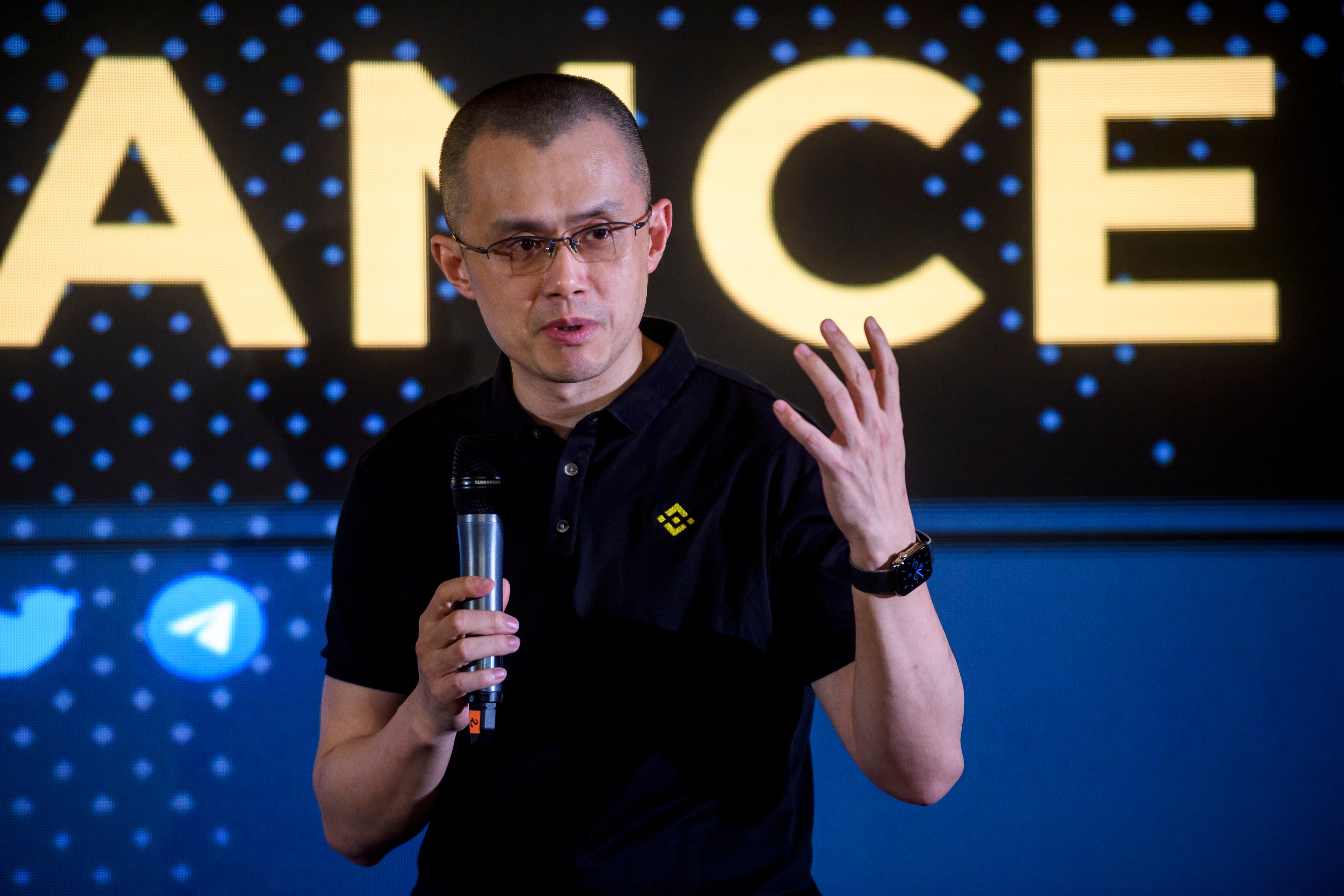
Zhao Changpeng, co-founder and former CEO of Binance, said he does not want to return as the company’s chief executive in his first public appearance after a four-month prison stint in the US. The 47-year-old Chinese-Canadian entrepreneur, known widely in the industry by his initials CZ, was sentenced to a California prison in May for failing to take required anti-money-laundering measures while he headed the world’s largest cryptocurrency exchange. He was released in September. In an interview on Thursday during the Binance Blockchain Week conference, his first public event since leaving prison, Zhao said he will not consider returning to helm the company he started in 2017. “I think in the judge’s mind, he treated me very leniently,” Zhao said. “It’s a very subjective opinion, I try not to think about it. I think everyone here will have their own opinions, but I just want to move on.” The crypto billionaire said he would not return to Binance even if he were allowed. He is currently banned from serving in the company under a plea deal with the US. “I don’t have any need to go back. I don’t have any wish to go back,” he said. Still, Zhao remains Binance’s largest shareholder, and he said that, to his knowledge, he can still request information on the company. “The relationship is actually a pretty good one, given that now there’s a bunch of other guys working really hard and I’m forced to retire,” he said. Zhao is now focusing on other projects, including one related to education called Giggle Academy, and making investments in blockchain, artificial intelligence and biotech. Despite having agreed to pay a US$50 million penalty as part of his plea agreement, Zhao’s riches have ballooned this year as cryptocurrency prices surged. Zhao’s 135 billion yuan (US$19 billion) fortune has made him the 16th richest entrepreneur in China, moving him up 81 spots on the latest Hurun Rich List published this week. The significant jump in Zhao’s fortune was due to the increase in cryptocurrency trading volume this year and the spike in the price of bitcoin, Hurun said. Bitcoin was trading above US$69,000 on Friday, up 95.67 per cent from a year ago. Zhao on Thursday described his prison experience as “not good” and “very limiting in a lot of ways”, but spoke fondly of his fellow inmates. “To be honest, I think there are very nice people in prison. People are very chill. I think a decent portion of them had no reason to be there,” Zhao said. “I met a few friends who I still keep in touch with. I’m trying to help a few of them to fight their case through legal means, hopefully to get them out earlier.”

 2024-11-01 11:00:24

read more

Analyst gives criteria for Ripple bull run as Sui and DTX Exchange aim for new peaks

Experienced cryptocurrency trader Dark Defender has pinpointed the key level of $0.6649 that Ripple (XRP) must cross to start a big ascent. This prediction has attracted the attention of XRP enthusiasts, as the altcoin has been under a bearish stint for long. At the same time, top altcoins like Sui (SUI) and DTX Exchange (DTX) are also looking to ride the bullish wave further. Analysts say the prices of these altcoins could skyrocket to new highs in the coming weeks. Ripple (XRP) could soar to $1.88 if it crosses major resistance Crypto trader Dark Defender has shared a key level that Ripple (XRP) has to break to experience enhanced increases in its value. He has maintained that this level is currently at $0.6649. Dark Defender noted that the altcoin price has been dumped here severally. Thus, this level is a pivotal point the Ripple coin must go past for the possibility of the rally to emerge. If the breakout occurs, the analyst gave three key targets of $1.88, $5.85, and $18.22 for the Ripple crypto. CoinMarketCap data shows that XRP has been struggling, losing 20% of its value over the last month. Presently, the coin is trading in the red region and is trading below the 200-SMA ($0.541372). Ripple price movement has been bearish in the past few months due to the ongoing legal battle with the US SEC. Reports allege the case could continue until next year if the SEC’s new deadline is approved. Analyst forecast two new all-time highs for Sui (SUI) Crypto analyst Cryptclay has noted that Sui (SUI) recently formed a bullish retest of the broken neckline in its Cup and Handle (C&H) pattern. According to Cryptclay’s analysis, this pattern could propel the Sui token to two significant targets: a handle target of $6.9 and a full C&H target of $9.6. Meanwhile, other analysts are also bullish about the Sui coin. Raoul Pal forecasted that the cryptocurrency is breaking its consolidation and is getting set for a new all-time high. In the meantime, the Sui price has pumped 8% on the weekly level and 22% on the monthly timeframe on CoinMarketCap. The cryptocurrency has regained the $2 level. With major support at the 50-SMA ($1.658943), the price of Sui (SUI) could soar to new levels in the coming weeks. DTX Exchange (DTX) could see 1,000% price pump DTX Exchange (DTX) is carving out a prominent space in both the traditional and crypto markets. Built as a Layer 1 blockchain specifically for high-speed trading, DTX’s VulcanX is designed for unmatched speed and efficiency. With testnet results surpassing 100,000 transactions per second (TPS), VulcanX is fully equipped to handle high transaction volumes, ensuring a seamless experience even during peak trading times. A major feature of DTX Exchange is its multi-asset trading model, which offers access to over 100,000 financial instruments across multiple markets. Users can trade not only cryptocurrencies but also equities, stocks, indices, commodities, etc. This diverse asset availability allows traders to manage various investments from a single platform, making DTX Exchange a true one-stop shop for asset management. The platform’s unified wallet enhances convenience and security, enabling users to oversee their entire portfolio without needing multiple accounts or external wallets. This feature simplifies the trading experience, particularly for users managing diverse assets, and appeals to both seasoned traders and newcomers alike. Currently, in the fourth phase of its presale, analysts say the DeFi token, DTX, could rally by 1,000% from its current value of $0.08. Sui, Ripple, or DTX: Which is the best Altcoin to buy now? Ripple’s (XRP) future is dependent on it crossing the resistance at $0.6649. On the other hand, DTX Exchange and Sui (SUI) are the best altcoins to watch. Analysts forecast their prices could skyrocket to new highs in the coming weeks. Learn more: DISCLAIMER – “Views Expressed Disclaimer: Views and opinions expressed are those of the authors and do not reflect the official position of any other author, agency, organization, employer or company, including NEO CYMED PUBLISHING LIMITED, which is the publishing company performing under the name Cyprus-Mail…more

 2024-11-01 10:55:00

read more

Bitcoin Rally Masks Bleaker Picture in the Crypto World - Bloomberg

Why did this happen? Please make sure your browser supports JavaScript and cookies and that you are not blocking them from loading. For more information you can review our Terms of Service and Cookie Policy.

 2024-11-01 10:43:28

read more

Bitcoin Rally Masks Bleaker Picture in the Crypto World - Bloomberg

Why did this happen? Please make sure your browser supports JavaScript and cookies and that you are not blocking them from loading. For more information you can review our Terms of Service and Cookie Policy.

 2024-11-01 10:43:28

read more

Top online animation tool LottieFiles hacked to target victim crypto wallets

A popular online animation tool was abused to trick people into handing over access to their cryptocurrency wallets, with at least one individual losing close to $700,000. LottieFiles is a platform that provides tools and a library for creating, editing, and sharing lightweight, scalable animations in the Lottie format. These animations, together with the plugin LottiePlayer, are commonly used in websites and mobile applications with 94,000 weekly downloads and has been downloaded more than 4 million times since its launch. Recently, an unnamed threat actor somehow obtained a session cookie from one of the developers of LottieFiles, and used that access to push three new versions of LottiePlayer (2.0.5, 2.0.6, and 2.0.7) to npmjs. Websites that use LottiePlayer and were configured to always use the latest version have had the malicious versions downloaded automatically. New version released These new versions prompted website visitors to connect their cryptocurrency wallets, which basically gives the site access to the stored funds. We don’t know how many people fell for the trick and connected their wallets, but we do know that at least one person did, and it cost them 10 BTC, which is $696,960 at press time. This information came from Scam Sniffer, a Web3 anti-scam platform. "On October 30th ~6:20 PM UTC – LottieFiles were notified that our popular open source npm package for the web player @lottiefiles/lottie-player had unauthorized new versions pushed with malicious code," the project’s co-founder and CTO, Nattu Adnan, wrote on GitHub. "This does not impact our dotlottie player and/or SaaS services. Our incident response plans were activated as a result. We apologize for this inconvenience and are committed to ensuring safety and security of our users, customers, their end-users, developers, and our employees." The attacker was quickly ousted, and a new version - 2.0.8, pushed live. This is a copy of the last safe version, which was 2.0.4. "We have confirmed that our other open source libraries, open source code, GitHub repositories, and our SaaS were not affected." Via The Register More from TechRadar Pro Hackers stole billions of dollars of crypto in 2023Here's a list of the best firewalls todayThese are the best endpoint protection tools right now

 2024-11-01 10:33:18

read more

Crypto market roundup: Dogecoin, IntelMarkets, and NEIRO lead charts as bulls add $200M to positions

The cryptocurrency space is getting attention with major ongoing activity as Dogecoin (DOGE), NEIRO, and IntelMarkets (INTL) create waves on trading charts. Despite recent market unpredictability, these players are gaining both retail and institutional interest, driven by a mix of speculative interest and innovative developments in blockchain technology. Investors infused $200 million in bullish positions, signaling potential confidence in these assets’ performance in the near future. Momentum builds for Dogecoin (DOGE) amidst continued accumulation phase Dogecoin (DOGE) maintains a significant position in the crypto world, particularly as it completes a prolonged accumulation phase. Created as a parody crypto coin based on a Shiba Inu meme, Dogecoin has come up well beyond its humorous beginnings to become one of the leading cryptocurrencies according to market capitalization. As of October 30, Dogecoin trades at $0.1690, with a 24-hour trading volume of $3.35 billion. The price has increased modestly by 0.20% over the last day, highlighting steady interest in the coin. The current price level is closely watched by market analysts, who suggest a sustained close above $0.20 could spark another bullish run. This pattern aligns with Dogecoin’s historical behavior; in previous years, similar accumulation phases have led to substantial gains. Notably, in 2021, DOGE’s price surged to $0.75 after completing a long accumulation phase of 1,096 days, representing a gain of over 8,900%. Based on this trend, some analysts speculate DOGE could rally up to 500% from its current price, potentially hitting the $1 mark if accumulation phases continue to follow historical patterns. NEIRO: Memecoin enthusiasm fuels near $1 billion market cap Another Shiba Inu-inspired token, NEIRO, has made headlines for its rapid rise and unique backstory. Despite recent downsides, this token has exhibited impressive growth, recording a 30% month-to-date increase in October alone. On October 15, NEIRO’s market capitalization nearly hit the $1 billion level, reaching $935 million—a milestone that has spread optimism among traders. At its peak, NEIRO hiked 4,600% in just 30 days, powered by a significant rally toward its all-time peak of $0.0022. Since then, the token has experienced some correction, currently trading around 31.5% below its ATH and ranging between $0.00132 and $0.00170. Yet, bullish sentiment remains strong, with analysts like Crypto Tony maintaining a positive outlook on NEIRO, thanks to the sustained interest that began in mid-September. This sentiment is largely driven by NEIRO’s brand association with the Dogecoin narrative, positioning it as a promising memecoin contender. IntelMarkets (INTL): Pioneering AI and Blockchain integration In contrast to the memecoin market, IntelMarkets (INTL) focuses on introducing advanced AI technology to cryptocurrency trading. As the first modern trading platform to integrate autopilot trading robots on a proprietary blockchain, IntelMarkets distinguishes itself from conventional exchanges by using AI-driven decision-making tools. This AI-based approach is particularly attractive to traders seeking a more systematic and data-driven method for handling crypto investments. IntelMarkets leverages AI-powered Rodeum AI™ trading robots, which automatically identify market opportunities aligned with traders’ goals. Variables like risk level, position sizing, and leverage are customizable, allowing for more personalized strategies. The self-learning capability of these bots ensures that they improve over time, becoming more accurate as they adapt to live trading environments. IntelMarkets incorporates real-time processing tools that optimize trading performance by normalizing a variety of technical indicators and parameters. Unlike standard platforms, IntelMarkets uses over 100,000 data points for market analysis, delivering a level of precision that can help traders make more informed decisions. This proprietary system combines multiple market indicators into a cohesive strategy, reducing conflicting signals. Traditional trading platforms often produce mixed buy and sell indicators, leading to uncertainty. IntelMarkets’ Intell-Array™ system simplifies decision-making by generating a unified signal across indicators, enhancing the efficiency and effectiveness of trade executions. In a market often driven by speculative sentiment, IntelMarkets’ AI-based blockchain offers a distinctive approach to managing digital assets. By merging DeFi accessibility with AI-enhanced trading, IntelMarkets aims to provide retail investors with a high-performance platform that stands out in the crypto space. Check out the IntelMarkets for more information about the technical platform or Join the Presale for exclusive benefits. DISCLAIMER – “Views Expressed Disclaimer: Views and opinions expressed are those of the authors and do not reflect the official position of any other author, agency, organization, employer or company, including NEO CYMED PUBLISHING LIMITED, which is the publishing company performing under the name Cyprus-Mail…more

 2024-11-01 09:30:00

read more

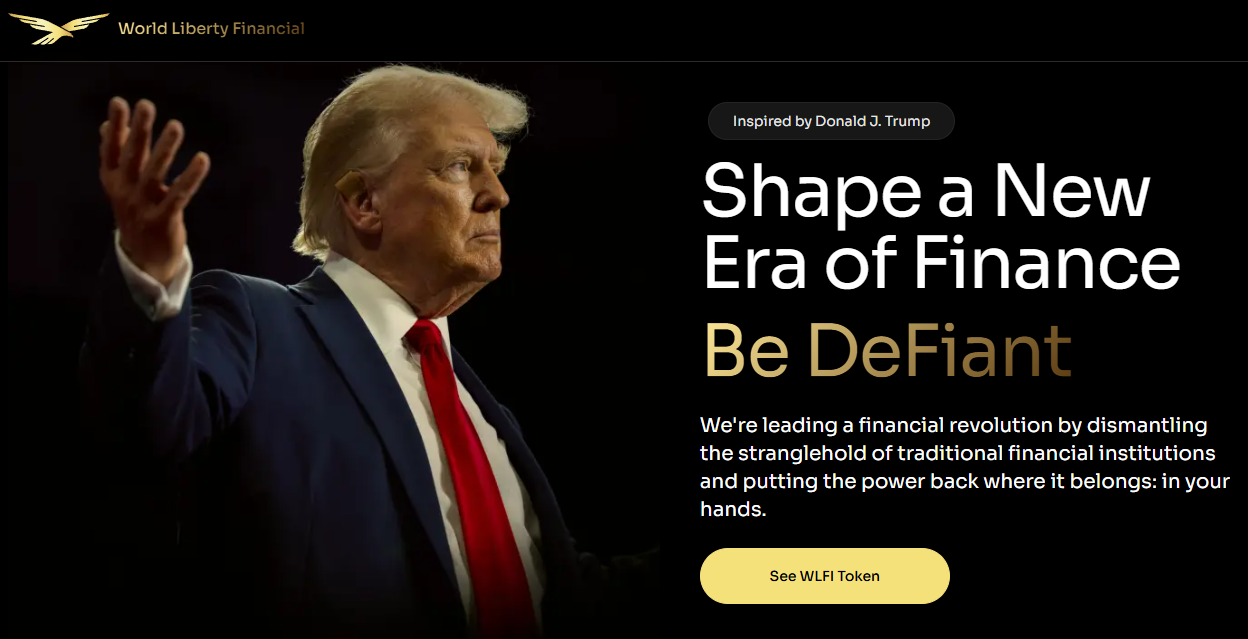
Trump-Backed WLFI Cuts Fundraising Goal From $300M To $30M After Underwhelming Token Sales

World Liberty Financial, which Donald Trump has promoted in recent weeks, has filed with the SEC to disclose that it is reducing its fundraising goal from a staggering $300 million to only $30 million, marking a 90% cut from its initial sales target."The company currently only plans to sell tokens up to $30M in the offering before terminating sales," the document stated. The filing was made after the DeFi project failed to make a statement on its first day of token sales.Token Sale FlopsSince allowing "accredited investors" to purchase tokens two weeks ago, the project has only sold 972.50 million tokens – there are still over 19 billion WLFI tokens up for grabs. Data from Arkham Intelligence shows that the project's wallet has only received some $14 million in cryptocurrencies from WLFI token buyers.The weak sales came even after Trump himself promoted the token sale event, saying the DeFi project will reshape the future of finance.Notably, WLFI's token sale day was marred by technical difficulties. At some points during the day, the website crashed for extended periods, raising more concerns about the project.A Protocol That Isn't YetWhile the exact reasons for underwhelming interest in World Liberty Financial's governance token have yet to be clarified by the team, trust could be a major cause.Trump and the WLFI team, which includes Eric Trump and Donald Trump Jr., have painted the project as a protocol. However, there is no protocol yet, and details about what it will offer remain scant.There have also been serious questions from crypto users about the code of WLFI that's said to have a "striking" similarities to the code of Dough Finance, which suffered a $2 million exploit in July.A 'Public' Token Sale That Isn'tAhead of the token sale, many crypto users raised issue with the requirements listed by WLFI for buyers. The team did make it clear that only "accredited investors" as defined by the SEC can partake in the token purchase, but crypto users believe it shouldn't be called a "public" sale because of the requirement.Some users called out the DeFi project for allegedly weeding out middle class crypto investors who don't make the cut of having a $1 million net worth.A Project Without the Right FundamentalsIn discussions on X that tackled the possible reasons for the project's lackluster performance even with Trump's backing, blockchain developer Jacob Gadikian said he believes most of the crypto users on X may have already foreseen how WLFI's fundamentals weren't there and "therefore not at all surprised that it failed."Prominent crypto user TylerD noted how "target and GTM (Go-To-Market) strategy are pretty telling signs of a team's competence," suggesting that the development team may have contributed to growing concerns about the project.Angel investor Johnny Utah agreed, saying initial details about WLFI "sounded like a money grab" and "this was not an elite dev[eloper] team."

 2024-11-01 07:56:18

read more

US Government-Linked Wallet Converts Seized Alameda $ANT To $ETH Ahead Of AragonDAO Deadline

A digital wallet linked to the U.S. government that held assets seized from defunct hedge fund Alameda Research sold thousands of ANT tokens for Ethereum (ETH) ahead of the redemption deadline set by AragonDAO.Data from leading blockchain analytics firm Arkham Intelligence shows that on Thursday, the wallet sold over 82,000 of the AragonDAO's governance token for conversion to Ether through AragonDAO's token redemption process.Just In Time Before Redemption DeadlineThe conversion was made before AragonDAO's deadline for users to redeem ANT tokens, a year after the decentralized autonomous organization (DAO) announced that it was winding down. Users have until Saturday to exchange their tokens.The Aragon Association (AA), which is the legal steward of the Aragon treasury and assets, announced on Nov. 2, 2023, that it will dissolve the DAO and allow ANT holders to redeem their ANT for Ether."This decision could not be put to a public vote due to legal constraints, specifically regulatory risks triggered by token speculation and market manipulation," the team said at the time.What's Left in the USG Wallet?Aside from the converted ETH tokens worth over $524,000 as of early Friday, the wallet still holds various other digital assets, including over $200,000 worth of iExec RLC tokens and more than $50,000 in Numeraire (NMR).In total, the wallet has more than $920,000, a fraction of the billions wiped out from the cryptocurrency industry when Sam Bankman-Fried's FTX collapsed, triggering the fall of Alameda Research and other crypto firms with exposure to the former popular exchange.FTX, Alameda Aftermath Saga ContinuesEven with SBF and former Alameda CEO Caroline Ellison behind bars for their roles in the shocking demise of the once-beloved crypto exchange, the fight to claim FTX's remaining assets ensues.It's also been two years since FTX crumbled along with Alameda, but the remnants of stealing from FTX customer funds, engaging in risky business practices, mismanagement, and other missteps linger.The FTX estate's bankruptcy plan that seeks to repay customers up to $16.5 billion in assets recovered since November 2022 has been approved, but it will take some time before all investor-victims are repaid.Just this week, the estate reached a $228 million settlement with crypto exchange Bybit and its investment arm, Mirana, to allow FTX to recover assets for its long list of creditors. The deal has yet to be heard for a final hearing later this month, which will put an end to the intense legal dispute initiated by the FTX estate a year ago. At the time, the estate initially sought $1 billion.

 2024-11-01 05:57:34

read more

US crypto industry expects friendlier Washington, whoever wins White House

The cryptocurrency industry has spent years clashing with Democratic President Joe Biden’s administration over regulatory issues, but executives expect an easier ride from Washington, regardless of who wins the White House next week. Crypto asset managers including Bitwise and Canary Capital are planning new products ahead of what many executives expect to be a more crypto-friendly administration, while others including Ripple are planning a fresh push for crypto legislation in the new Congress, said executives and lawyers. “Regardless who wins, there will be a new approach to how we move forward with crypto,” said Rebecca Rettig, chief legal and policy officer at crypto company Polygon Labs. Republican candidate Donald Trump has pledged to be a “crypto president,” and executives also expect Vice President Kamala Harris, the Democratic candidate, to take a softer stance than Biden. Harris has not yet detailed her crypto plans, but executives have been encouraged by her promise to promote digital asset innovation and protect crypto investors. Harris surrogate and billionaire entrepreneur Mark Cuban, a crypto enthusiast, has also criticized a crypto crackdown under Securities and Exchange Commission Chair Gary Gensler, a Biden appointee. “Absolutely it will be friendlier under a Harris admin,” Cuban wrote in an email to Reuters, adding her promise to protect crypto users was “important.” Gensler has insisted that the crypto industry is a risk to investors, pointing to the collapse of FTX and multiple other bankruptcies and scams that triggered calls for tighter regulation. Since bitcoin debuted in 2009, the crypto market has been extremely volatile. Gensler’s SEC has brought dozens of enforcement actions against Coinbase, Kraken and others, accusing them of flouting US securities laws meant to inform investors about potential risks. The crypto players have denied the SEC’s allegations. They say cryptocurrencies, which have a global market value of around $2.5 trillion, should be regulated like commodities. Gensler, whose term ends in 2026, has not said his crypto views have changed. While Trump has said he will fire Gensler, Harris has not suggested she would seek to replace him. An SEC spokesperson declined to comment. Trump’s plan to promote bitcoin has won him several big crypto donors, including Gemini founders Cameron and Tyler Winklevoss. At least one industry boss, Ripple chairman Chris Larsen, cut Harris’ super PAC a big check and new Democratic-aligned crypto groups have raised funds for her. Ripple, Coinbase and others have spent more than $119 million backing pro-crypto congressional candidates, according to data from Public Citizen. Among those firms’ goals is advancing legislation that would propel stablecoins, crypto tokens pegged to the US dollar, into the mainstream. “For the crypto industry, this election isn’t about choosing one party over another – this is about supporting candidates who recognize that the US needs to support innovation,” Lauren Belive, Ripple’s head of US policy, said in a statement. Coinbase, which announced an additional $25 million donation to a pro-crypto PAC on Wednesday, did not respond to a request for comment. Influential progressive lawmakers have also pressured Gensler to be tough on crypto, but some Democrats flagged concerns to the Democratic National Committee in July that some voters were alienated by that approach, Reuters previously reported. CRYPTO THAW? Crypto executives believe the SEC under Harris will review or even rescind guidance requiring public companies to account for crypto assets held on behalf of others as liabilities due to their riskiness. That “SAB 121” guidance is a top crypto industry bugbear. Because strict capital rules require banks to hold cash against liabilities, it has kept many lenders on the crypto sidelines. Cryptocurrencies would become more popular if consumers could store them with trusted lenders, executives say. Congress voted on a bipartisan basis in May to overturn SAB 121 but Biden vetoed the resolution. “With recent bipartisan support… I’d expect that regardless of who becomes the next president, SAB 121 is overturned,” said David Mercer, CEO of LMAX Group, which operates a crypto exchange. “That should be an accelerant for the whole crypto market.” In August, State Street (STT.N) announced plans to offer crypto custody, expecting the SEC to eventually revise that guidance, Reuters reported. Some executives already see a thaw. Last month, the SEC’s chief accountant said SAB 121 did not apply to some companies, provided they met certain conditions. Shortly after, the agency granted a “no objection” allowing BNY (BK.N) to custody cryptocurrencies held by exchange-traded products without having to account for them as liabilities. Speaking to Bloomberg, Gensler said other banks could replicate the model. “There’s clearly a recognition by both presidential candidates that digital assets can play a positive economic role,” said Sui Chung, CEO of Kraken subsidiary CF Benchmarks, who pointed to the BNY approval as a sign the political climate was shifting. After losing a court challenge, the SEC this year approved bitcoin and ether ETFs. Bitwise and Canary Capital this month filed SEC applications to launch similar products that would track Ripple’s XRP crypto token. “We do think that, whoever wins on Tuesday, crypto markets will be looking at a more favorable regulatory environment in a new administration in the new year,” a spokesperson for Bitwise said. Given the SEC has until mid-2025 to decide on those applications, they are likely a bet on a friendlier SEC, executives said. “These filings are effectively a down payment on that change in political environment,” said Chung. “Canary continues to see encouraging signs of a more progressive regulatory environment,” a spokesperson said in a statement, adding that was spurring investor demand for access to cryptocurrencies beyond bitcoin and ether.

 2024-11-01 04:00:00

read more

US indicts founder of crypto firm Gotbit for alleged wire fraud - Reuters

WASHINGTON, Oct 31 (Reuters) - The founder of cryptocurrency market maker Gotbit was indicted for his alleged role in a wide-ranging conspiracy to manipulate cryptocurrency markets on behalf of client cryptocurrency companies, the U.S. Justice Department said on Thursday. Aleksei Andriunin, 26, was charged with wire fraud and conspiracy to commit market manipulation and wire fraud in a superseding indictment, the Justice Department said in a statement. Advertisement · Scroll to continue The U.S. Justice Department says that between 2018 and 2024, when Andriunin was the firm's CEO, Gotbit provided market manipulation services to create artificial trading volume for multiple cryptocurrency companies, including companies located in the United States. The superseding indictment also charged Gotbit and two of its directors, Fedor Kedrov and Qawi Jalili, who were previously charged in an indictment unsealed on Oct. 9. Advertisement · Scroll to continue Gotbit, Andriunin, Kedrov and Jalili could not immediately be contacted. If convicted of wire fraud, Andriunin faces a maximum penalty of 20 years in prison. If convicted of conspiracy to commit market manipulation and wire fraud, he faces a maximum penalty of five years in prison, the Justice Department said. Federal prosecutors said on Oct. 9 they had charged crypto firms Gotbit, ZM Quant, CLS Global and the leaders and employees of those and other companies in a takedown that led to four arrests, agreements by five people to plead guilty and the seizure of over $25 million worth of cryptocurrency. Reporting by Kanishka Singh in Washington; Editing by Leslie Adler and Richard Chang XFacebookLinkedinEmailLinkPurchase Licensing Rights Kanishka SinghThomson ReutersKanishka Singh is a breaking news reporter for Reuters in Washington DC, who primarily covers US politics and national affairs in his current role. His past breaking news coverage has spanned across a range of topics like the Black Lives Matter movement; the US elections; the 2021 Capitol riots and their follow up probes; the Brexit deal; US-China trade tensions; the NATO withdrawal from Afghanistan; the COVID-19 pandemic; and a 2019 Supreme Court verdict on a religious dispute site in his native India.EmailX

 2024-11-01 00:33:02

read more

Bitcoin Nears ATH In Nigeria, As Naira Hits Record Low

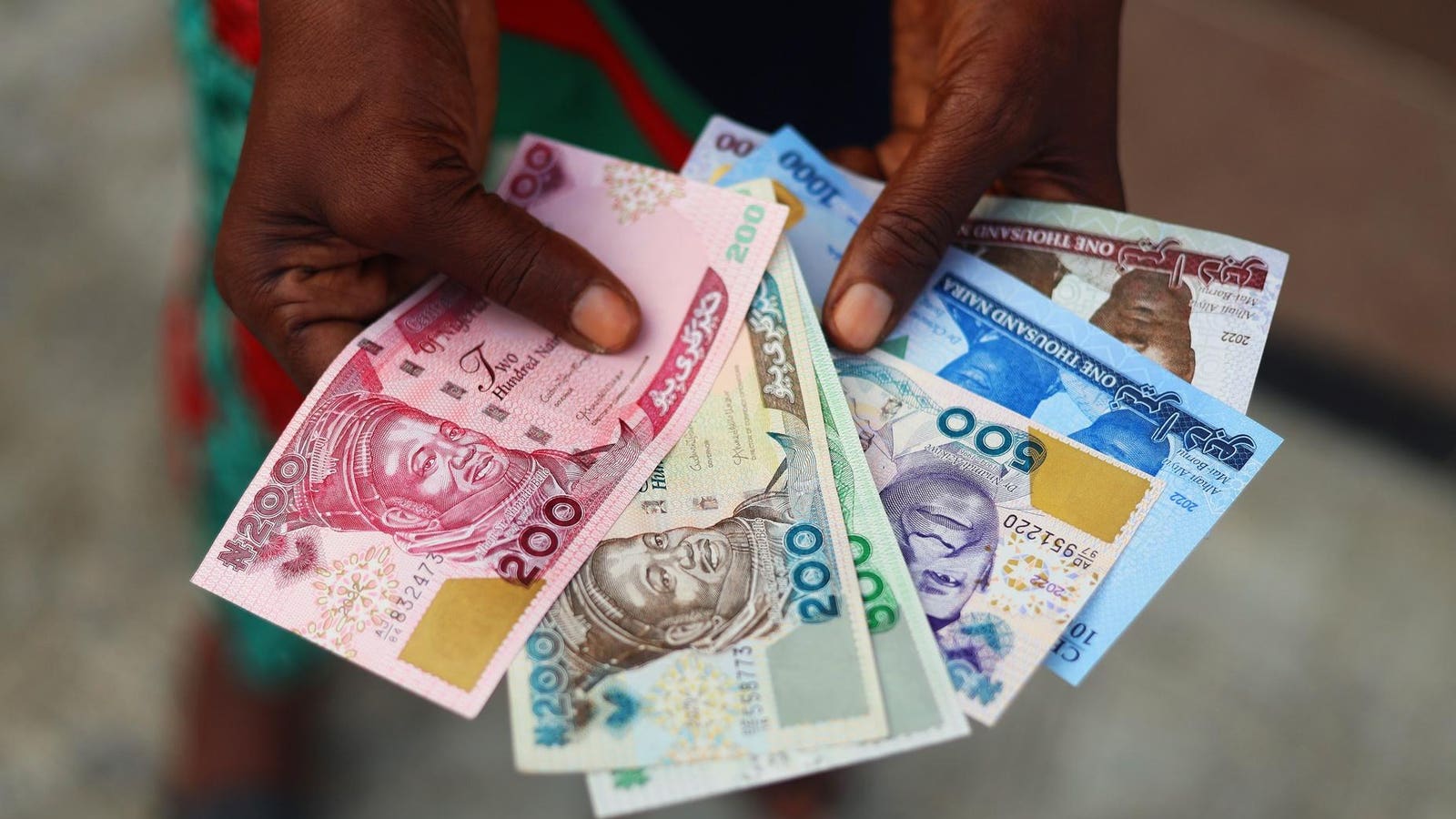
Share to Facebook Share to Twitter Share to Linkedin Hands holding the Old and New Nigerian Naira Notes As the Nigerian Naira records its worst performance yet against the US dollar in weeks as US dollar liquidity in Nigeria plunges, bitcoin continues to rally ahead to within its All-Time High (ATH) levels of $73,737 from April and in some P2P exchanges, according to data from monierate, reaching the ATH in Nigeria already, at N121m. Recent Naira-USD Performance The Naira has yet to find stability against the US dollar despite several forex market reforms, such as the free-floating of the Naira. However, First Securities Discount House (FSDH) Merchant Bank Ltd's macroeconomic report highlights that critical drivers such as "a rise in foreign exchange (forex) inflows, driven by increased policy rates and heightened FX interventions from the Central Bank of Nigeria (CBN)" could push us closer to that reality. The Naira is currently at ₦1,711.774 to the US dollar, based on data from monierate, following a 72% freefall to $81m in US dollar liquidity, according to reporting from Bloomberg, its lowest level in months, marking its worst performance yet in weeks. Moreover, the recent World Bank report, Africa's Pulse, noted that the Naira, the Ethiopian Birr, and the South Sudanese Pound are among the worst-performing Sub-Saharan African currencies of 2024. The report cites factors driving the Naira's 43% year-to-date depreciation, as primarily the surge in demand for the US dollar, limited US dollar liquidity and inflows, and delays from the CBN in forex disbursements. The Bitcoin Rally & Stablecoin Adoption Rise Meanwhile, bitcoin continues to build off its September rise and is steadily approaching a new ATH. It has already appreciated ~12% over the last half year and 66% year-to-date. MORE FOR YOU Election 2024 Swing State Polls: Harris And Trump Virtually Tied Across 7 Battlegrounds—And Pennsylvania’s A Tossup (Updated) Trump Vs. Harris 2024 Polls: Near-Tie In Latest HarrisX/Forbes Survey—Just Days Before Election Samsung’s Impossible Deadline—You Have 24 Hours To Update Your Phone Beyond the ETFs, there are other macro factors at play here, including the market's anticipatory exuberance ahead of a potential Trump victory in the US election and the consequences for bitcoin, given his recent perceived embrace of it. In Nigeria, the story features even more factors. With the alarming inflation levels and the Naira's persistent underperformance and devaluations, bitcoin's stark contrast continues to present a haven for those on the ground. Sub-saharan Africa Share of Bitcoin and Stablecoin value received (the 2024 geography of crypto ... [+] report) Chainalysis Further, USDT has emerged as another alternative to the Naira over the last year, with stablecoins now accounting for 43% of the crypto transaction volume in Sub-Saharan Africa, according to Chainalysis. As the Naira continues to fall to the US dollar and US dollar liquidity tightens in the country, many seek out USDT as it is simply the easiest way to access the scarce USD for trade, short-term savings, and international payments. Bitcoin Outlook In Nigeria As the Naira continues to face further devaluations and slips against the US dollar, it has become almost second nature for those in Nigeria to seek out viable alternatives in the form of bitcoin and USDT. With 2025 on the horizon, we can expect that this dynamic will persist as long as the challenges facing the Naira continue and more Nigerians flock to alternatives to reap the attendant benefits of having cheap access to USD via USDT and the ability to store wealth and make unencumbered global cheap instant payments via bitcoin. Nevertheless, Q4 is not over yet, and there may well be some consolation for the Naira over the coming weeks in regaining its strength against the US dollar as the Government, especially the CBN, continues to proactively implement measures to ameliorate the present economic and currency challenges. Follow me on Twitter or LinkedIn. Check out my website. Abubakar Nur Khalil Editorial Standards Forbes Accolades

 2024-10-31 22:58:54

read more

US indicts founder of crypto firm Gotbit for alleged market manipulation

We know it's a hassle to switch browsers but we want your experience with CNA to be fast, secure and the best it can possibly be. To continue, upgrade to a supported browser or, for the finest experience, download the mobile app.

 2024-10-31 21:34:01

read more

US indicts founder of crypto firm Gotbit for alleged wire fraud

WASHINGTON :The founder of cryptocurrency market maker Gotbit was indicted for his alleged role in a wide-ranging conspiracy to manipulate cryptocurrency markets on behalf of client cryptocurrency companies, the U.S. Justice Department said on Thursday. Aleksei Andriunin, 26, was charged with wire fraud and conspiracy to commit market manipulation and wire fraud in a superseding indictment, the Justice Department said in a statement. The U.S. Justice Department says that between 2018 and 2024, when Andriunin was the firm's CEO, Gotbit provided market manipulation services to create artificial trading volume for multiple cryptocurrency companies, including companies located in the United States. The superseding indictment also charged Gotbit and two of its directors, Fedor Kedrov and Qawi Jalili, who were previously charged in an indictment unsealed on Oct. 9. Gotbit, Andriunin, Kedrov and Jalili could not immediately be contacted. If convicted of wire fraud, Andriunin faces a maximum penalty of 20 years in prison. If convicted of conspiracy to commit market manipulation and wire fraud, he faces a maximum penalty of five years in prison, the Justice Department said. Federal prosecutors said on Oct. 9 they had charged crypto firms Gotbit, ZM Quant, CLS Global and the leaders and employees of those and other companies in a takedown that led to four arrests, agreements by five people to plead guilty and the seizure of over $25 million worth of cryptocurrency.

 2024-10-31 21:34:01

read more

Latino Crypto Voters: Trump Rally Comments Spark Election Shift Debate

Share to Facebook Share to Twitter Share to Linkedin A supporter holds up the flag of Puerto Rico as Democratic Presidential candidate and former US Vice ... [+] President Joe Biden delivers remarks at a Drive-in event in Coconut Creek, Florida, on October 29, 2020. (Photo by JIM WATSON / AFP) (Photo by JIM WATSON/AFP via Getty Images) AFP via Getty Images As the U.S. presidential election approaches, many Latino voters find themselves at a crossroads. Economic concerns frequently drive political choices, but recent racially charged remarks from comedian Tony Hinchcliffe at a GOP rally in New York City, where he referred to Puerto Rico as “a floating island of garbage,” have added a layer of complexity for Latino voters, especially those interested in cryptocurrency. As they weigh candidates’ alignment with both financial ambitions and cultural values, these remarks add urgency to the decision. While the Trump campaign distanced itself from these statements, the incident has sparked outrage across Puerto Rican and broader Latino communities. For Latino crypto holders—an increasingly influential group—this moment underscores the need for political leaders who prioritize both economic empowerment and respect for cultural identities. With 5.8 million people of Puerto Rican origin in the U.S., many concentrated in swing states like Pennsylvania, Arizona, and Georgia, this demographic could hold significant sway in determining the next president​​. Keiko Yoshino, founder and CEO of the Puerto Rican Blockchain Trade Association (PRBTA), noted, “Puerto Ricans on the mainland care more about what is happening on their island than local politics. So when their island is called ‘garbage’ at a GOP rally, it’s going to get attention. For many Puerto Ricans in Florida, New Jersey, Texas, and Pennsylvania, this may be the reason they vote on November 5th.” The potential electoral impact of this episode for both crypto policy and cultural respect could be a tipping point for many Puerto Rican voters. Latino Voters’ Growing Influence in Swing States Latino voters hold substantial sway in the 2024 election, especially in swing states where they could prove decisive. 36.2 million Latinos are eligible to vote this year—up by almost 4 million since 2020, according to Pew Research Center. In key battleground states like Arizona (25%), Nevada (22%), Florida (22%), Colorado (17%), and New Jersey (16%), Latino voters comprise a significant portion of the electorate, with New Mexico leading at 45%. MORE FOR YOU Election 2024 Swing State Polls: Georgia, North Carolina Still Razor-Thin—And Pennsylvania’s A Tie (Updated) Samsung’s Impossible Deadline—You Have 24 Hours To Update Your Phone Microsoft Update Warning—400 Million Windows PCs Now At Risk Importantly, the Hispanic community is far from monolithic. Cultural views, priorities, and experiences are as diverse as the diaspora itself, spanning various countries of origin, economic backgrounds, and generational perspectives. This diversity underscores the complexity in capturing the Hispanic electorate, as Latino voters reflect a wide spectrum of political and social perspectives. The Puerto Rican population is particularly concentrated in pivotal regions. Pennsylvania, with 472,213 Puerto Ricans, was won by only 80,555 votes in 2020, while Georgia and Arizona—where Puerto Ricans number 100,923 and 64,738, respectively—were decided by even narrower margins of 11,779 and 10,457 votes​. This could galvanize the group, especially as their concerns have often been overlooked, potentially swinging these states toward candidates who show genuine respect and commitment to economic equity. Latinos’ growing interest in crypto and digital finance amplifies their impact. For example, 92% of Latinos report regular use of fintech, and 24% of U.S. crypto holders identify as Hispanic, illustrating crypto’s appeal as a tool for financial empowerment within the Latino community. PRBTA has been championing this cause in Puerto Rico with initiatives like the annual “BUIDL Here” conference in San Juan, which, according to Yoshino, “aims to provide students with knowledge and access to jobs of the future” while educating the public on “how interested Puerto Ricans can participate in crypto.” Comparing the Crypto Approaches of Trump and Harris The divergent crypto stances of GOP presidential candidate Donald Trump and Democratic candidate Vice President Kamala Harris provide Latino crypto holders with two distinct visions. Harris has positioned herself as a forward-thinking supporter of digital innovation, including cryptocurrency, under her “Opportunity Economy” vision. Speaking at a Wall Street fundraiser, she stated her administration would “encourage innovative technologies like AI and digital assets while protecting investors and consumers”​. Her support reflects an intent to foster a tech-friendly environment through balanced regulation, distinct from the restrictive policies under SEC Chair Gary Gensler, whose approach has stifled crypto growth and been challenged successfully in federal court. Harris’s platform specifically appeals to communities with limited access to traditional finance. By focusing on economic inclusion through blockchain and DeFi (decentralized finance), she aligns her campaign with underbanked communities, including Latino voters, to offer tools for wealth-building and financial sovereignty. As she emphasized, “We will bring together labor, small business founders, and innovators” to create a more accessible financial system​​. Yoshino also notes that Puerto Rico’s leadership has approached crypto as an opportunity to diversify the economy. She observes that “Puerto Rican elected officials and regulators realize that crypto and blockchain represent an opportunity for diversification and expansion of the local economy,” contrasting with more hostile federal approaches. Act 60, for instance, has drawn blockchain companies to the island with favorable tax structures, bolstering growth and making Puerto Rico a leader in the DeFi economy. Economic and Social Impact of Policy Choices For Latino voters with a stake in crypto and fintech, the candidates’ approaches present starkly different futures, although on balance, the fact that both candidates will pursue the crypto assets and Web3 economies favorably. Harris’s “Opportunity Economy” envisions a balanced regulatory framework that supports innovation without compromising consumer protections, emphasizing that the government must “invest in the aspirations and ambitions of the American people.” Her approach aligns with decentralized finance principles, empowering marginalized communities to access banking alternatives without the high fees and barriers of traditional financial systems​​. Additionally, Harris’s campaign is considering new leadership for the SEC as part of her transition planning, reportedly vetting Georgetown Law professor Chris Brummer and PCAOB Chair Erica Williams as potential replacements for Gary Gensler. Both Brummer and Williams are seen as advocates for a balanced regulatory approach toward cryptocurrency, contrasting with Gensler’s strict enforcement stance and arbitrary overreach, which has often led to industry pushback. In contrast, Trump’s promises to deregulate crypto, while enticing to some, come with potential risks for everyday investors. While his vow to remove Gensler may appeal to pro-crypto advocates, his WLFI platform’s restricted access structure and alignment with high-net-worth individuals raise questions about his broader commitment to equitable growth. Deregulation without consumer safeguards could leave smaller investors vulnerable to predatory practices and widen existing financial disparities. What’s at Stake for Latino Crypto Holders Latino crypto holders face the 2024 election with a unique set of concerns. As cultural pride and financial empowerment converge, this demographic seeks policies that ensure fair access to financial tools while respecting cultural values. Trump’s pro-crypto rhetoric might appeal to some, but his history of business ventures raises doubts about his commitment to equitable growth in the sector. Harris, by contrast, offers a vision centered on economic opportunity for middle-class and underbanked families, aiming to support a balanced regulatory approach that nurtures innovation without sacrificing consumer protections. As Yoshino points out, the recent inflammatory comments have intensified the stakes, particularly for Puerto Rican voters, who are heavily invested in the future of blockchain. “The common myth is that Puerto Ricans do not vote. This is not true. Electoral participation on the island is extremely high… For many Puerto Ricans in Florida, New Jersey, Texas, and Pennsylvania, this may be the reason they vote on November 5th.” Her observations reflect the heightened relevance of cultural respect alongside economic opportunity. As Latino crypto holders consider their options, they must weigh the future of crypto in America against policies that either empower or restrict access to financial resources. For those moved by Hinchcliffe’s offensive comments, Harris’s vision of the Opportunity Economy may resonate as a more respectful and inclusive alternative. Follow me on Twitter or LinkedIn. Check out my website or some of my other work here. Tonya Evans Editorial Standards Forbes Accolades

 2024-10-31 20:54:05

read more

Donald Trump Celebrates Bitcoin White Paper Anniversary Promises Crypto Support

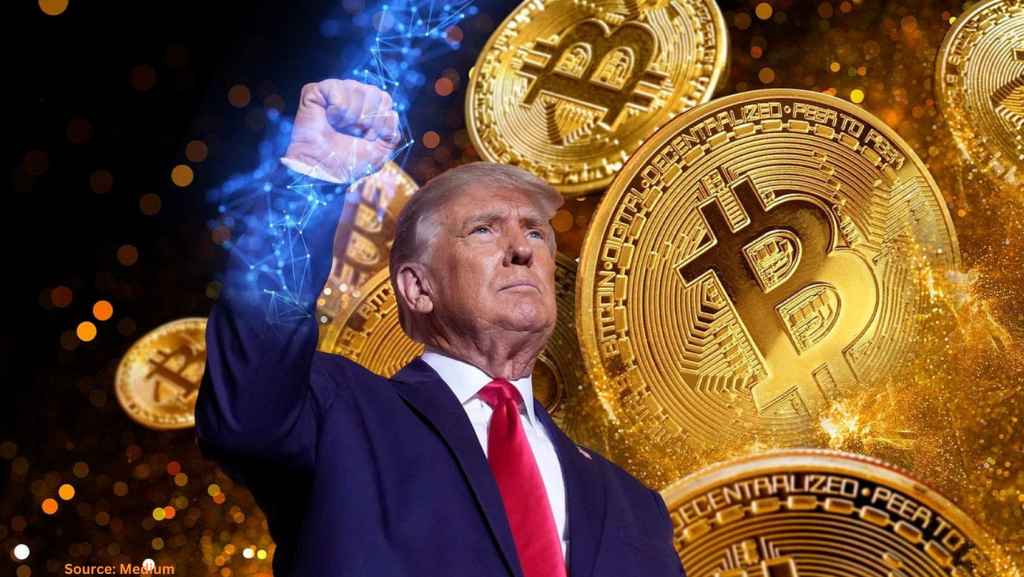
Donald Trump Celebrates Bitcoin White Paper Anniversary Promises Crypto Support as he marked Bitcoin’s 16th anniversary on October 31, 2024. He pledged to terminate what he termed Kamala Harris’s “war on crypto,” signaling a shift in his political stance towards cryptocurrency. Trump emphasized his commitment to fostering Bitcoin innovation in the U.S., declaring that “Bitcoin will be made in the USA.” The former president also announced his intention to pardon Ross Ulbricht, the founder of Silk Road, who is currently serving a life sentence. Trump’s remarks came just days ahead of the November 5 U.S. general elections, highlighting their potential electoral impact. Former U.S. President Donald Trump has reaffirmed his commitment to cryptocurrency on the anniversary of Bitcoin’s whitepaper release. Trump’s message to American Bitcoin supporters included a jab at political rival Kamala Harris and reiterated his plans for crypto-friendly policies. Trump celebrated Bitcoin’s 16th birthday by promising to end what he calls “Kamala’s war on crypto.” He also expressed support for Bitcoin innovation in the United States. The former president and current Republican candidate stated: “I would like to wish our great Bitcoiners a Happy 16th Anniversary of Satoshi’s White Paper. We will end Kamala’s war on crypto, & Bitcoin will be MADE IN THE USA! VOTE TRUMP!” Trump’s message comes just days before the U.S. general elections on November 5th. As a Republican candidate, Trump has been actively courting Bitcoin and cryptocurrency supporters throughout his campaign, pledging to end government Bitcoin sales and dismiss Securities and Exchange Commission chair Gary Gensler. JUST IN: Donald Trump promises to “end Kamala’s war on crypto and #Bitcoin.” pic.twitter.com/exkBqDixh4 — Watcher.Guru (@WatcherGuru) October 31, 2024 In contrast, Harris expressed support for emerging technologies like artificial intelligence and committed to protecting digital asset investors. However, her stance on cryptocurrencies remains less clear compared to Trump’s explicit promises. Bitcoin adoption and price continue to trend upward ahead of the U.S. election. Sixteen years after Satoshi Nakamoto’s whitepaper release, Bitcoin remains one of the best-performing assets of the past decade, with a 192% increase year-to-date compared to the S&P 500’s 36% gain. Corporate holders like Michael Saylor’s MicroStrategy have rushed to buy more Bitcoin through capital raises. Spot BTC exchange-traded funds on Wall Street made history, with BlackRock’s fund becoming the fastest-growing ETF, and investors parked over $72 billion in BTC investment products. As the U.S. presidential race heats up, Trump’s pro-Bitcoin stance could potentially sway cryptocurrency enthusiasts towards supporting him in the upcoming election. Also Read: Bruce Jones Shares Candid Thoughts on Coronation Street Changes Last Updated on October 31, 2024 by 247 News Around The World

 2024-10-31 20:10:29

read more

Crypto Just Got More Fun with Bitget Exchange & Shiba Inu! Why is Plus Wallet Winning Over Crypto Traders in The UK & US?

Be it crypto coins or digital asset management solutions, today’s products are making DeFi more engaging, accessible, and even fun. Consider Shiboshi Rush, Shiba Inu’s latest game, where Android users find themselves strategizing and battling in a relaxed setting, creating an easy entry point into the Shiba Inu ecosystem. Bitget Exchange’s “Trade Smarter” campaign offers another angle, bringing humor into DeFi to show that making smart trading decisions can be both relatable and rewarding. Meanwhile, Plus Wallet is seeing rapid growth in the US and UK by pairing high security with income potential. With private key storage and a referral rewards system, Plus Wallet gives users confidence in their security and a steady way to earn simply by managing their assets. Unpacking Bidget Exchange’s “Trade Smarter” Campaign Bitget Exchange’s latest “Trade Smarter” campaign brings a refreshing twist to crypto trading by pairing financial insights with humor. Developed with Vantage Pictures, the campaign moves away from traditional, intense financial advertising to offer something lighthearted and relatable. The four-film series, directed by Paul Moore and shot in Bangkok, uses everyday scenarios to illustrate how thinking strategically can lead to great results. Each film cleverly highlights moments where a “smart move” makes all the difference, helping viewers see crypto trading as part of daily life. Shiba Inu News: Shiboshi Rush Game Hits Android Users Shiba Inu news brings an exciting update for fans with a fresh addition to the Shiba Inu game collection. The latest release, Shiboshi Rush, is now available to Android users, promising a unique mix of strategy and fun. Players can deploy troops, use multiplier gates to grow their armies, and aim to destroy opponents’ castles. With an easy and pick-up-and-play design, the game skips complex tutorials, letting users dive straight into gameplay. Each game offers something new, with adventures that bring out the playful spirit behind Shiba Inu. Plus Wallet’s Popularity Explodes in The US & UK They say the simplest solutions are often the strongest, and Plus Wallet is proving this as it gains popularity across regions like the US and the UK. Its appeal is rooted in a combination of features that serve users’ need for security and passive income, making it a rising choice in the digital wallet market. At the forefront is Plus Wallet’s vault-like security. Private keys remain on users’ devices, ensuring no outside access. For extra protection, the wallet supports Face ID and PIN code authentication, adding layers that make it the most secure wallet out there. Then, there’s the referral rewards system, which allows users to earn non-stop passive income with minimal effort. When users share their referral link, each swap made by referrals generates rewards in USDT for both parties. This creates a passive income stream that grows as swap activity increases—unlimited and flexible. And with no cap on earnings, the potential is truly open-ended. Plus Wallet also offers fast payouts, sending rewards within 24 to 48 hours. This feature allows users to see the benefits of their activity almost immediately, reinforcing the wallet’s reputation for reliability. This combination of security, earning potential, and seamless experience is fueling Plus Wallet’s steady rise as a top choice for users who want more from their digital wallet. Over & Out! It’s clear that finance, security, and entertainment are a powerful trio, and platforms like Shiba Inu, Bitget Exchange, and Plus Wallet are leading the charge in this matter. Shiboshi Rush gives users an easy and engaging way to step into the Shiba Inu ecosystem, while Bitget Exchange’s “Trade Smarter” campaign shows that strategic trading can be part of everyday life without the intensity. Plus Wallet completes the picture by meeting demands for both security and passive income, becoming a trusted choice across leading crypto markets like the US and UK. Together these platforms show that digital finance can be practical, secure, and truly enjoyable, connecting users to opportunities beyond traditional boundaries. Explore Plus Wallet: Website: https://pluswallet.app/ Download: https://onelink.to/pluswalletapp Twitter: https://x.com/pluswalletapp Instagram: https://www.instagram.com/pluswallet.app

 2024-10-31 18:00:02

read more

Did a Canadian developer really invent bitcoin? A new HBO show explores an intriguing theory

The true identity of the founder of bitcoin has always been a mystery. (Shutterstock) In 2008, someone using the pseudonym Satoshi Nakamoto published the design of the cryptocurrency bitcoin, proposed the initial code and was active online for just under two years. In this time, they helped develop the code, answer questions and promote the project. Then, claiming to busy with new things, Nakamoto left working on bitcoin and was probably never heard from again. HBO’s 2024 documentary Money Electric: The Bitcoin Mystery finds director Cullen Hoback looking for the real Nakamoto, motivated by bitcoin being “embraced by nation states” and “incorporated into 401(k)s.” Read more: Bitcoin turns ten – here's how it all started and what the future might hold The real Nakamoto? Several attempts to unmask Nakamoto have been made before. Previous theories suggest that the elusive developer is Irish graduate student Michael Clear, Japanese-American systems engineer Dorian Nakamoto or one of several cypherpunks who worked on predecessors to bitcoin: Hal Finney, Nick Szabo or Adam Back. Hoback confronts the man he suspects of being Nakamoto on camera in the film’s climax: Peter Todd, a software developer from Toronto. On film, Todd alternates between joking about being Nakamoto and calling the theory ludicrous, perhaps necessitating him to make an unequivocal denial in the press after it aired. The trailer for HBO’s ‘Money Electric.’ The documentary is entertaining, but does it play it fast and loose? I would draw attention to three things that deserve further thought. Online breadcrumb trail While stopping short of claiming to have conclusively identified bitcoin’s creator, Hoback suggests something Todd once said to Nakamoto online was a slip up. The background is this: with bitcoin, users leave tips to have their transactions processed. If the tip is too low, the computers running bitcoin will refuse to process it and the transaction will sit in bitcoin purgatory. Worse, bitcoin users who make this mistake cannot increase the fee without it looking like an attack on the system. In an online post, Nakamoto posts that transactions could be declared safe if they only changed the amount of the fee. Not long after, Todd chimes in that this is impossible with how bitcoin transactions work. The increased fee has to come from somewhere, namely a decrease in the amount paid out, which changes the transaction. Todd’s message is short: “Of course, to be specific, the inputs and outputs can’t match *exactly* if the second transaction has a transaction fee.” Hoback ponders if maybe Nakamoto meant to correct himself, but somehow accidentally used his real account. As the documentary recounts, Todd is smart, has developer experience and had been discussing digital cash online since he was a teenager. Todd would eventually be the one to implement the feature Nakamoto described, albeit with a fix to the issue he pointed out. The theory plays out well on film but leaves out a few considerations. Early bitcoin enthusiasts were a self-selecting group, and most were as technically minded as Nakamoto or Todd. This technical background is niche but not rare: more than 100,000 computer science students graduate annually in the United States, while there are over 500,000 certified security experts. And there are many equally capable people who are neither of these things. Given Hoback’s evidence for Todd is circumstantial, the weight shifts to Todd’s reaction on camera when Hoback outlines his theory: a mix of bemusement, mockery and indignation. The film frames the reaction as incriminating, while others caution against reading anything into it. Enter Ethereum Bitcoin is maintained by an open group of volunteered computers (whose operators are paid in new bitcoin for the work of validating transactions and storing them on a ledger called the blockchain) where no one is in charge, and yet maintains high security. Early bitcoin enthusiasts saw the potential for bitcoin’s blockchain technology to handle more than financial transactions, but the developers helming bitcoin (including Todd) thought it would be best if bitcoin stayed in its lane. Some bitcoin enthusiasts in Toronto then banded together and launched Ethereum. Led by 21-year-old Vitalik Buterin, Ethereum provides a platform where anyone can run their code on a blockchain simply by paying a fee and pushing a button. The code could be anything from a new digital currency to sophisticated financial technology. In Hoback’s documentary, many of the interviewees view bitcoin and its developers as competitors and antagonists of Ethereum. Ethereum gets only about two minutes of screentime, dominated by Buterin rapping about Ethereum on the mainstage of a conference and being ribbed for his hat’s safari flaps. Hoback’s documentary emphasizes Ethereum’s scam tokens but overlooks the innovative financial services that captured US$64 billion of assets in 2021, as well as its advancements in areas like efficiency and cryptography. Ironically, it is Ethereum technology that runs crypto-betting platform Polymarket, which hosted a US$44 million betting pool on who would be named as Nakamoto in Hoback’s film before it aired. “Polymarket turned Money Electric into a sporting event,” Hoback enthused. “Even I’m refreshing the betting pool to see how high the total volume gets.” The end of privacy? In his 2014 documentary, Terms and Conditions May Apply, Hoback did show he is willing to tackle social concerns that might seem a little dry or academic, such as privacy rights in a digital age. He picks up this thread again in Money Electric, embedding an earnest message about the potential privacy and surveillance implications of governments — including Canada, the United States and 130 other countries — launching central bank digital currencies (CBDCs), something my research also draws attention to. In theory, the technology underlying bitcoin can be expanded to provide a CBDC system as private as paper cash. However it will take a strong political will to get there. Jeremy Clark receives funding from the National Sciences and Engineering Research Council (NSERC), Raymond Chabot Grant Thornton and Autorité des Marchés Financiers.

 2024-10-31 17:30:23

read more

16 Years On: Will Bitcoin’s Lightning Network Drive Crypto Payments?

Share to Facebook Share to Twitter Share to Linkedin Today marks the 16th anniversary of the Bitcoin whitepaper, a milestone for the world’s largest ... [+] cryptocurrency, which has since sparked a new financial reality. Last week a new initiative was announced that could reshape the role of the Bitcoin network in payment transactions. (Photo illustration by Chesnot/Getty Images) Getty Images Sixteen years ago, Bitcoin’s whitepaper sparked a financial revolution, introducing a deflationary, decentralized currency that defies central bank control and inflationary manipulation. Emerging from the 2008 crisis, Bitcoin operates in two roles: Bitcoin the asset—a “digital gold” store of value known for scarcity and censorship resistance—and Bitcoin the network—a decentralized payment protocol with growing potential in global finance. While critics like ECB’s Ulrich Bindseil recently dismissed Bitcoin as speculative, supporters argue that central banks overlook its true utility as both an asset and a resilient payment network outside central control. As central banks push their own digital currencies, supporters like MIT’s Christian Catalini emphasize Bitcoin’s unique value as “the basis for a truly open and neutral protocol for money.” From Cash to Digital Gold Bitcoin’s deflationary design lies at the heart of its appeal and function. Originally envisioned as a peer-to-peer cash alternative, Bitcoin’s rising value and transaction costs gradually made it less practical for everyday payments, shifting its role more toward a store of value. Its fixed supply sets it apart from fiat currencies, which central banks can inflate at will. This scarcity makes Bitcoin appealing to those concerned about monetary debasement, positioning it as “digital gold”—a means to preserve wealth and guard against inflation. Central Banks Dismiss Bitcoin’s Utility Last week Ulrich Bindseil, Director General of Market Infrastructure and Payments at the ECB, questioned Bitcoin’s economic legitimacy in a paper, claiming, “Promoters of this investment vision put little effort into relating Bitcoin to an economic function which would justify its valuation.” Bindseil contends that Bitcoin is speculative and benefits early adopters at the expense of others—a stance reflecting traditional finance’s skepticism of Bitcoin’s lack of economic utility. Bitcoin’s Alternative to Central Control While central bankers argue that Bitcoin’s appeal is based on speculation, its proponents insist that central banks are missing the point. “Early Bitcoin adopters are no different from the Rothschilds in banking, the Vanderbilts in railroads, or Gates in software,” says Christian Catalini, co-founder of Lightspark and the founder of the MIT Cryptoeconomics Lab. For Catalini, Bitcoin’s actual utility lies in its network's resistance to central control and deflationary nature, offering a powerful alternative to fiat currency’s inflationary limitations. However, as he explains, “Bitcoin the network is as important as Bitcoin the asset. It’s the basis for a truly open and neutral protocol for money.” Bitcoin Is Evolving Bitcoin sparked a vast crypto ecosystem, driving innovations like stablecoins and decentralized finance (DeFi) that are transforming traditional finance. Ethereum’s 2015 launch of smart contracts accelerated crypto’s growth, and by September 2024, active blockchain addresses surpassed 220 million, with crypto wallets reaching 29 million users. Stablecoins alone processed $8.5 trillion in Q2 2024—double Visa’s $3.9 trillion—leading major players like Stripe, Visa, and Mastercard to embrace crypto wallets and stablecoin technology. Bitcoin’s own network utility is expanding, too; recent innovations, such as Lightspark’s Bitcoin-based network—co-founded by David Marcus, the former head of Facebook’s Libra project—enable nearly free, self-custodial cross-border transactions, signaling Bitcoin’s potential renewed role in global payments. MORE FOR YOU Election 2024 Swing State Polls: Georgia, North Carolina Still Razor-Thin—And Pennsylvania’s A Tie (Updated) Samsung’s Impossible Deadline—You Have 24 Hours To Update Your Phone Harris And Trump’s Biggest Celebrity Endorsements: YouTuber Jake Paul Endorses Trump—But He Can’t Vote Central Banks’ Bitcoin Paradox Ironically, while central banks often criticize Bitcoin, they increasingly adopt its underlying technology to develop centralized digital currencies. For example, the ECB’s Digital Euro project plans to enforce Eurozone-wide adoption—a top-down model in stark contrast to Bitcoin’s voluntary, grassroots expansion. Responding to Ulrich Bindseil’s aforementioned Bitcoin critique, Christian Catalini remarked on X, “Status quo bias is hard to shake,” suggesting that while central banks recognize blockchain’s benefits, they are hesitant to embrace its core principles of decentralization and deflationary nature. Bitcoin’s Fixed Supply Advantage As inflation erode fiat’s purchasing power, Bitcoin’s fixed supply becomes increasingly appealing, especially in regions facing currency depreciation. For many, Bitcoin’s independence and deflationary nature represent a compelling alternative to fiat, a way to store wealth free from the reach of monetary policy. And if central banks worry about Bitcoin rewarding early adopters, its open, permissionless design means they, too, are free to join. Bitcoin’s Path Forward At 16, Bitcoin stands at a crossroads between skepticism and rising adoption. While central banks dismiss it as a bubble, supporters see it as a liberating alternative with the potential to outlast fiat systems as both an asset and a network. With major players like Visa, Stripe, and Mastercard investing in crypto’s future, Bitcoin’s impact on global finance seems poised to grow. Whether central banks embrace or resist it, Bitcoin’s trajectory as a decentralized, deflationary alternative to fiat appears unstoppable. Follow me on Twitter or LinkedIn. Check out my website. Jon Helgi Egilsson Editorial Standards Forbes Accolades

 2024-10-31 17:27:47

read more

Did a Canadian developer really invent bitcoin? A new HBO show explores an intriguing theory

In 2008, someone using the pseudonym Satoshi Nakamoto published the design of the cryptocurrency bitcoin, proposed the initial code and was active online for just under two years. In this time, they helped develop the code, answer questions and promote the project. Then, claiming to busy with new things, Nakamoto left working on bitcoin and was probably never heard from again. HBO’s 2024 documentary Money Electric: The Bitcoin Mystery finds director Cullen Hoback looking for the real Nakamoto, motivated by bitcoin being “embraced by nation states” and “incorporated into 401(k)s.” Read more: Bitcoin turns ten – here's how it all started and what the future might hold The real Nakamoto? Several attempts to unmask Nakamoto have been made before. Previous theories suggest that the elusive developer is Irish graduate student Michael Clear, Japanese-American systems engineer Dorian Nakamoto or one of several cypherpunks who worked on predecessors to bitcoin: Hal Finney, Nick Szabo or Adam Back. Hoback confronts the man he suspects of being Nakamoto on camera in the film’s climax: Peter Todd, a software developer from Toronto. On film, Todd alternates between joking about being Nakamoto and calling the theory ludicrous, perhaps necessitating him to make an unequivocal denial in the press after it aired. The documentary is entertaining, but does it play it fast and loose? I would draw attention to three things that deserve further thought. Online breadcrumb trail While stopping short of claiming to have conclusively identified bitcoin’s creator, Hoback suggests something Todd once said to Nakamoto online was a slip up. The background is this: with bitcoin, users leave tips to have their transactions processed. If the tip is too low, the computers running bitcoin will refuse to process it and the transaction will sit in bitcoin purgatory. Worse, bitcoin users who make this mistake cannot increase the fee without it looking like an attack on the system. In an online post, Nakamoto posts that transactions could be declared safe if they only changed the amount of the fee. Not long after, Todd chimes in that this is impossible with how bitcoin transactions work. The increased fee has to come from somewhere, namely a decrease in the amount paid out, which changes the transaction. Todd’s message is short: “Of course, to be specific, the inputs and outputs can’t match *exactly* if the second transaction has a transaction fee.” Hoback ponders if maybe Nakamoto meant to correct himself, but somehow accidentally used his real account. As the documentary recounts, Todd is smart, has developer experience and had been discussing digital cash online since he was a teenager. Todd would eventually be the one to implement the feature Nakamoto described, albeit with a fix to the issue he pointed out. The theory plays out well on film but leaves out a few considerations. Early bitcoin enthusiasts were a self-selecting group, and most were as technically minded as Nakamoto or Todd. This technical background is niche but not rare: more than 100,000 computer science students graduate annually in the United States, while there are over 500,000 certified security experts. And there are many equally capable people who are neither of these things. Given Hoback’s evidence for Todd is circumstantial, the weight shifts to Todd’s reaction on camera when Hoback outlines his theory: a mix of bemusement, mockery and indignation. The film frames the reaction as incriminating, while others caution against reading anything into it. Enter Ethereum Bitcoin is maintained by an open group of volunteered computers (whose operators are paid in new bitcoin for the work of validating transactions and storing them on a ledger called the blockchain) where no one is in charge, and yet maintains high security. Early bitcoin enthusiasts saw the potential for bitcoin’s blockchain technology to handle more than financial transactions, but the developers helming bitcoin (including Todd) thought it would be best if bitcoin stayed in its lane. Some bitcoin enthusiasts in Toronto then banded together and launched Ethereum. Led by 21-year-old Vitalik Buterin, Ethereum provides a platform where anyone can run their code on a blockchain simply by paying a fee and pushing a button. The code could be anything from a new digital currency to sophisticated financial technology. In Hoback’s documentary, many of the interviewees view bitcoin and its developers as competitors and antagonists of Ethereum. Ethereum gets only about two minutes of screentime, dominated by Buterin rapping about Ethereum on the mainstage of a conference and being ribbed for his hat’s safari flaps. Hoback’s documentary emphasizes Ethereum’s scam tokens but overlooks the innovative financial services that captured US$64 billion of assets in 2021, as well as its advancements in areas like efficiency and cryptography. Ironically, it is Ethereum technology that runs crypto-betting platform Polymarket, which hosted a US$44 million betting pool on who would be named as Nakamoto in Hoback’s film before it aired. “Polymarket turned Money Electric into a sporting event,” Hoback enthused. “Even I’m refreshing the betting pool to see how high the total volume gets.” The end of privacy? In his 2014 documentary, Terms and Conditions May Apply, Hoback did show he is willing to tackle social concerns that might seem a little dry or academic, such as privacy rights in a digital age. He picks up this thread again in Money Electric, embedding an earnest message about the potential privacy and surveillance implications of governments — including Canada, the United States and 130 other countries — launching central bank digital currencies (CBDCs), something my research also draws attention to. In theory, the technology underlying bitcoin can be expanded to provide a CBDC system as private as paper cash. However it will take a strong political will to get there.

 2024-10-31 17:16:22

read more

Bitcoin Exempt From Capital Gains? Bitcoin Becomes “Money” In U.S.

Share to Facebook Share to Twitter Share to Linkedin A man uses a bitcoin ATM. Getty Images In a recent post on X, Microstrategy CEO Michael Saylor posted a quote from a recent interview with Donald Trump where he discussed his evolving views on bitcoin. In this short answer, Trump made several statements that are significant for the possibility of bitcoin becoming deeply intertwined in the U.S. economy in the coming years. "They have them paying tax on crypto and I don't think that's right. #Bitcoin is money and you have to pay capital gains tax if you use it to buy a coffee? I was talking with a friend he said 'it really shouldn't be taxed' and I agree.” The idea of eliminating capital gains tax on bitcoin is not new – it has had bipartisan supporters in the U.S. Senate for years – but we are at a critical moment today when a confluence of political circumstances could ignite bitcoin adoption in the U.S., and by proxy, worldwide, to an unprecedented degree. With the increasingly likely outcome of a Trump victory, his statements about bitcoin are consequential for the way bitcoin might be regulated and taxed in the coming years. His use of the phrase “bitcoin is money” is key for understanding why. To do that, it’s helpful to review Trump’s past statements about bitcoin and crypto so that we can trace the path that led to this view. MORE FOR YOU Samsung’s Impossible Deadline—You Have 24 Hours To Update Your Phone Harris And Trump’s Biggest Celebrity Endorsements: Cardi B To Stump For Harris In Wisconsin Friday New Windows Warning As Hacker Breaks Google Chrome 2FA Security Encryption Bitcoin’s Threat To The Dollar The evolution in Trump’s thinking about bitcoin will be familiar to many people who followed a similar journey as they studied bitcoin. Because it is an emerging technology that deviates from the accepted wisdom about what money is, on first encountering bitcoin, most rational people will resist it and assume it is probably nonsense. Along these lines, Trump stated during his previous administration that “bitcoin... [is] not money.” He rightly intuited that in the 21st century, U.S. power is derived principally from the dollar’s roles as the leading world reserve currency, a store of value for central banks and institutions, and medium of exchange for oil and other commodities. Insofar as he understood that bitcoin threatens this favorable arrangement, he believed that bitcoin cuts against his vision for increasing American leverage in foreign policy. The ability of the U.S. to print money and decide who gets it is indeed the most extraordinary power ever obtained by a single political body in human history. Our open capital markets seal the deal, allowing the U.S. economy to benefit from investment in those dollars back into our financial system. This lets the federal government collect taxes on the productive capital of the entire planet. One does not simply give that up, and it would be rational to suppress new technologies that threaten change. Revisiting Free Market Principles A few months ago, during his 2024 campaign for president, Trump changed his stance. When asked a question about whether he supports access to crypto, he replied that he’s “fine with it.” He didn’t offer justification as to why his attitude changed, but it would be reasonable to assume that politics had a strong influence. The Biden/Harris administration is inextricably linked to the rise and fall of FTX, which turned out to be a money laundering operation that benefitted U.S. politicians – which is likely why regulators allowed it to operate for so long. The current administration is also implicated in the corrupt and possibly illegal attacks on banking institutions, dubbed Operation Chokepoint 2.0. A leading Democratic senator has attempted to build an “Anti-Crypto Army,” using militaristic language to threaten a $2.33 trillion industry. A deeply unpopular SEC chair, Gary Gensler, has intimidated and undermined leading financial innovators. It is estimated that 26% of Americans own bitcoin – and that doesn’t include financial products like spot bitcoin ETFs. Being “fine with it” is just good politics. Trump’s comments were widely praised by the bitcoin and crypto communities, and laid groundwork for Trump giving a historic keynote speech at the Bitcoin Conference in the summer of 2024. Dalliance With DeFi And World Liberty Financial (WLFI) Along a typical person’s journey to understanding bitcoin, one arrives at a fork in the road. One path is to recognize the uniqueness of bitcoin; the other is to assume that the technologies that underlie bitcoin are the real innovation, and that new tokens, tools, DeFi platforms, and crypto projects are more important. Taking the crypto path, Trump (and his sons) conceived and promoted a dubious DeFi product called World Liberty Financial. After a launch that could be characterized as somewhere between disappointing and disastrous, we haven’t heard much about it. The less said about that, the better. Separation Of Money And State Crypto projects like World Liberty Financial and other DeFi and NFT initiatives miss the forest for the trees. There may eventually be use cases for crypto that lead to healthy businesses with staying power. But, the real prize that Satoshi’s invention makes attainable is something far more profound: separation of money and state. Over the past decade, a movement has arisen that heavily overlaps with Trump’s base of supporters (but extends beyond it) to reexamine the costs and benefits of the staid institutions established in the early to mid 20th century. Which ones do we need? Which ones have been corrupted? What alternatives do we have? The Federal Reserve is a prime example. Its original mandate was to defend the value of the dollar. Since it was created in 1913, the dollar has lost 97% of its purchasing power. In recent years, the naive belief that most Americans had – that the Fed is an apolitical body of benevolent technocrats who would never use their immense, ring-of-Sauron-like power for anything but the good of humanity – has evaporated. As the followers of Donald Trump, Robert F. Kennedy, Jr., Ron Paul, Bernie Sanders, Tulsi Gabbard, and others have woken up to this reality, previously held assumptions about the very nature of money are being reexamined. Does money really need to be issued by a central authority? Why should the price of money be dictated by the Fed, instead of the market? Is it strange that a single man or woman can walk up to a podium, give a 5 minute speech, and impact the prosperity of 8 billion people across the entire planet? WTF happened in 1971? (For those not familiar – 1971 was the year that the Nixon administration eliminated the last vestiges of the dollar’s tie to a scarce asset, unleashing the money printer to be used at will.) Bitcoin Is Money This brings us to present day, when the U.S. government treats bitcoin in a confused, inconsistent manner. Multiple sclerotic bureaucracies are competing to extend their mandate to include regulation of bitcoin. The Commodity Futures Trading Commission (CFTC) would like it to be classified as a digital commodity so that it falls under their purview. SEC chairman Gary Gensler, who once asserted that bitcoin is a commodity, now refuses to do so, presumably for fear of losing his ability to regulate it. He has avoided issuing proactive regulatory guidance to the bitcoin industry, choosing instead to regulate by enforcement. Meanwhile, leading politicians and their media mouthpieces have stated that it is a tool for criminality and nothing more. Taking a step back to compare bitcoin to other forms of money, it is clear that it fits the definition, and for good reason – it has qualities that make it useful to fulfill the role of facilitating value exchange in a global, digital economy. Bitcoin compared to other forms of money, from "Bitcoin Foundations." Adapted from The Bullish Case ... [+] for Bitcoin by Vijay Boyapati and other sources. Bitcoin Foundations Ultimately, this is why Trump’s statement is so consequential. Eliminating capital gains tax on bitcoin transactions would reduce filing complexity for bitcoin users, as well as their tax burden. But it is giving bitcoin the label of “money” that changes everything and sets the stage for it to be used in everyday commerce. If the status of bitcoin in the U.S. is clarified to be money from a regulatory perspective, we can expect a boom in the development of wallet software, e-commerce and retail payments solutions, private transactions, and more. In the medium term, bitcoin may even save the U.S. from its over-reliance on the power of its money printer, which has caused political and market distortions that are no longer tolerable by a large swath of American voters and international interests. The dollar has been mortally wounded by a collapse in trust of American institutions. It can be kept on life support for a time, perhaps even decades. But it will never return to the status it once had. Bitcoin enables decentralized value exchange with final settlement. Accelerated adoption in the coming years would converge with the rise of AI and nuclear power, two complementary emerging technologies for which bitcoin solves impediments to growth. It is hard to imagine a more consequential policy decision in the coming administration. Here’s hoping that the designation of bitcoin as money comes to fruition. Follow me on Twitter or LinkedIn. Check out my website. Dave Birnbaum Editorial Standards Forbes Accolades

 2024-10-31 16:49:38

read more

Abu Dhabi firms to launch tokenized US Treasuries fund - Reuters

NEW YORK, Oct 31 (Reuters) - Abu Dhabi firms Realize and Neovision Wealth Management have launched an investment vehicle that will buy units of exchange traded funds (ETFs) focused on U.S. Treasury bills and convert these assets into digital tokens that can be held, traded and transferred on a blockchain. The fund is called Realize T-BILLS Fund and it will buy BlackRock's iShares and State Street's SPDR, tokenize units from these ETFs, and incorporate them within the fund, Dominik Schiener, co-founder of technology company Realize, told Reuters in an interview. It hopes to grow to a $200-million fund. Advertisement · Scroll to continue Realize will tokenize the units of the T-BILLS Fund, while Neovision will manage it. WHY IT'S IMPORTANT Tokenized Treasuries are a growing segment of the crypto market, with a market capitalization of $2.4 billion on public blockchains, primarily Ethereum, according to data platform rwa.xyz, opens new tab. They are effectively digital tokens created on a blockchain and backed by U.S. government debt, and issued both by blockchain-native firms and traditional institutions, notably BlackRock and Franklin Templeton. Advertisement · Scroll to continue In March, BlackRock launched its first tokenized fund called BUIDL on the Ethereum blockchain, investing 100% of its assets in cash, U.S. Treasury bills and repurchase agreements or repos. The BlackRock fund has a current market cap of $530 million. FUND DETAILS The Realize fund, the first tokenized fund to be domiciled out of the Abu Dhabi Global Market, will issue the $RBILL token and will serve as the digital representation of the units of the fund. They will initially launch on both the IOTA and Ethereum blockchain networks. Ad Break Coming Up NEXT StayNext OffEnglish 480pAuto (480p) About ConnatixV540117 About ConnatixV540117 Continue watchingafter the adVisit Advertiser websiteGO TO PAGE "The goal is to bring fungible assets onchain. T-Bills are the most liquid asset today in the real world," said Schiener. "They're also the best form of collateral, paying around 5%." Dr. Ryan Lemand, co-founder and chief executive officer of Neovision, said it makes sense to buy T-Bill ETFs and tokenize them, instead of outright purchasing Treasury bills in the market. He noted buying cash Treasuries in the market would involve continuous transaction costs because they will have to be bought again and again. Reporting by Gertrude Chavez-Dreyfuss; Editing by Alden Bentley, Daniel Wallis and Sharon Singleton XFacebookLinkedinEmailLinkPurchase Licensing Rights

 2024-10-31 15:49:24

read more

Related Articles

Top 10 Cryptocurrencies by Market Cap

by Vivek , 08 Aug, 2024

Top 10 CryptoCurrencies

Market capitalization, or market cap, is calculated by multiplying the current price of a cryptocurrency by the total number of coins or tokens that are in circulation.
As of August 2024, the top 10 cryptocurrencies by market cap represent a diverse array of digital assets, each with unique features and applications. Bitcoin (BTC) leads the market as the first and most valuable cryptocurrency, often regarded as digital gold. Ethereum (ETH) follows